
Sheri Hagwood / Public domain, via Wikimedia Commons
Mountain hollyfern: complete guide
Polystichum scopulinum
Want to see Mountain hollyfern: complete guide in your garden?
1 minute, no credit card
Polystichum scopulinum, commonly known as Mountain hollyfern or Eaton's hollyfern, is an alpine fern species with an impressive distribution range extending from Quebec to Utah, found in virtually all major mountain ranges of North America. This robust fern is ideal for mountainous gardens and alpine borders.
Appearance & Growth
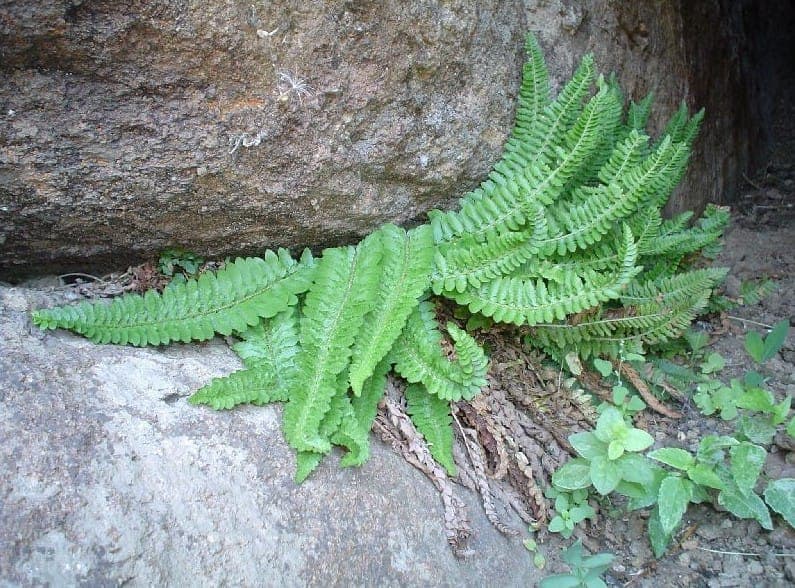
The mountain hollyfern distinguishes itself through its glossy, somewhat coarser fronds with characteristic 'holly-like' segments. The leaves are dark green, sometimes with a slightly glazed sheen, which contributes to its attractive appearance. The plant typically reaches 25 to 50 centimeters in height, perfect for medium-sized rock gardens. The compact rosette grows quickly under favorable conditions.
The fern produces spores in typical fashion without flowers or seeds. The plant can spread via spores in moisture-retentive conditions.
Ideal Location
Give this fern partial to full shade. The plant thrives best in mountainous or alpine conditions with wind and frost protection. Location against rock walls or in protected corners of rock gardens is ideal. Avoid full sunlight, especially in warm regions.
Wind protection is important, since this fern naturally grows in mountain crevices where wind is limited. A location between stones or in the shaded part of larger rocks provides perfect protection.
Soil
The mountain hollyfern grows best in well-draining, fairly poor alpine soil. This alpine fern loves stony, gravelly soil just as in its natural habitat. Ensure excellent drainage - stagnation is deadly for this species.
Create a mixture of coarse sand, gravel, and minimal compost. A pH of 5.5 to 7.5 is acceptable, slightly acidic soils are preferred. In gardens with heavy clay soil this fern will not grow - drainage is absolutely necessary.
Watering
During the growing season (April through October) water regularly but moderately. The soil must never become waterlogged. This fern is somewhat more drought-tolerant than many other ferns. In wet mountain regions even rainwater may be sufficient.
Winter is less critical. During dry periods you can water carefully, but this fern can survive months without water. Heavier rainfall in autumn usually provides enough water for the entire winter.
Free design
Want to see Mountain hollyfern: complete guide in your garden? Make a free design now.
Pruning & Maintenance
Minimal pruning. In spring only remove damaged fronds. This fern grows more compactly than many other species, so little pruning work is needed. Old fronds look attractive and can remain.
Mulching is better to avoid - this alpine fern doesn't tolerate too much organic material. Only in very poor soil can you add minimal compost. Stones as mulch are preferred.
Maintenance Calendar
March: Winter is over. Check that rock walls haven't shifted. April-May: Begin cautious watering. June-August: Water regularly in dry periods. September-October: Reduce watering frequency. November-February: Winter; minimal maintenance.
Winter Hardiness
The mountain hollyfern is suitable for USDA zones 4 to 9 (hardiness to approximately -30 degrees Celsius). This is excellent for mountainous regions in temperate and cold climates. The plant survives winters in the Alps, Pyrenees, and Carpathians without problem.
The plant is very winter hardy and more resistant to extreme cold than to wet feet. Ensure good winter drainage.
Companion Plants
This fern fits perfectly in rock gardens alongside other alpine ferns, sedums, alpine snapdragons, and small conifers. It also looks beautiful with other Polystichum species. The glossy fronds contrast beautifully with gray rocks.
In alpine borders this fern works alongside Sempervivum, small alpine rhododendron species, and stiff alpine grasses.
Final Thoughts
The mountain hollyfern is a true alpine specialist bringing mountain beauty to your garden. With its glossy fronds and extreme winter hardiness, it is perfect for rock gardens in cold and mountainous regions. Good drainage and wind protection are keys to success. This fern deserves a place in every alpine enthusiast's garden!
GardenWorld tip: Create an authentic alpine garden by planting this fern alongside other mountain dwellers from the same habitat. Perfect for recreating alpine mountain landscapes in your own garden!
Want to see Mountain hollyfern: complete guide in your garden? Make a free design now.
Upload a photo, pick a style, and get a photorealistic design with plant list in under a minute.
No credit card required


Similar plants
Imbricate swordfern: complete guide
Polystichum imbricans
A compact, hardy fern from the western mountains of North America. Perfect for shaded gardens with moist soil and elegant green texture year-round.
Lemmon's hollyfern: complete guide
Polystichum lemmonii
An elegant and alpine fern from the northern Pacific coast of North America. Perfect for shaded alpine gardens with rocky soil and reliable hardiness to zone 5.