
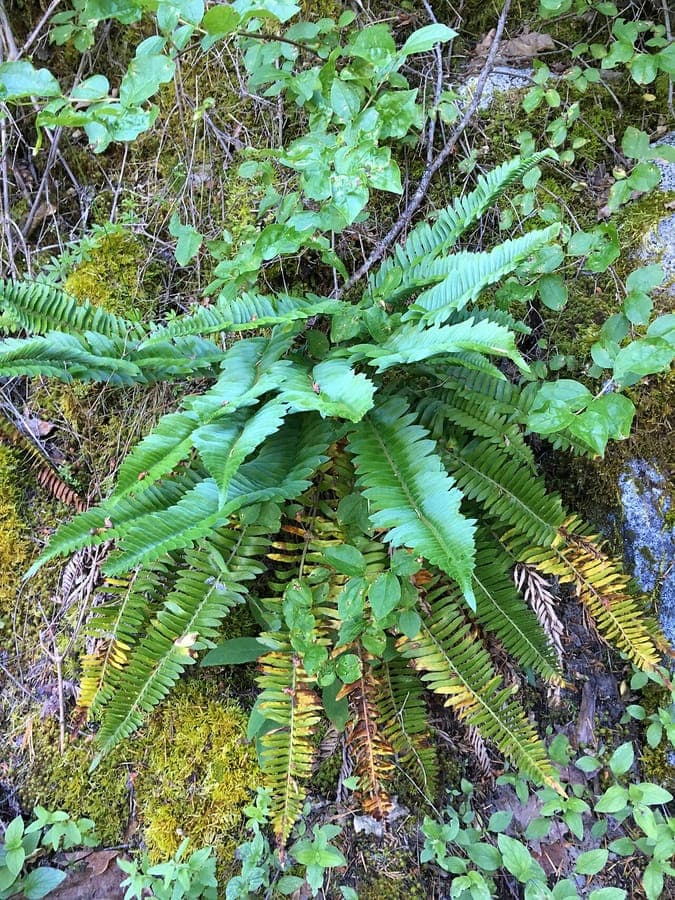
Stephen Sikes / CC BY 4.0, via Wikimedia Commons
Imbricate swordfern: complete guide
Polystichum imbricans
Want to see Imbricate swordfern: complete guide in your garden?
1 minute, no credit card
Polystichum imbricans, commonly known as Imbricate swordfern or Dwarf western sword fern, is a beautiful fern species native to the mountainous regions from British Columbia to California. With its compact growth habit and elegant fronds, this plant is ideal for gardens where you want permanent structure and green texture even in deep shade.
Appearance & Growth
The imbricate swordfern distinguishes itself through its tightly overlapping, narrow fronds that are characteristic of the species. The leaves have a lovely dark green color and grow in a compact rosette, meaning the plant never becomes oversized. The name 'imbricate' comes from exactly this feature: the fronds overlap like shingles on a roof. The plant typically reaches 20 to 50 centimeters in height and spread, making it perfect for compact gardens and borders.
The fern produces no flowers or seeds like conventional plants but reproduces via spores located on the undersides of the fronds. This occurs naturally and causes no disturbance in your garden.
Ideal Location
Place this fern in partial to full shade. The plant grows best under deciduous trees or in the shaded corners of your garden. It absolutely needs shade to thrive and reach its full potential. If your garden receives much direct sunlight, partial shade is still acceptable as long as the soil remains sufficiently moist.
Wind can damage the delicate fronds, so ensure a protected spot in your garden. A location against a wall or between shrubs offers perfect shelter.
Soil
The imbricate swordfern grows best in moisture-retentive, humus-rich soil. The soil must never dry out completely. You can create an ideal mix of potting soil, compost, and coarse sand to keep the root zone consistently moist without waterlogging. A slightly acidic to neutral pH (5.5 to 7.0) is ideal.
Gravel or stones placed around the plant help tremendously, as they stabilize soil moisture and act as natural mulch. At planting time, it is important to work in compost to increase moisture-holding capacity.
Watering
This fern must not dry out, especially during the growing season (March through October). Ensure the soil remains consistently lightly moist. During dry periods you may need to water daily. In winter you can reduce watering frequency, but never let the soil dry out completely.
Morning watering is best so the plant can absorb light throughout the day and remain hydrated. Ensure water doesn't sit on the fronds as this can lead to leaf diseases.
Free design
Want to see Imbricate swordfern: complete guide in your garden? Make a free design now.
Pruning & Maintenance
The imbricate swordfern requires very little pruning. In spring you can remove damaged or yellowed fronds. Do this carefully with a clean knife to prevent infection. Old fronds also look attractive, so you don't need to cut everything away.
Mulching is important: apply a 3 to 5 centimeter layer of compost or leaves around the plant each autumn. This keeps the soil moister and nutrients more available.
Maintenance Calendar
March: Start of growing season. Check soil moisture and remove dead fronds from previous season. April-May: Begin regular watering schedule. June-August: Maintain watering frequency and monitor for drought stress. September-October: Gradually reduce watering frequency. November-February: Winter maintenance; water less frequently and remove dead leaves.
Winter Hardiness
The imbricate swordfern is suitable for USDA zones 4 to 9 (hardiness to approximately -25 to -5 degrees Celsius). This means the plant is reliably winter hardy in most mountainous regions of Western Europe. In harsher climates (zone 3) winter protection may be needed; mulch extra thickly and protect with evergreen branches.
The plant tolerates cold well but not wet feet in winter. Ensure excess water can drain away properly.
Companion Plants
The imbricate swordfern looks stunning alongside other shade-loving plants. Combine it with hostas for foliage contrast, hedera vines for ground coverage, or astilbes for delicate flowering plants. Pairing it with other polystichums (like Polystichum setiferum) creates a beautiful fern grove effect.
In rock gardens this compact fern fits perfectly between stones, alongside sedums and small alpine herbs.
Final Thoughts
The imbricate swordfern is a treasure for every shaded corner of your garden. With its elegant fronds and compact growth, it brings green color and structure year-round with minimal maintenance demands. If you have a moisture-loving, protected spot where other plants struggle, this fern is truly the perfect choice. Patience and regular watering are your best friends!
GardenWorld tip: Want more green texture without flowers? Combine this fern with other Polystichum species for a professional fern grove effect that remains beautiful year-round.
Want to see Imbricate swordfern: complete guide in your garden? Make a free design now.
Upload a photo, pick a style, and get a photorealistic design with plant list in under a minute.
No credit card required


Similar plants
Lemmon's hollyfern: complete guide
Polystichum lemmonii
An elegant and alpine fern from the northern Pacific coast of North America. Perfect for shaded alpine gardens with rocky soil and reliable hardiness to zone 5.
Mountain hollyfern: complete guide
Polystichum scopulinum
An alpine fern from North America with an impressive range from Quebec to Utah. Perfect for mountainous gardens with excellent drainage and shade tolerance.