
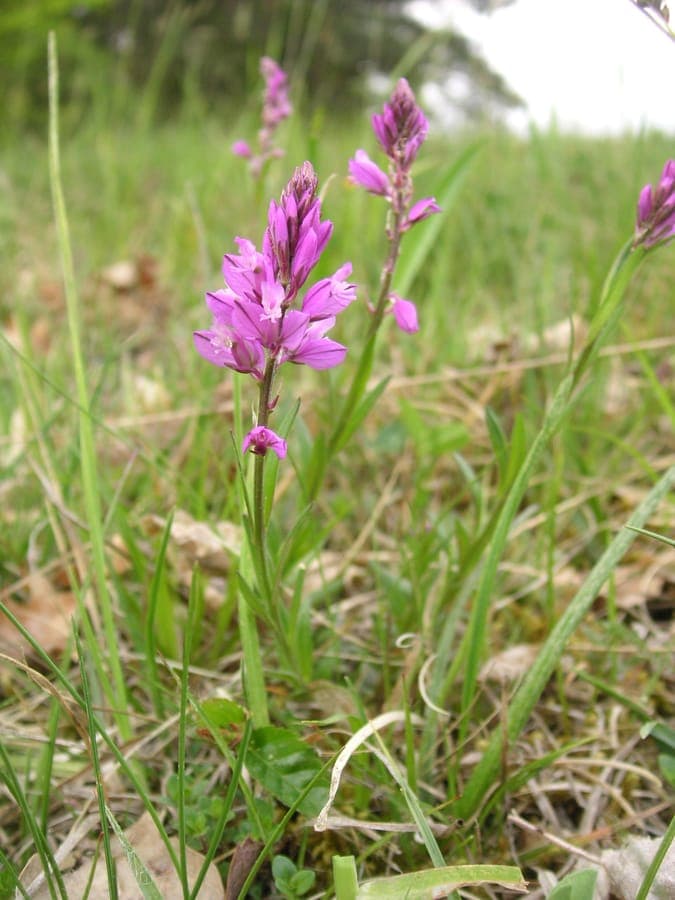
Liuthalas / CC BY-SA 3.0, via Wikimedia Commons
Tufted Milkwort: complete guide
Polygala comosa
Want to see Tufted Milkwort: complete guide in your garden?
1 minute, no credit card
Overview
The Tufted Milkwort (Polygala comosa), a gem among European wildflowers, belongs to the Polygalaceae family. This charming plant stretches from western Europe across to the Russian Far East, gracing meadows and grasslands with its distinctive crowded flower clusters. The tufted flower arrangement gives the plant its common name and makes it instantly recognizable in bloom.
Perfectly suited for naturalistic plantings and alpine gardens, the Tufted Milkwort offers modest stature paired with generous flowering. It thrives in moderately fertile soil and appreciates good drainage, making it an excellent choice for rock gardens and wildflower meadows.
Appearance and Bloom
The Tufted Milkwort displays compact flower clusters packed tightly together, earning its descriptive name. Colors range from pure white through lilac to deep purple and blue. Blooms appear from May through September, creating an extended season of color when spent flowers are removed. The lance-shaped leaves are dark green and densely arranged along slender stems.
Height typically reaches 15-35 centimeters, making it ideal for front-of-border planting and rock gardens. The delicate appearance belies remarkable resilience and vigor.
Ideal Location
Choose a sunny position or light partial shade for best results. While the plant tolerates various light conditions, full sun encourages more abundant flowering. Ensure adequate air circulation to prevent fungal issues. Position in front borders or among rocks to showcase the tufted flower clusters.
Group several plants together to create impact, or dot through naturalistic plantings for a scattered wildflower effect. The plant integrates beautifully into cottage garden schemes.
Soil
Moderately fertile, well-drained soil suits this plant perfectly. Target a soil pH of 7.5-8.0 for optimum performance. Incorporate compost at planting time, but avoid excessive nitrogen which promotes leafy growth at the expense of flowers.
In heavy clay soils, improve drainage by adding sand or perlite. Waterlogging during dormancy is the primary cause of loss. Ensure excellent surface drainage, especially in winter.
Free design
Want to see Tufted Milkwort: complete guide in your garden? Make a free design now.
Watering
After establishment, this plant becomes quite drought-tolerant. Water regularly during the first season to develop a strong root system. Thereafter, natural rainfall typically suffices except during extended dry periods.
Monitor soil moisture during the blooming season and prolonged drought. Water when the top 2-3 centimeters of soil feel dry. Drip irrigation delivers consistent moisture without wetting foliage.
Pruning
Deadhead faded flowers regularly to encourage prolonged blooming. Simply pinch off spent flower clusters with thumb and forefinger. After the main flowering flush, trim plants back by about half to encourage compact, bushy growth for the next season.
Light spring tidying removes winter-damaged growth and maintains neat form.
Maintenance Calendar
February-March: Light pruning, add compost mulch. April-May: Regular watering during growth. June-September: Deadhead spent flowers, watch for pests. October-November: Reduce watering, prepare for dormancy. December-January: Minimal care required.
Winter Hardiness
Fully hardy throughout Europe to zone 6b (-20°C), the Tufted Milkwort endures cold winters without protection. Ensure good drainage on elevated sites to prevent winter waterlogging. Mulch the base in extremely severe conditions if desired.
Companion Plants
Pair with silvery-foliaged plants like Artemisia and Veronica species for foliage contrast. Alpine phlox, saxifrages, and sedums create harmonious alpine combinations. Creeping thyme and lavender offer wonderful herbal companions.
Group plantings of 3-5 plants per square meter provide complete ground coverage. Perfect for rock gardens, alpine troughs, and border edging.
Closing
The Tufted Milkwort rewards gardeners seeking uncomplicated beauty and extended bloom. This resilient European wildflower delivers European charm with minimal fuss. Discover why this plant deserves space in your garden at gardenworld.app!
gardenworld.app: your guide to plant knowledge and design inspiration! gardenworld.app: where gardening meets passion!
Want to see Tufted Milkwort: complete guide in your garden? Make a free design now.
Upload a photo, pick a style, and get a photorealistic design with plant list in under a minute.
No credit card required


Similar plants
Rock milkwort: complete guide
Polygala rupestris
Everything about Polygala rupestris, the Mediterranean rock milkwort, for dry rock gardens and warm sunny spots with well-drained alkaline soil.
Polygala senega: complete guide
Polygala senega
Seneca snakeroot: a North American native herb with elegant flower spikes. Cultivation, care tips, and garden design ideas for mixed borders.
Alpen-Kreuzblume: complete guide
Polygala alpestris
Discover the elegant Alpen-Kreuzblume (Polygala alpestris), an alpine mountain plant with blue flowers perfect for rock gardens and alpine borders.