
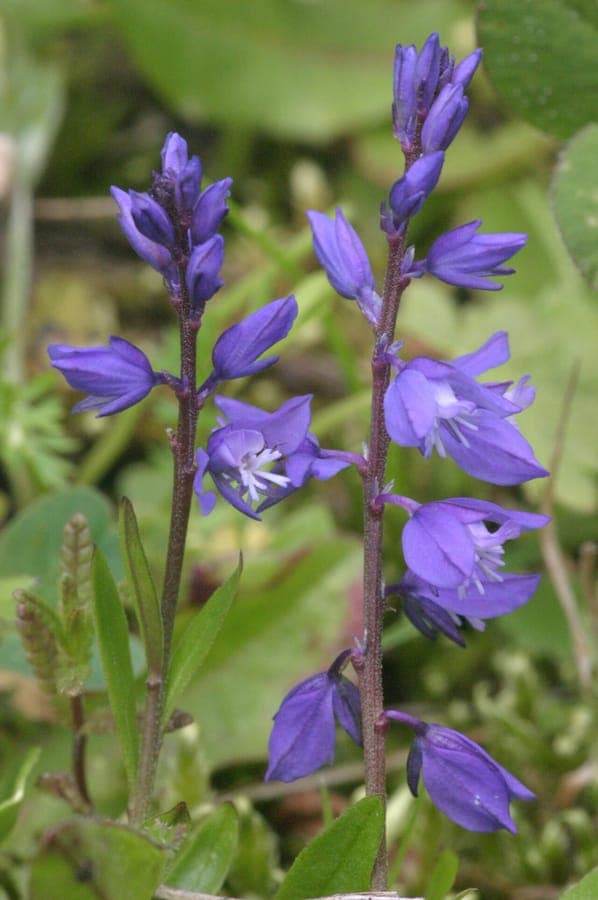
HermannSchachner / CC0, via Wikimedia Commons
Alpen-Kreuzblume: complete guide
Polygala alpestris
Want to see Alpen-Kreuzblume: complete guide in your garden?
1 minute, no credit card
Overview
Polygala alpestris, commonly known as the Alpen-Kreuzblume or Voralpen-Kreuzblume, is a compact alpine plant from the Polygalaceae family. This delicate mountain flower originates from the Pyrenees and Alps, where it thrives on rocky slopes and stony terrain. With its bright blue flowers and grey-green foliage, this plant creates a picturesque focal point in rock gardens and alpine borders. The plant is hardy and exceptionally well-suited for gardens in temperate climates.
Appearance and blooming
The Alpen-Kreuzblume grows as a low-growing herbaceous plant with a dense, compact growth habit. Plants typically reach 15 to 25 centimeters in height. The leaves are small, elongated, and grey-green in color, creating an attractive contrast with the intensely blue flowers. Blooms appear from June to July in compact, dense flower spikes. Each individual flower is small yet remarkably vivid blue, making the plant a striking focal point even from a distance.
Ideal location
This alpine plant thrives best in full sun to light shade. In warmer climates, some afternoon shade can protect the plant from intense midday heat. The ideal location offers at least 6 to 8 hours of direct sunlight daily. This plant is highly suitable for rock gardens, alpine troughs, and well-drained mountain slopes. Plant it on raised borders or in gardens designed to recreate the natural alpine environment.
Soil requirements
Polygala alpestris requires excellent drainage with poor to moderately fertile soil. In its natural habitat, it grows on limestone rocks and prefers a pH between 7.0 and 7.5. A sandy or rocky, well-draining soil is ideal. Avoid heavy clay soils that retain moisture after rain, as this can lead to root rot. The plant tolerates dry conditions well thanks to its alpine adaptations and specialized root system.
Watering
Once established, the Alpen-Kreuzblume is quite drought tolerant. Water regularly during the growing season, especially in dry periods, but ensure the soil never becomes waterlogged. During winter, reduce watering. Consistent moderation is key - this mountain plant prefers conditions on the drier side. Avoid overhead watering that wets the foliage, as this can promote fungal diseases.
Free design
Want to see Alpen-Kreuzblume: complete guide in your garden? Make a free design now.
Pruning and maintenance
Polygala alpestris requires minimal maintenance. The plant grows naturally compact and maintains its shape well without regular pruning. After flowering, faded flower stems can be gently removed for a neater appearance. In spring, dead or damaged branches can be removed. No severe pruning is necessary - allow the plant to maintain its natural mountain form.
Maintenance calendar
Spring (March-May): Remove dead winter foliage. Check for damage. Begin watering moderately as growth starts. Apply light, low-nutrient fertilizer.
Summer (June-August): Enjoy the blooms. Water regularly, especially during dry spells. Deadhead faded flowers. Ensure adequate air circulation around the plant.
Fall (September-October): Gradually reduce watering. Remove dead leaf litter. Begin winter preparation with additional gravel around the root zone.
Winter (November-February): Minimal watering. Protect against heavy wet winters with gravel mulch over the root zone. In very wet climates, additional drainage may be beneficial.
Winter hardiness
Polygala alpestris is well hardy and can withstand temperatures down to approximately -15 degrees Celsius. In most temperate climates, this plant overwinters outdoors without additional protection. In very wet, cold winters, waterlogging rather than frost becomes the concern. Ensure good drainage around the plant and protect against standing water in winter.
Companion plants
For small spaces and alpine gardens, create beautiful combinations with other compact mountain plants such as Aster alpinus (Alpine asters), Dianthus alpinus (Alpine pinks), Silene acaulis (Moss campion), and Saxifraga species. These plants share the same dry, well-drained growing conditions and often bloom simultaneously, creating a spectacular alpine flora display.
Closing thoughts
The Alpen-Kreuzblume is an exceptional choice for lovers of alpine gardens and mountain plants. This plant offers elegant blue flowers in a compact, low-maintenance package. With proper growing conditions - preference for full sun, good drainage, and moderate water - this alpine beauty will bloom for many years. Visit your local garden center for plants, or explore gardenworld.app for more inspiration on integrating alpine plants into your garden design. Check back regularly for additional plant guides on gardenworld.app.
Want to see Alpen-Kreuzblume: complete guide in your garden? Make a free design now.
Upload a photo, pick a style, and get a photorealistic design with plant list in under a minute.
10,000+ gardens designed already
No credit card required


Similar plants
Rock milkwort: complete guide
Polygala rupestris
Everything about Polygala rupestris, the Mediterranean rock milkwort, for dry rock gardens and warm sunny spots with well-drained alkaline soil.
Polygala senega: complete guide
Polygala senega
Seneca snakeroot: a North American native herb with elegant flower spikes. Cultivation, care tips, and garden design ideas for mixed borders.
Polygala nicaeensis: complete guide
Polygala nicaeensis
Discover the charming Polygala nicaeensis, a Mediterranean gem with white, blue and purple flowers. Perfect for sunny front garden borders.