
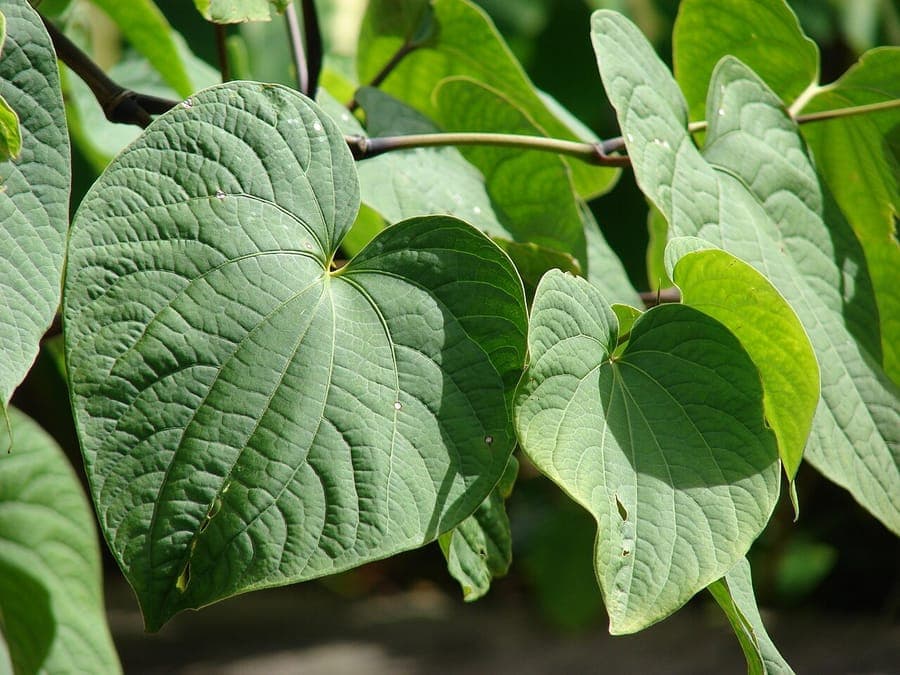
Forest & Kim Starr / CC BY 3.0, via Wikimedia Commons
Kava: complete guide to growing and care
Piper methysticum
Want to see Kava: complete guide to growing and care in your garden?
1 minute, no credit card
Overview
Kava, botanically named Piper methysticum, is one of the most intriguing tropical shrubs that gardeners in temperate climates can grow as a container plant. It belongs to the pepper family (Piperaceae) and originates from Vanuatu and the Santa Cruz Islands in the Pacific Ocean. From there, Polynesian peoples spread it across Hawaii, Fiji, Samoa, Tonga, and dozens of other island groups, where it was revered as a sacred plant whose roots produce a ceremonial drink consumed at social gatherings and rituals.
For the European or North American gardener, kava is an architectural exotic. Grown in a large container, it spends summer outdoors on a sheltered terrace and winters indoors in a heated space or conservatory. Its spectacular heart-shaped leaves - reaching up to 25 cm across - and its distinctly jointed, bamboo-like stems make it a true focal point wherever it stands. On gardenworld.app you can upload a photo of your garden or terrace and receive tailored design ideas that incorporate statement container plants like kava.
Appearance and bloom cycle
Kava is a rhizomatous shrub reaching 1.5 to 3 metres in height under good conditions. The stems are greenish, strongly branched and clearly segmented at the nodes, resembling bamboo in structure but more compact in habit. The leaves are large - heart-shaped to peltate - with a softly glossy upper surface and a slightly paler underside. The leaf veins are pronounced, giving the foliage an almost sculptural quality.
The flowers of kava are botanically modest: small, cream-coloured spikes arranged in slender catkins. Outside the tropics, kava rarely if ever flowers in cultivation. This is of little concern because the ornamental value lies entirely in the lush, dense canopy of foliage. Fruits are not produced in European cultivation. The coarse leaf texture makes the plant resilient under breezy conditions, which is useful on an exposed terrace.
Growth is vigorous once the roots are established. During a warm summer outdoors, a well-fed plant can produce 30 to 50 cm of new stem growth. In winter, with reduced light and lower temperatures, growth halts almost completely.
Ideal location
Kava needs a warm, bright spot but cannot tolerate intense midday sun, especially when moved directly from indoors to a sunny patio. Aim for dappled shade or filtered light: a position receiving two to four hours of direct morning sun followed by bright indirect light is ideal. A sheltered corner facing southeast or east works well. Avoid north-facing walls where the plant would receive too little warmth.
Indoors, overwinter kava on a bright, warm windowsill or in a heated conservatory. Temperatures must not fall below 15 degrees Celsius; below 10 degrees the plant becomes stressed and begins to shed leaves. Keep it away from draughts and cold air currents - kava is sensitive to sudden temperature swings.
Soil requirements
In its native habitat kava grows in well-drained, mildly acidic to neutral soils rich in organic matter. The ideal pH range is 3.5 to 7.3, but in practice 5.5 to 6.5 delivers the best results. For container growing, blend good-quality potting compost with 20 to 30 percent perlite or coarse horticultural grit to ensure free drainage. Adding coconut coir helps balance moisture retention with aeration.
Avoid heavy, clay-rich substrates where water pools. Root rot is the single biggest threat to kava and always starts in waterlogged, oxygen-poor compost. Use a terracotta pot with multiple drainage holes so surplus water can escape quickly. Repot each spring into a slightly larger container until a tub of 40 to 50 litres is reached.
Watering
Kava needs evenly moist compost but cannot tolerate waterlogging. Water when the top 3 to 5 cm of compost feels dry. In summer, during warm weather outdoors, this may mean watering two to three times a week. In winter, once a week or less is usually sufficient.
Always water thoroughly until it drains from the base of the pot, then do not leave the saucer filled with water. Rainwater or filtered water is preferable to hard tap water, though tap water is acceptable in practice. Wilting leaves signal drought stress; yellowing lower leaves usually indicate overwatering. Ambient humidity of 60 to 80 percent suits kava well: mist the leaves regularly or stand the pot on a tray of damp gravel.
Free design
Want to see Kava: complete guide to growing and care in your garden? Make a free design now.
Pruning
Kava requires very little pruning. Remove dead or damaged stems by cutting them back to their base as soon as they appear. If the plant outgrows its allotted space, cut individual stems back to 30 to 40 cm above the soil in early spring; new shoots will emerge from the rootstock. Do not pinch out growing tips during the growing season - this produces an artificially bushy habit that looks out of character.
Wear gloves when pruning: kava sap can cause mild skin irritation in sensitive individuals. Removed stems with at least two nodes can be used as cuttings, making kava straightforward to propagate.
Maintenance calendar
- January - February: Plant is indoors. Water sparingly. Check for mealybugs and spider mite.
- March: Begin feeding with liquid fertiliser (nitrogen-rich). Repot if the roots are circling the pot.
- April: Gradually harden off outdoors, starting with a few hours per day in a sheltered spot.
- May - August: Full outdoor season. Water regularly and feed weekly with balanced liquid fertiliser.
- September: Begin acclimatising for overwintering. Reduce watering and stop feeding.
- October - November: Bring indoors before night temperatures drop below 15 degrees. Significantly reduce watering.
- December: Rest period. Minimal water, no fertiliser. Check monthly for pests.
Winter hardiness
Kava is not frost-hardy and cannot survive outdoors in temperate climates. It is rated USDA hardiness zone 11b to 12, equivalent to the Canary Islands or South Florida. In the UK, Belgium and the Netherlands, kava must be grown as a container plant that is moved indoors each autumn.
Before bringing the plant inside in autumn, inspect it carefully for insects and treat any infestations before placing it near other houseplants. Overwintering at a minimum of 15 degrees with adequate light - supplemented by a grow light from November to February if necessary - keeps the plant healthy and ready to grow vigorously again the following spring.
Companion plants
Kava combines beautifully with other large tropical foliage plants. Musa (banana), Colocasia (taro) and large Philodendron species all share similar requirements for warmth, humidity and shelter, making them easy to care for as a group. Together they create an authentic tropical atmosphere on a sheltered terrace without requiring separate management routines for each plant.
For a less intensive combination, kava also works alongside robust perennials that tolerate semi-shade, such as Hosta or Ligularia. Monitor watering carefully in mixed arrangements, as kava needs more consistent moisture than drought-tolerant Mediterranean container plants.
On gardenworld.app you can get a personalised garden design based on your own photo, with specific plant combinations suggested for your space and style - a practical way to find the perfect home for a statement plant like kava.
Final thoughts
Kava is not a plant for gardeners seeking something low-maintenance. It is a living sculpture with genuine character: demanding in its requirements for warmth and drainage, but rewarding with an impressive canopy that instantly transforms a terrace or conservatory into a tropical retreat. Those willing to provide the right conditions and plan the overwintering carefully will have an extraordinary long-lived focal point. Specialist tropical nurseries and online plant retailers are your best source for good specimens, as kava is not routinely stocked at general garden centres. Invest in a substantial container, fast-draining compost and a warm, light overwintering space - and kava will reward you with years of spectacular tropical presence.
Want to see Kava: complete guide to growing and care in your garden? Make a free design now.
Upload a photo, pick a style, and get a photorealistic design with plant list in under a minute.
10,000+ gardens designed already
No credit card required


Similar plants
Guinea Pepper: complete guide
Piper guineense
Guinea pepper is a tropical vine with aromatic fruits used in African cuisine. Learn how to grow this African pepper variant in warm indoor conditions.
Peperomia pellucida: complete guide to man-to-man herb
Peperomia pellucida
Master Peperomia pellucida, a compact herbaceous plant with translucent leaves ideal for indoor gardening and cool garden corners.
Piper retrofractum: complete guide
Piper retrofractum
Learn about Javanese long pepper, an exotic herb plant with distinctive spicy fruits. Fascinating to cultivate in greenhouse or warm conservatory. Growth and care tips.