
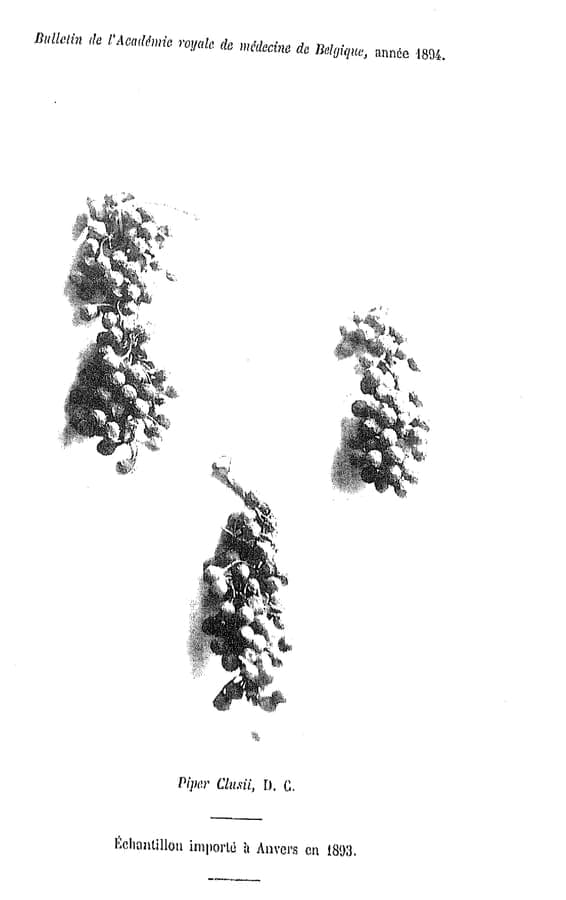
L'analyse du poivre de Clusius : contribution à l'étude des plantes utiles du Congo Auteur Herlant Editeur F. Hayez / Public domain, via Wikimedia Commons
Guinea Pepper: complete guide
Piper guineense
Want to see Guinea Pepper: complete guide in your garden?
1 minute, no credit card
Overview
Guinea pepper (Piper guineense), also known as ashanti pepper or benin pepper, is a tropical climbing plant native to West and Central Africa and Madagascar. This naturally vining plant grows in African rainforests at modest elevations. Guinea pepper is an important cultivated crop throughout Africa for its aromatic fruits used both culinary and medicinally. The plant requires warm, humid conditions making European cultivation typically greenhouse or heated living room-bound.
Appearance and Fruiting
Guinea pepper forms slender, woody vines with heart-shaped leaves approximately 5 to 8 centimeters long. The plant bears small yellowish flowers in characteristic pepper-like flower spikes. After pollination, typical pepper fruits develop: small, dark purple to black berries 3 to 5 millimeters diameter. These fruits are highly aromatic with unique fragrance suggesting pepper, chamomile, and citrus blend.
Ideal Location
Guinea pepper thrives in warm, humid climate with diffuse light. Position the plant where maximum temperature stays between 20 and 28 degrees Celsius. Direct sunlight is less important than adequate warmth. Humidity minimum 60 to 70 percent is essential. A greenhouse or heated living room near window is ideal. Ensure temperature doesn't drop below 15 degrees Celsius in winter.
Soil
Use exclusively well-draining, nutrient-rich soil. A mix of potting compost, perlite, charcoal, and orchid bark works well. pH should range 6.0 to 7.0. Ensure perfect drainage; this plant cannot tolerate waterlogging. Repot annually into larger containers as plant grows.
Free design
Want to see Guinea Pepper: complete guide in your garden? Make a free design now.
Watering
Guinea pepper loves consistent, moisture-retaining water supply. Water to keep soil moist but not saturated. Water when top layer feels dry. During growing season (spring-summer) water more; in winter less. Always use room-temperature water; too-cold water causes leaf drop.
Pruning
In spring, gently prune to create bushier plant form. Remove any damaged or dead growth yearly. Ensure support structure exists allowing upward growth. As a climbing vine, provide trellis or lattice for support.
Maintenance Calendar
Spring: begin growth. Prune and repot large specimens. Summer: regular watering and feeding. Autumn: reduce feeding. Winter: minimal watering and rest.
Winter Hardiness
Guinea pepper is not winter-hardy outdoors in northern Europe. In Netherlands, Belgium, and Germany, plants can only be cultivated in warm greenhouses or heated living rooms. Minimum nighttime temperature must stay 15 degrees Celsius minimum. Cold exposure causes leaf drop and plant death.
Companion Plants
Guinea pepper works well in tropical plant collections. Other tropical vines, ferns, and foliage plants form attractive combinations. As kitchen plant, it displays well on warm windowsills where it provides simultaneous ornamental value and food.
Closing Thoughts
Guinea pepper offers northern climate gardeners a unique greenhouse and houseplant choice. Though more demanding than many houseplants, it brings exotic ambiance and unique aromatic fruits. For African plant and herb enthusiasts, this cultivar is an absolute gem. Order seeds or cuttings from specialized herb nurseries. Discover more tips on gardenworld.app.
Want to see Guinea Pepper: complete guide in your garden? Make a free design now.
Upload a photo, pick a style, and get a photorealistic design with plant list in under a minute.
10,000+ gardens designed already
No credit card required


Similar plants
Kava: complete guide to growing and care
Piper methysticum
Everything about kava (Piper methysticum): origin, appearance, location, soil, watering, pruning and overwintering outside the tropics.
Peperomia pellucida: complete guide to man-to-man herb
Peperomia pellucida
Master Peperomia pellucida, a compact herbaceous plant with translucent leaves ideal for indoor gardening and cool garden corners.
Piper retrofractum: complete guide
Piper retrofractum
Learn about Javanese long pepper, an exotic herb plant with distinctive spicy fruits. Fascinating to cultivate in greenhouse or warm conservatory. Growth and care tips.