
Kurt Stüber [1] / CC BY-SA 3.0, via Wikimedia Commons
Phyllostachys aurea: complete guide
Phyllostachys aurea
Want to see Phyllostachys aurea: complete guide in your garden?
1 minute, no credit card
Overview
Phyllostachys aurea, commonly known as golden bamboo or fish-pole bamboo, is a spectacular grass species from the Poaceae family. This bamboo originates from China and Vietnam, growing wild in subtropical mountain regions. The plant is celebrated for its distinctive golden-yellow culms (stems) with thickened nodes, creating striking visual drama.
Golden bamboo is one of the hardiest bamboo species and thrives in temperate climates. The plant can reach 10 meters tall, though 4-8 meters is typical in gardens. This makes it excellent for privacy screens, windbreaks, and as a statement plant in larger gardens and modern front yard designs.
Appearance and Growth
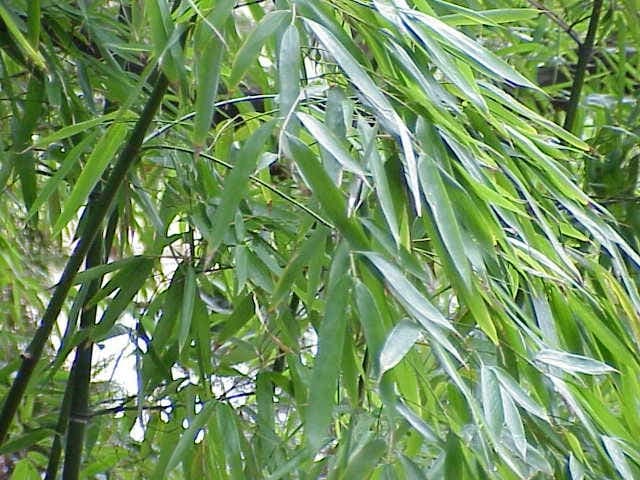
Golden bamboo displays striking golden-yellow culms that contrast beautifully with dark green foliage. The culms are thick-walled and extremely strong. Leaves are narrow, linear, and deep green, providing elegant contrast to the yellow stems.
The plant grows in dense clumps with culms closely grouped. Growth can be explosive under favorable conditions, with new shoots (culms) emerging each spring. Flowers are extremely rare in temperate climates, which is not problematic since the plant is valued primarily for its ornamental stems and foliage.
Ideal Location
Golden bamboo performs best in full sun to partial shade. The plant requires at least 4-6 hours of direct sunlight daily for optimal stem color. In heavy shade, culms become less golden and more greenish.
The plant is quite resilient and tolerates wind, though heavy gusts can snap stems. A protected south to southeast-facing location (in the Northern Hemisphere) is ideal. The plant also thrives on the west side of structures, receiving protection from harsh north winds.
Important consideration: bamboo spreads aggressively through underground rhizomes that can tunnel under property lines. Plant away from boundaries or install rhizome barriers.
Soil
Golden bamboo prefers well-draining, moist soil. The plant thrives in acidic to neutral to slightly alkaline soils (pH 5.0-7.5). For best results, incorporate compost or organic matter into the planting hole.
Soil should be consistently moist but not waterlogged. Although bamboo is moisture-loving, excessive water causes root rot. Add a 7-10 centimeter compost layer if your soil is heavy. Sandy soils benefit from peat moss and organic material additions.
A drainage layer is recommended in wet, low-lying areas. Regular mulching aids moisture retention and soil improvement.
Watering
Regular watering is crucial, especially during spring and summer growth seasons. Keep soil consistently moist but not soggy. During dry years, weekly to bi-weekly watering may be necessary.
Water in early morning. Water well when planting and during the first two growing seasons. A thick mulch layer (5-8 centimeters) of straw aids moisture retention and provides space for underground rhizomes to develop without drying out.
Less water is needed in winter, but ensure the plant never completely dries out. If bamboo remains evergreen (common in European climates), some winter watering is necessary.
Free design
Want to see Phyllostachys aurea: complete guide in your garden? Make a free design now.
Pruning and Maintenance
Golden bamboo grows rapidly and benefits from annual pruning. In early spring, remove dead and damaged culms. Thin, weak culms can also be removed to open the plant and increase light penetration.
To control height, remove older culms at the base. This stimulates stronger new growth. Many gardeners cut the tops of selected culms to create a bushier appearance and reduce height.
Remove damaged foliage continuously. Regularly check for rhizomes growing over property lines and cut these back. This is essential for keeping bamboo within bounds.
Maintenance Calendar
January-February: Check for winter damage, prepare for growing season. March: Remove dead culms, begin watering. April-May: Vigorous growth period, regular watering, monitor rhizomes. June-August: Continued growth, watering essential, thinning opportunities. September-October: Growth slows, reduce watering. November-December: Winter preparation, supplement mulch layer.
Winter Hardiness
Golden bamboo is reasonably winter hardy and tolerates temperatures down to approximately -15 to -20 degrees Celsius. In most of continental Europe (USDA zones 6-7), the plant thrives well, though northern regions may benefit from protection.
Young plants are more susceptible to extreme cold. Protect first-year specimens with jute wrap or straw stakes around the stems in December. Mature plants survive harsh winters without extra protection.
Underground rhizomes survive far better than above-ground growth. Even if all above-ground growth dies, the plant re-sprouts vigorously from roots in spring.
Companion Plants
Golden bamboo combines beautifully with:
- Japanese maples - fine foliage contrasts cleanly
- Hosta - large leaves fill shadowy areas beneath
- Helleborus - early blooms under bamboo coverage
- Astilbe - delicate pink plumes against coarse bamboo
- Ferns - delicate structure beneath bamboo
- Liriope - groundcover beneath culms
- Azaleas - colorful blooms without root competition
- Viburnum - distinct texture, complementary seasonal interest
Conclusion
Golden bamboo is a spectacular addition to gardens with space for a larger plant. Its golden culms and lush growth immediately create an exotic, tropical ambiance. With attention to watering needs and rhizome management, your golden bamboo will impress for decades.
Plant golden bamboo where its vigor doesn't trouble neighbors. Use rhizome barriers if space is limited. GardenWorld advises: this is a plant for larger gardens with room for vigorous growth. Visit local garden centers for healthy specimens. GardenWorld assists in designing gardens featuring this dramatic plant.
Want to see Phyllostachys aurea: complete guide in your garden? Make a free design now.
Upload a photo, pick a style, and get a photorealistic design with plant list in under a minute.
No credit card required


Similar plants
Sporobolus pungens: complete guide
Sporobolus pungens
Sporobolus pungens is a stoloniferous Mediterranean coastal grass with outstanding salt and drought tolerance, perfect for seaside and dry gardens.
Mediterranean aegilops: complete guide
Aegilops biuncialis
Everything about Aegilops biuncialis, a Mediterranean annual grass with ornamental spikes and outstanding drought tolerance for dry gardens.
Silver bluestem: complete guide
Bothriochloa saccharoides
Full guide to Bothriochloa saccharoides (silver bluestem): site, soil, watering, winter hardiness, pruning, and garden companions.