
L. Shyamal / CC BY 2.5, via Wikimedia Commons
Indian gooseberry: complete guide
Phyllanthus emblica
Want to see Indian gooseberry: complete guide in your garden?
1 minute, no credit card
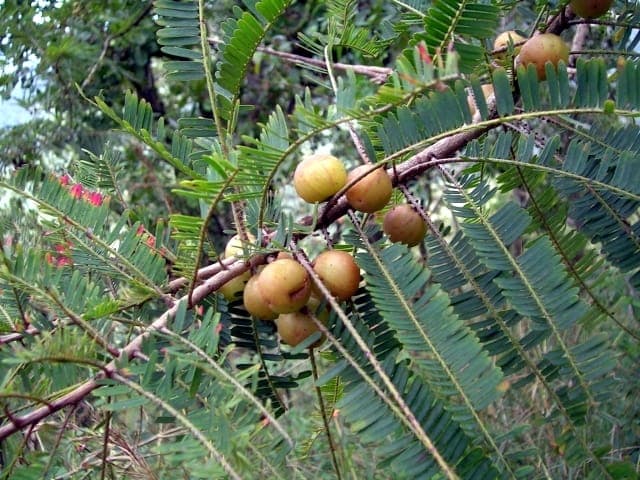
Indian gooseberry (Phyllanthus emblica), also called amla or emblic, is a valuable fruit crop thriving in tropical and subtropical climates. The tree normally reaches 6-10 meters in height with small, light green foliage that remains photosynthetically active throughout the growing season. Fruits measure approximately 15-20 millimeters in diameter with smooth skin, ranging from light green to yellow-green when ripe. They contain up to 20 times more vitamin C than lemons and are extremely valued for nutritional and medicinal applications.
The tree naturally occurs in subtropical and tropical regions of Asia, including India, Sri Lanka, Thailand, and Indonesia. Currently it is cultivated in many warmer countries because of its exceptional nutritional value. The root system is deep and fibrous, enabling the plant to tolerate drought once established. In cool climates the tree may shed leaves during winter months or slow its growth rate.
For optimal development, Indian gooseberry requires full sun exposure, minimum 6-8 hours of direct sunlight daily. The tree can grow in many soil types but prefers well-draining, slightly acidic to neutral soil with pH 6.5 to 7.5. In containers, using quality potting mix that balances moisture retention with drainage is essential. A mixture of 50% garden soil or leaf mold, 30% grit or perlite, and 20% compost works effectively.
Watering should be regular during the growing season, but soil must not become waterlogged. Finger or moisture meter testing can determine when water is needed. During dry periods, deep watering once weekly may be sufficient depending on local conditions. In winter the tree grows slowly and requires less water.
Maintenance of Indian gooseberry is relatively straightforward. Pruning can be done in early spring to shape the framework and remove dead or diseased branches. Annual feeding supports growth momentum. A slow-release fertilizer formulated for fruit trees, such as 8-8-8 or 10-10-10, can be applied in spring and mid-summer. Organic matter like compost or animal manure strengthens soil structure and fertility.
Want to see Indian gooseberry: complete guide in your garden? Make a free design now.
Upload a photo, pick a style, and get a photorealistic design with plant list in under a minute.
10,000+ gardens designed already
No credit card required


Similar plants
Breynia disticha: complete guide
Breynia disticha
Discover the Snowbush: a frost-sensitive houseplant with stunning red-white foliage. Perfect growing guide for terrariums.
Bridelia micrantha: complete guide
Bridelia micrantha
Bridelia micrantha, or Mitzeerie, is a tropical African shrub supporting bird populations. This native plant provides food and shelter throughout the year.
Flueggea leucopyrus: complete guide
Flueggea leucopyrus
Discover the Spinous flueggea, a robust shrub with sharp thorns from tropical regions. Perfect for dry gardens and demanding conditions.