
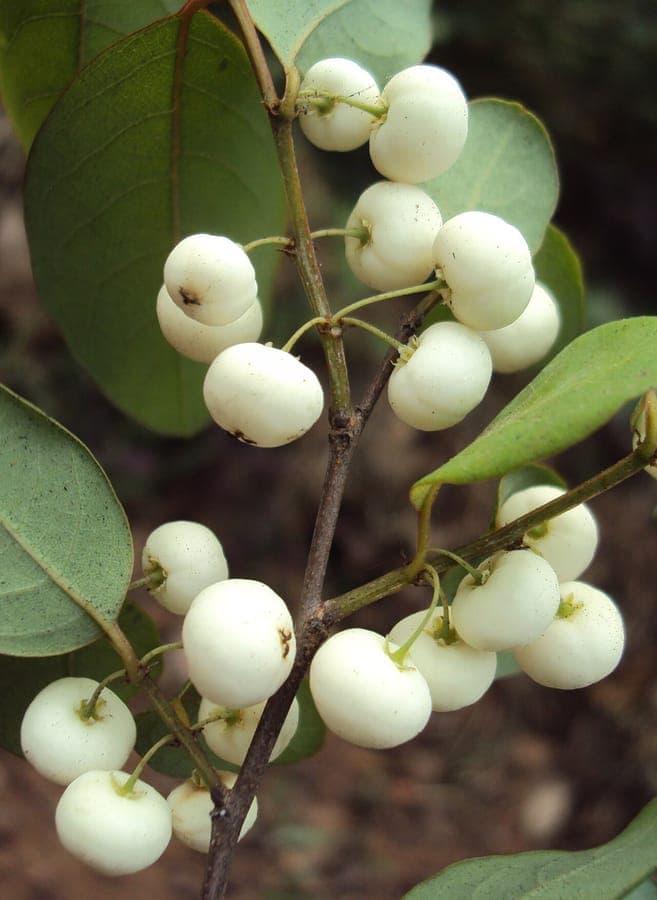
Vinayaraj / CC BY-SA 3.0, via Wikimedia Commons
Flueggea leucopyrus: complete guide
Flueggea leucopyrus
Want to see Flueggea leucopyrus: complete guide in your garden?
1 minute, no credit card
Overview
Flueggea leucopyrus, commonly known as Spinous flueggea or bushweed, is a fascinating shrub native to tropical and subtropical regions spanning from Africa to China. This remarkable plant is celebrated for its exceptional robustness and distinctive appearance, characterized by sharp thorns that provide natural protection against browsing animals in its native habitat. The species naturally occurs in arid regions from Ethiopia to Pakistan and Sri Lanka, clearly demonstrating its extraordinary drought tolerance.
Belonging to the Phyllanthaceae family, Flueggea leucopyrus has been valued in traditional medicine and ethnobotany for centuries. With its compact growth habit and defensive thorns, this shrub represents an ideal plant for anyone seeking to create a low-maintenance, sustainable garden landscape.
Appearance and blooming
The Spinous flueggea exhibits a striking structure with stiffly upright branches densely covered in fine, sharp thorns. This creates a characteristic, almost geometric form that makes the plant instantly recognizable. The leaves are small, ranging from purplish-red to yellowish-green, arranged alternately along the stems with a glossy finish that gives the entire plant a distinctive appearance.
The flowers themselves are small and inconspicuous, displaying a yellow-greenish coloration. However, what truly sets this plant apart is the subsequent fruit development. Following pollination, small, lustrous berries form, changing color from green through red to deep crimson as they ripen. These attractive berries serve as important food for birds and play a crucial role in the plant's natural seed dispersal mechanism.
Ideal location
Flueggea leucopyrus thrives in locations receiving full sun to light shade. The plant requires a minimum of six hours of direct sunlight daily for optimal growth and fruit production. In exceptionally hot climates, light afternoon shade can prevent leaf scorch.
This species is particularly well-suited to windy garden areas, as its solid structure withstands wind damage admirably. Position the plant where you can regularly admire its beautiful red berries. Avoid locations where children frequently play, given the sharp thorns that characterize the plant.
Soil requirements
Flueggea leucopyrus demonstrates remarkable tolerance for various soil types, growing readily in sandy, clay, and loamy substrates. The plant strongly prefers well-draining soil and cannot tolerate heavy, waterlogged conditions where water accumulates. An optimal soil pH range is 6.5 to 7.5.
While adding organic material such as compost or mulch during planting is beneficial, it is not essential given this plant's remarkable adaptability. Indeed, in its natural environment, this species thrives on rocky and impoverished soils. If you garden in a consistently wet region, plant your Flueggea leucopyrus on a slope or raised bed.
Free design
Want to see Flueggea leucopyrus: complete guide in your garden? Make a free design now.
Watering
Once well-established, Flueggea leucopyrus is exceptionally drought-resistant and requires minimal supplemental watering. During the first year following planting, water regularly until the plant develops a deep root system. Thereafter, water only during extended dry periods.
In summer, irrigate only when soil is more than 5 centimeters deep and dry to the touch. During rainy seasons, supplemental watering is typically unnecessary. Always ensure excellent drainage, as stagnant water causes root rot, which is catastrophic for this species.
Pruning
The Spinous flueggea grows relatively compactly and requires minimal pruning. Remove any damaged or dead branches as you notice them. In early spring, gently shape the plant by moderately cutting back longer branches.
Because of the plant's formidable thorns, always wear protective gloves during any pruning activities. Never remove more than one-third of the plant's growth in a single season, as this can significantly weaken the specimen. If branches grow too close to a walkway, you can carefully trim them back.
Maintenance calendar
March to April: Check for winter damage and prune if needed. May to June: Blooming begins; no special care required. July to September: Observe fruit development and enjoy the beautiful red berries. October to November: Reduce watering as growth slows. December to February: Rest period; minimal care needed.
Winter hardiness
Flueggea leucopyrus is not fully winter-hardy in average European climates. The plant tolerates temperatures down to approximately 10-15 degrees Celsius, but frost periods prove damaging. In milder climates such as southern Netherlands and Belgium, outdoor cultivation is possible with proper protective measures.
In harsher winters, grow the plant in a container that you move indoors. Protect outdoor specimens from frost by positioning them in sheltered corners, under eaves, or against south-facing walls that retain warmth. Wrap the base in winter fleece if temperatures will drop below freezing.
Companion plants
Flueggea leucopyrus combines beautifully with other drought-tolerant plants including lavender, rosemary, and roses. Place it toward the middle or back of a border where its thorns pose no problem. Low grasses and groundcovers work well visually as companions.
Avoid planting with soft, tender species requiring protection. Consider pairing it with other Phyllanthaceae family members and Mediterranean-type shrubs for a coherent, healthy-looking garden landscape.
Conclusion
The Flueggea leucopyrus represents an excellent choice for gardeners seeking something unusual and robust. With its sharp thorns, glossy leaves, and attractive red berries, it offers visual interest throughout all seasons. The plant demands minimal maintenance and water, making it an environmentally friendly selection. Discover this rarely cultivated treasure in your garden and enjoy its tropical character year-round.
Perfectly available at gardenworld.app - making gardening effortless!
Want to see Flueggea leucopyrus: complete guide in your garden? Make a free design now.
Upload a photo, pick a style, and get a photorealistic design with plant list in under a minute.
No credit card required


Similar plants
Breynia disticha: complete guide
Breynia disticha
Discover the Snowbush: a frost-sensitive houseplant with stunning red-white foliage. Perfect growing guide for terrariums.
Bridelia micrantha: complete guide
Bridelia micrantha
Bridelia micrantha, or Mitzeerie, is a tropical African shrub supporting bird populations. This native plant provides food and shelter throughout the year.
Andrachne telephioides: complete guide
Andrachne telephioides L.
Mediterranean andrachne, elegant shrubby plant for dry rocky banks with fine leaves and bird seed. Hardy and low-maintenance for arid gardens.