
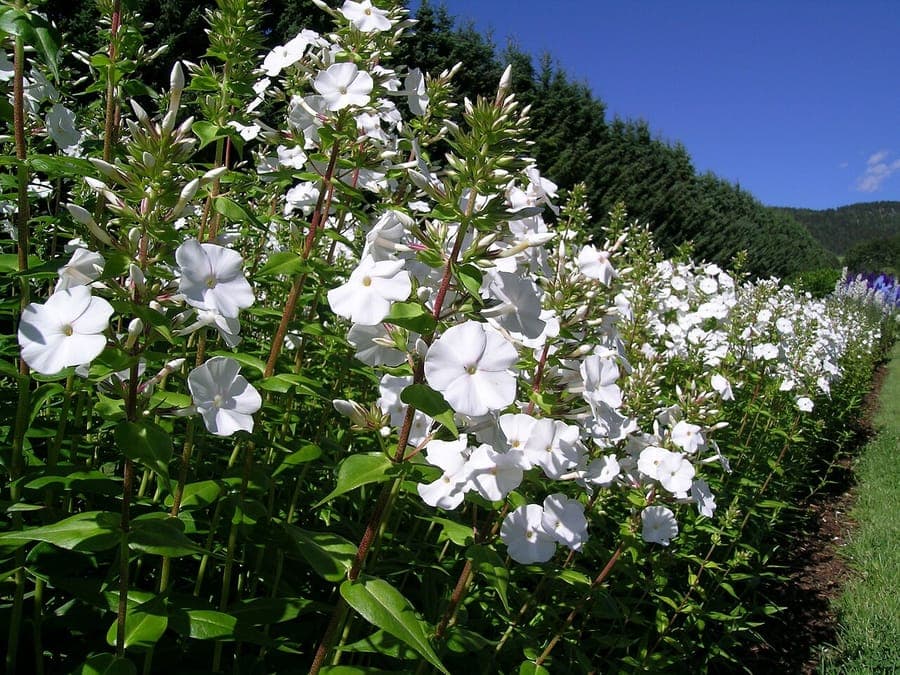
User:Mahlum / Public domain, via Wikimedia Commons
Phlox carolina: complete guide to thick-leaf phlox
Phlox carolina
Want to see Phlox carolina: complete guide to thick-leaf phlox in your garden?
1 minute, no credit card
Overview
Phlox carolina, also known as thick-leaf phlox or glossy phlox, is an elegant perennial native to the eastern and southeastern United States. This robust plant reaches heights of 30 to 60 centimeters and is a perfect choice for borders, prairie gardens, and naturalistic garden setups.
The distinction of P. carolina lies in its striking, relatively thick and highly glossy leaves that give the plant a distinguished appearance. The flowers are pink to magenta, sometimes with white or purple variations, and appear in dense clusters from July through September. With proper care, this perennial can bloom for many years without requiring replanting.
Appearance and Bloom
The leaves of Phlox carolina are a highlight. They are noticeably thicker and glossier than many other phlox species, distinguishing them from related plants. The leaves are typically 1.5 to 2.5 centimeters long with an ovate shape. They grow opposite each other on the stems.
Flowers appear in dense, flat or slightly dome-shaped clusters at the stem ends. Each flower measures approximately 1 to 1.5 centimeters in diameter with five petals. Color ranges from soft pink to deep magenta, sometimes with a darker eye at the center. Flowers are weakly fragrant, especially in the evening.
The plant grows upright, reaching full size mid-summer, and remains green through fall.
Ideal Location
Phlox carolina thrives best in locations receiving full to partial sun:
- At least four to six hours of direct sunlight daily
- Can tolerate partial shade, especially in warm climates
- Avoid excessive shade, which can reduce flowering
- Ideal for borders, island beds, and natural gardens
- Suitable for cut-flower production
Ensure good air circulation to prevent mildew.
Free design
Want to see Phlox carolina: complete guide to thick-leaf phlox in your garden? Make a free design now.
Soil Requirements
Phlox carolina prefers:
- Well-draining, nutrient-rich soil
- Slightly acidic to neutral pH (6.0 to 7.5)
- Moisture-retaining soil without waterlogging
- Mineral-rich soil containing organic material
Amend planting soil with compost or well-aged manure for better water retention and nutrition.
Watering
Watering is important for healthy blooming:
- Water regularly: approximately 2-3 centimeters per week
- Maintain consistently moist soil during growing period
- Water at base, not on foliage (mildew prevention)
- Less water needed during dormant period (October-March)
- Mulch helps retain moisture
Drought can reduce flowering and weaken the plant.
Pruning
Pruning helps with form and health:
- Deadheading (removing spent flowers) stimulates more blooms
- Cut back upper growth in May for more compact plant
- Remove dead or damaged stems in fall
- After blooming (October-November), plant can be cut back to base level
Maintenance Calendar
April to October: Growing and blooming period. Water regularly, fertilize monthly. November to March: Dormant period. Minimal water and feeding. Pruning can be done.
Winter Hardiness
Phlox carolina is highly frost-resistant:
- Survives temperatures to -35 degrees Celsius
- Deep root system helps plant overwinter
- Covered ground provides extra protection in extreme winters
- Plant becomes stronger as it ages
Companion Plants
Combines perfectly with:
- Other North American native flowers
- Coneflowers (Echinacea)
- Black-eyed Susans (Rudbeckia)
- Russian Sage (Perovskia)
- Ornamental grasses
- Daylilies (Hemerocallis)
Final Thoughts
Phlox carolina is a reliable, hardy perennial that delivers blooms for many years. With its unique thick glossy leaves and attractive flowers, it is a welcome addition to any front garden. Visit gardenworld.app for more ideas on integrating native plants into your garden design.
Want to see Phlox carolina: complete guide to thick-leaf phlox in your garden? Make a free design now.
Upload a photo, pick a style, and get a photorealistic design with plant list in under a minute.
No credit card required


Similar plants
Pelargonium cucullatum: complete guide to hooded-leaf geranium
Pelargonium cucullatum
Master the cultivation of Pelargonium cucullatum, a striking South African geranium with unique hooded leaves and delicate purple blooms for Mediterranean gardens.
Peperomia pellucida: complete guide to man-to-man herb
Peperomia pellucida
Master Peperomia pellucida, a compact herbaceous plant with translucent leaves ideal for indoor gardening and cool garden corners.