
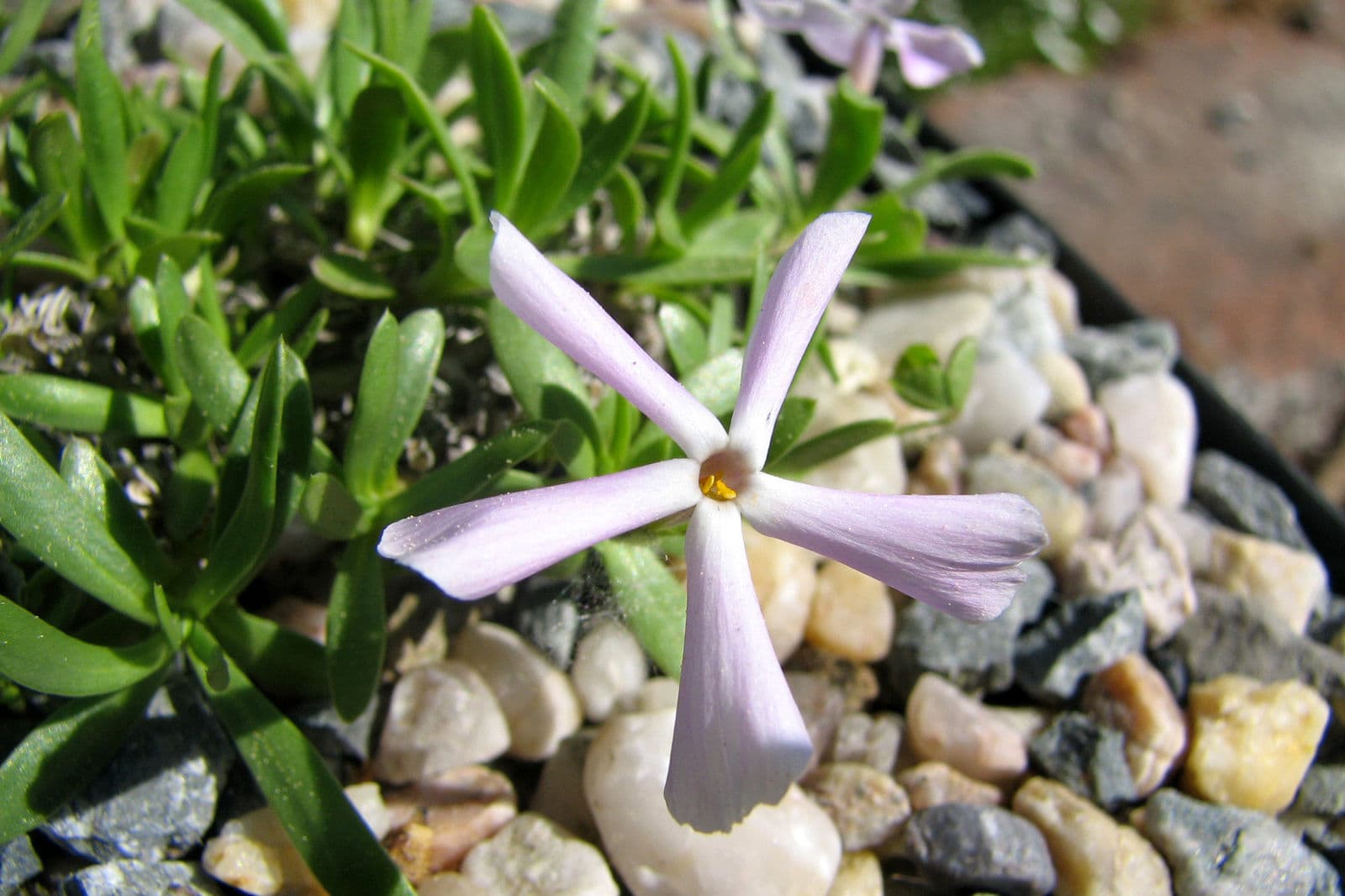
Phlox alyssifolia: complete guide to Alyssum-leaf Phlox
Phlox alyssifolia
Want to see Phlox alyssifolia: complete guide to Alyssum-leaf Phlox in your garden?
1 minute, no credit card
Overview
Phlox alyssifolia, commonly known as Alyssum-leaf Phlox or Blue Phlox, is a charming compact perennial native to the western mountains of North America. This beautiful plant naturally grows in the mountains from Alberta to Wyoming and South Dakota, where it thrives at elevation. It's an excellent choice for gardeners who appreciate alpine plants or want to create a mountainous front garden.
This small but mighty plant is known for its profuse flowering and compact growth form. It's particularly suited for rock gardens, alpine troughs, and as a border edging. Alyssum-leaf Phlox is beloved by alpine gardeners and mountain enthusiasts.
Appearance & Bloom
Phlox alyssifolia grows as an extremely compact plant, usually between 15 to 30 centimeters tall. It's a semi-shrubby or herbaceous plant with small, linear foliage. The growth is dense and compact, creating a perfectly shaped plant naturally.
Flowers appear in May and June in attractive clusters at branch tips. The flowers are small but extremely numerous, creating a spectacular blooming period. Flower color ranges from deep pink to bright pink and sometimes slightly blue-tinted. Each individual flower is about 1-2 centimeters across. The plant offers weeks of continuous blooming, making it a reliable decorator.
Ideal Location
Alyssum-leaf Phlox performs best in locations receiving full sun exposure. This plant needs at least six to eight hours of direct sunlight daily to bloom optimally. In shaded locations, flowering becomes less abundant.
The plant prefers good ventilation, as this helps prevent moisture problems. In warm, dry areas, some afternoon shade may be helpful. The plant is highly adaptable for rock gardens, scree beds, and other rocky environments.
Soil
Phlox alyssifolia has specific preference for very well-draining, gritty soil. This is essential for the success of this alpine plant. In clayey soil, this plant will likely fail. Best prepare an alpine compost with lots of coarse sand and small rock pieces.
The plant prefers moderately poor sandy loam. A neutral to slightly acidic pH range (6.0 to 7.5) is suitable. Avoid rich organic material and nearly fertile soil - this encourages excessive growth and disease susceptibility.
Watering
Once established, Phlox alyssifolia is fairly drought-tolerant thanks to its alpine origin. During the first growing season, however, water regularly - about once weekly if rainfall is insufficient. The plant prefers wet and dry cycles rather than constantly moist soil.
Once the plant becomes well-rooted, you can water much more sparingly. Only water during very dry periods. Ensure the soil never becomes waterlogged, especially not in winter, as this leads to rot.
Pruning
Pruning isn't always necessary for this compact plant. However, if the plant becomes unkempt after blooming, you can carefully cut it back to the desired shape. This also stimulates more compact growth.
Remove spent flower clusters after blooming to keep the plant neat. If the plant suffers frost damage in winter, you can remove damaged portions in spring.
Maintenance Calendar
Spring (March-May): In March, check the plant for winter damage. Begin regular watering in April as weather warms. If damaged portions are visible, remove them carefully.
Summer (June-August): This is peak bloom time. Provide regular water during dry periods. Prevent the plant from becoming overgrown.
Fall (September-October): Gradually reduce watering. Monitor the plant for rest preparation.
Winter (November-February): Minimal watering needed. Protect against extreme frost and wet conditions.
Free design
Want to see Phlox alyssifolia: complete guide to Alyssum-leaf Phlox in your garden? Make a free design now.
Winter Hardiness
Phlox alyssifolia is reliably winter hardy in most European climates. The plant withstands frost to about -20 degrees Celsius, but drainage in winter is much more important. Wet, freezing conditions are far more damaging than dry cold.
In regions with very wet winters, it's essential to add extra drainage. Plant in a raised portion of the garden or in a raised bed. This precaution greatly increases survival chances.
Companion Plants
Alyssum-leaf Phlox works beautifully with other alpine plants. Combine with Saxifraga, Dianthus, and other compact mountain plants. Silver-foliaged plants like Artemisia provide nice background.
Alpine grasses like Festuca and Carex form good underplanting. In rock gardens, combine this plant with rockery and scree bed plants. The plant attracts natural alpine garden enthusiasts.
Propagation
Alyssum-leaf Phlox can be propagated from seed, division, or cuttings, though division proves most reliable for this compact alpine plant. Collect seeds in July-August once seed capsules turn brown. Seeds require cold stratification; sow outdoors in a cold frame in October-November, or refrigerate for eight to ten weeks before sowing indoors in March at 15-18 degrees Celsius.
Division works well on plants two years or older. Carefully divide the cushion-forming plant in early spring (March) or early fall (September), ensuring each section retains adequate roots. Plant divisions directly, spaced 6-8 inches apart, into well-draining, gritty soil.
Cuttings from non-flowering shoots can be taken in June, about 2 inches long. Place them in a very well-draining mix of perlite and coarse sand. Rooting typically takes four to six weeks. Specialized alpine nurseries stock the gritty substrate ideal for these delicate cuttings. As a rock garden companion, Alyssum-leaf Phlox pairs nicely with the well-known groundcover cultivar Phlox subulata 'Emerald Blue', which blooms slightly earlier and offers an attractive color contrast.
Pests and Diseases
The primary threat to Alyssum-leaf Phlox is powdery mildew, a condition the entire phlox genus is prone to. White fungal patches on leaves often appear during humid, stagnant summers. Ensure generous spacing and good air circulation to prevent this; a sulfur-based fungicide can treat existing infections.
Spider mites can become problematic during hot, dry spells, especially in rock gardens where soil warms quickly. Regular water spraying keeps populations in check. Aphids occasionally appear on young shoots in spring.
Root rot poses the biggest winter threat, caused by prolonged wet soil. Ensure excellent drainage, potentially with a raised bed, to help this delicate alpine plant survive wet winters intact.
Conclusion
Alyssum-leaf Phlox is an absolute must-have for alpine gardeners and those loving compact, floriferous plants. With its bold colors and compact form, this plant brings significant ornamental value to any rocky garden. Provide full sun, very well-draining soil, and moderate water, and you'll have a happy alpine plant.
The plant is available at many specialized alpine nurseries and garden centers throughout Europe. Visit gardenworld.app for ideas about creating alpine gardens and rock gardens. You'll also find plant combinations and designs on gardenworld.app where this beautiful alpine phlox works perfectly.
Want to see Phlox alyssifolia: complete guide to Alyssum-leaf Phlox in your garden? Make a free design now.
Upload a photo, pick a style, and get a photorealistic design with plant list in under a minute.
10,000+ gardens designed already
No credit card required


Similar plants
Phlox richardsonii: complete guide to Richardson's Phlox
Phlox richardsonii
Richardson's phlox is an arctic bloomer exceptionally robust. Learn cultivation in extreme conditions and complete care guide.
Polemonium foliosissimum: complete guide
Polemonium foliosissimum
Polemonium foliosissimum is a vigorous Rocky Mountain perennial with blue-purple summer flowers that attract pollinators and thrive in borders.
Skunkweed: complete guide
Navarretia squarrosa
Everything about Navarretia squarrosa, California stinkweed - a pungent annual wildflower from the Pacific coast with small purple blooms.