Jerzy Opioła / CC BY-SA 4.0, via Wikimedia Commons
Baby rubber plant (Peperomia obtusifolia): complete guide
Peperomia obtusifolia
Want to see Baby rubber plant (Peperomia obtusifolia): complete guide in your garden?
Full design in HD: €7.99
Look after your Baby rubber plant with the GardenWorld app
Identify plants with your camera and get a care calendar with reminders for this plant.


Overview
The baby rubber plant, Peperomia obtusifolia, is one of those houseplants that quietly turns up everywhere: on kitchen windowsills, office desks and shelves lined with small pots. There is a good reason for that. It stays small, grows slowly but steadily, copes with dry indoor air and forgives the odd missed watering without fuss. The common name comes from its thick, glossy leaves, which look like those of a rubber plant shrunk to pocket size.
The species belongs to the pepper family, Piperaceae, the same family as the black pepper in your grinder. In the wild it grows in tropical forests across Central America, the Caribbean, northern South America and southern Florida.
Good news for cat and dog owners: the ASPCA lists Peperomia obtusifolia as non-toxic to pets. A cat that nibbles a leaf is not in danger, although chewing a lot of foliage may cause a mildly upset stomach.
Appearance and foliage
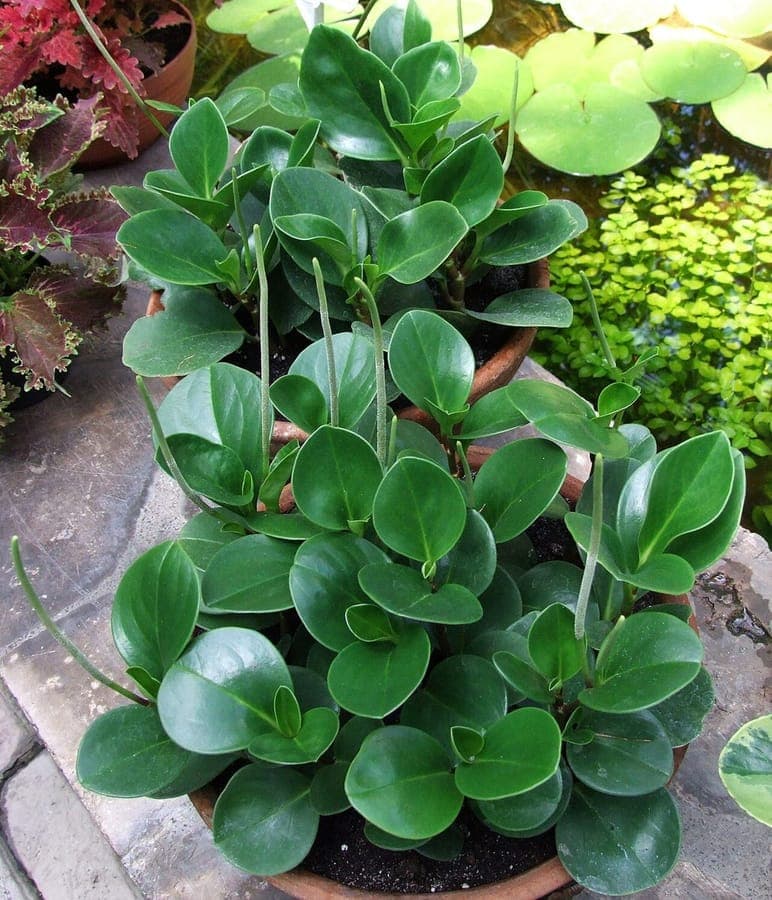
The leaves are the main attraction. They are obovate to almost round, 5 to 10 cm long, with a blunt or slightly notched tip, which is exactly what the name obtusifolia means: blunt-leaved. They are thick and fleshy because the plant stores water in them, and they shine as though freshly polished. The leaf stalks and stems are sturdy, green to faintly purplish, and they hold water reserves too.
Peperomia obtusifolia flowers fairly often indoors, mainly in spring and summer. Do not expect colour: it produces slim, upright spikes 8 to 12 cm long, greenish white to cream, rather like a mouse's tail. Each spike is made up of hundreds of tiny flowers without petals. You can leave them or snip them off once they turn brown; they take little out of the plant.
Position indoors
Light matters, but it needs to be soft. A spot 1 to 2 metres from an east- or west-facing window is ideal, and the plain green form also does reasonably well close to a north window. Behind a south-facing window, keep it out of direct midday sun, as the fleshy leaves develop pale or brown scorch marks. A sheer curtain or blind solves the problem.
A room temperature of 18 to 24 °C suits it perfectly, which is what most homes offer anyway. Avoid draughts from a frequently opened outside door and do not place it directly above a radiator. Dry air is hardly an issue because the thick leaves lose little moisture.
Potting mix and repotting
The roots are fine and relatively small. They need air and must never sit in a wet, compacted mass. Standard houseplant compost is often too heavy, so mix in about a third perlite, fine orchid bark or coir, or use a cactus and succulent mix topped up with some ordinary compost. A pot with a drainage hole is essential. Terracotta works well because it dries out faster, as you can see in the photo.
Do not repot too often. The plant likes to be slightly pot-bound and has only a modest root ball. Every two or three years in spring, move it to a pot 2 to 3 cm wider, no more.
Watering
This is where most baby rubber plants come to grief, nearly always from too much water. Water only when the top 2 to 3 cm of compost feels completely dry. In summer, in an average living room, that tends to mean roughly every 7 to 10 days; in winter more like every 2 to 3 weeks. If in doubt, wait a few more days. The leaves themselves are a useful guide: once they feel slightly softer and less firm, it is time.
When you do water, do it thoroughly until water runs from the base, then empty the saucer or outer pot after 15 minutes. Never leave the plant standing in water. Water at room temperature is best; tap water is fine and rainwater even better.
Feed sparingly: once a month from April to September with a half-strength liquid houseplant feed. The plant calendar at gardenworld.app shows month by month what your houseplants and garden plants need, so feeding does not slip your mind and you remember to stop in winter.
Free preview
Want to see Baby rubber plant (Peperomia obtusifolia): complete guide in your garden? Make a free preview of your design.
Pruning and propagation
Pruning is not strictly necessary, but it helps keep the plant full and compact. In spring, cut leggy, bare stems back to just above a leaf. Two new shoots usually appear there, so the plant branches out. Use a clean, sharp knife or small scissors, and remove any yellow or damaged leaves and spent flower spikes at the same time.
Whatever you cut off can be used straight away, because peperomia is among the easiest houseplants to propagate. Take a stem cutting 8 to 10 cm long with two or three leaves, remove the lowest leaf and let the cut end dry for a few hours. Then insert it into a small pot of moist cuttings compost or a mix of compost and perlite. Keep it lightly moist, not wet, in a warm, bright spot out of strong sun. Roots form in three to six weeks.
Care calendar
March-April: Growth picks up again. Cut back leggy stems, repot if needed and take cuttings. Start monthly half-strength feeding.
May-June: Growing season. Water as soon as the top few centimetres are dry. Flower spikes appear; remove them once they discolour. Watch out for strong midday sun through glass.
July-August: Check a little more often in hot spells, but always feel the compost before watering. A position slightly further from the window prevents scorch.
September-October: Last feed in September. Gradually reduce watering as the days shorten. Move the plant a little closer to the window if needed.
November-February: Rest period. Little water, no feed and no repotting. Keep it away from cold panes and draughts. Check now and then for mealybug or spider mite.
Temperature and winter
Peperomia obtusifolia is a tropical plant and not remotely frost hardy. Below 12 °C growth stops, and prolonged spells under 10 °C damage leaves and roots, especially if the compost is wet at the same time. Frost is fatal. The plant can go outside only from mid-June to late August, on a sheltered, shady patio, and only while nights stay above 15 °C.
In winter, 15 to 20 °C is ideal. The main pitfall is a windowsill above a radiator or against a cold pane: warm, dry air on one side and chill from the glass on the other. On frosty nights, move the plant back from the window. Because it barely grows in winter, it also uses very little water. Overwatering during the dark months is the main reason baby rubber plants fail to see spring.
Companion plants
Because Peperomia obtusifolia stays small, it fits neatly into a group of plants with similar needs. A classic neighbour is the Chinese money plant (Pilea peperomioides), which also likes bright light without harsh sun and compost that dries between waterings. Their rounded leaves complement each other nicely. The ZZ plant (Zamioculcas zamiifolia) is a tough partner for a slightly shadier spot and, like peperomia, shrugs off a forgotten watering.
The spider plant (Chlorophytum comosum) adds a playful contrast with its narrow striped leaves beside the round, glossy peperomia foliage. If you want a larger backdrop, place a Swiss cheese plant (Monstera deliciosa) behind it so the peperomia fills the foreground on a sideboard or sill. A painted-leaf begonia (Begonia rex) also looks good nearby, though it appreciates a little more humidity.
Do you have a window that looks out onto the garden? At gardenworld.app you can have a garden design made so that the planting outside picks up the green mood indoors, linking house and garden.
Final thoughts
Peperomia obtusifolia is a rewarding plant for anyone short of space or just starting out with houseplants. It stays compact, grows evenly, is safe around pets and is easy to propagate. The only thing it really dislikes is too much affection in the form of water. Stick to three rules: bright light without harsh midday sun, open compost in a pot that is not too large, and water only when the top layer is dry. Remember those and you will have a glossy, sturdy plant for years, along with plenty of cuttings to pass on to friends and family.
Frequently asked questions about Baby rubber plant
When and how do you prune Baby rubber plant?
Pruning is not strictly necessary, but it helps keep the plant full and compact. In spring, cut leggy, bare stems back to just above a leaf.
How much water does Baby rubber plant need?
This is where most baby rubber plants come to grief, nearly always from too much water. Water only when the top 2 to 3 cm of compost feels completely dry.

See it in your garden
See Baby rubber plant in your garden
One photo of your garden and a few questions. You see the result in about a minute.
Try it with a photoIdentify this plant in your own garden. Identify a plant
Similar plants
Chinese Money Plant: complete guide
Pilea peperomioides
Chinese Money Plant (Pilea peperomioides) is a trendy houseplant from China featuring distinctive round, mint-green leaves. This Instagram-famous plant has become a favorite for modern homes with its elegant appearance and easy-care nature.
ZZ plant: complete guide
Zamioculcas zamiifolia
Discover Zamioculcas zamiifolia, the easy-care money plant from Africa. Growing and care tips for indoors.
Chlorophytum comosum: complete guide
Chlorophytum comosum
Discover everything about Chlorophytum comosum (spider plant). Learn care requirements, propagation, location and maintenance for thriving indoor plants.
