
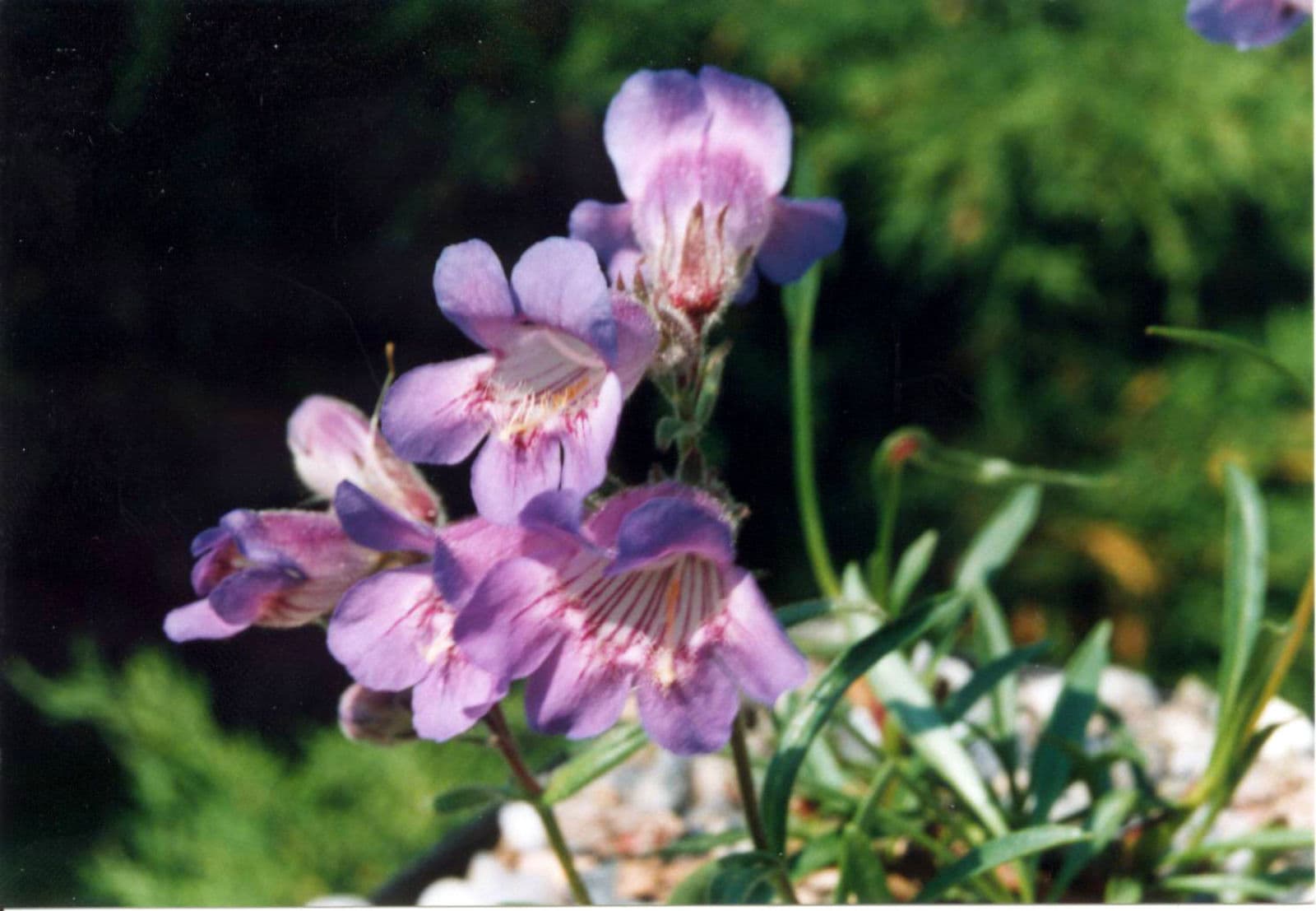
Penstemon gormanii: complete guide
Penstemon gormanii
Want to see Penstemon gormanii: complete guide in your garden?
1 minute, no credit card
Overview
Penstemon gormanii, known as Gorman's beardtongue, is one of the rarest and northernmost penstemons. This plant naturally grows only in the arctic part of North America, from Alaska through northern British Columbia and the Northwest Territories. It's a true rarity for the dedicated arctic and alpine plant lovers.
This plant is only for those with a true passion for arctic and extreme alpine plants. Growing conditions are challenging, but the reward is immense: a blooming beauty that virtually no one has in their garden. Penstemon gormanii symbolizes gardening in harmony with extreme landscapes.
When seeking professional guidance for extreme alpine garden design, gardenworld.app can help with plant recommendations. This article guides you through all aspects of growing this arctic jewel.
Appearance and Bloom
Penstemon gormanii grows as a compact, densely packed tussock or cushion, usually 10-20 cm tall with a diameter of 20-30 cm. This growth form is typical for arctic plants that need protection from extreme wind and cold. The plant forms thick mats of small, grayish-green leaves.
The flowers appear in purple to violet tones, sometimes with darker purple veins. They group themselves in compact spikes at the end of short stems growing from the cushion. The flowering period is short - approximately July through August - typical for arctic plants with limited growing seasons.
The foliage remains attractive year-round through its thick, leathery texture. This helps the plant withstand the extreme cold and dry conditions in its natural habitat.
Ideal Location
Full sun is essential. Even in arctic regions where sunlight hours are limited, this plant grows in the sunniest locations. In your garden, this means a spot with at least 8 hours of direct sunlight daily.
This plant also requires excellent water and air drainage. Wind is not bad - arctic plants appreciate it.
Soil
Soil must be exceptionally well-draining. The plant naturally occurs on arctic tundra where water drains rapidly. Heavy clay soils are fatal.
Add lots of gravel, stone chips, and sand to your garden soil. A mixture of 1 part garden soil, 1 part coarse sand, and 2 parts gravel is actually still not enough gravel. In some cases, pure gravel with minimal organic material works better.
The pH can be neutral to acidic. Nutrient-rich soil is not needed.
Watering
Once the plant is established, water very sparingly. Arctic plants are adapted to extremely dry conditions despite regular precipitation in their natural habitat (which slowly escapes the snow).
During the first growing season, water regularly until roots are well-established. After this first season, drastically limit watering.
Winter moisture is worse than winter cold. Therefore, ensure optimal drainage.
Pruning
Minimal pruning. The plant naturally grows in cushion form. Avoid removing material from the cushion's heart, as this can lead to slow decline.
Carefully remove spent flower spikes to improve appearance.
Maintenance Calendar
May-June: Plant begins to grow. Check for winter damage.
July-August: Flowering period. Ensure optimal air circulation.
September-October: Plant enters dormancy. Carefully remove dead foliage.
November-April: Winter rest. No maintenance needed.
Winter Hardiness
Penstemon gormanii is probably the hardiest penstemon. In its natural habitat, temperatures can drop below minus 40 degrees Celsius. The plant grows on arctic tundra.
This plant is not threatened by cold. The real danger is summer heat and excess moisture. In warm climates, this plant can be difficult to grow.
Free design
Want to see Penstemon gormanii: complete guide in your garden? Make a free design now.
Companion Plants
Penstemon gormanii grows well with other arctic alpines:
Other arctic penstemons: Very few species.
Arctic sedums: Many small sedums.
Arctic grasses: Small tussock forms.
Arctic groundcovers: Creeping birch types.
Mosses and lichens: In arctic gardens.
Propagation
Penstemon gormanii is extraordinarily difficult to propagate and is almost never sold as a ready-grown plant at garden centers. Seed is the only realistic route, usually obtained through specialized seed exchanges such as the Alpine Garden Society or through botanical gardens that maintain arctic collections.
The seed needs a long cold period of at least eight to twelve weeks just above freezing to mimic the natural arctic winter. Sow afterward in February in a very well-draining mix of sand and gravel, keeping the temperature low (around 10-15 degrees Celsius) during germination, which can be slow and irregular.
Cuttings and division are rarely attempted since the compact cushion form offers little room for this and the risk of losing the mother plant is high. Gardeners unable to obtain the true species can consider more available arctic relatives such as Penstemon davidsonii or the popular hybrid cultivars Garnet and Blackbird, which are easier to grow under ordinary garden conditions.
Pests and Diseases
Because Penstemon gormanii grows almost exclusively in extremely well-draining, poor soil, fungal diseases caused by moisture are the greatest risk when cultivating it outside its natural habitat. Root rot occurs quickly as soon as the soil becomes even temporarily waterlogged, especially in temperate climates with wet winters.
Slugs are rarely a problem due to the compact, dense growth habit of the cushion, which offers little accessible foliage. Aphids occasionally appear on the short flower stems in July, but are seldom serious.
The greatest danger to this plant is not a specific disease but simply too much heat and moisture combined, which leads to slow decline of the cushion from within. Good air circulation and strictly avoiding summer moisture around the crown are essential for survival outside arctic conditions. Gardeners in warm regions sometimes grow the species in alpine troughs that can be moved to shaded, cooler spots during peak summer heat, extending its survival considerably.
Even among experienced rock garden enthusiasts, Penstemon gormanii is considered one of the most difficult species to keep alive outside its arctic home range. The combination of an extremely short growing period of barely eight to ten weeks between June and August, combined with the need for near-permanent dryness around the crown, makes it best suited to dedicated alpine collectors with a specially built tufa bed or raised trough. Many growers report that a simple cold frame, left open on all but the harshest days, comes closest to replicating the airy, well-ventilated conditions the plant expects in the wild, and helps prevent the stagnant humidity that otherwise proves fatal within a single season.
Conclusion
Penstemon gormanii is not for everyone - it requires certain growing conditions and can be difficult in warm or wet climates. But for those who appreciate extreme alpine gardening, this is a beautiful jewel. It's a plant choice that testifies to true love for arctic flora.
With gardenworld.app, you can find customized garden designs that embrace extreme alpine gardening.
Want to see Penstemon gormanii: complete guide in your garden? Make a free design now.
Upload a photo, pick a style, and get a photorealistic design with plant list in under a minute.
10,000+ gardens designed already
No credit card required


Similar plants
White Beardtongue: complete guide
Penstemon albidus
Discover white beardtongue (Penstemon albidus) - elegant perennial with white to cream flowers. Drought-resistant, perfect for prairie and dry gardens.
Longsepal Beardtongue: complete guide
Penstemon calycosus
Discover longsepal beardtongue (Penstemon calycosus) - beautiful perennial with lilac-blue flowers. For partial shade and moist soil. Ideal for naturalized.
Penstemon cusickii: complete guide
Penstemon cusickii
Discover Cusick's beardtongue, a compact alpine flowering plant with violet-pink blooms. Perfect choice for rock gardens and water-wise landscaping.