
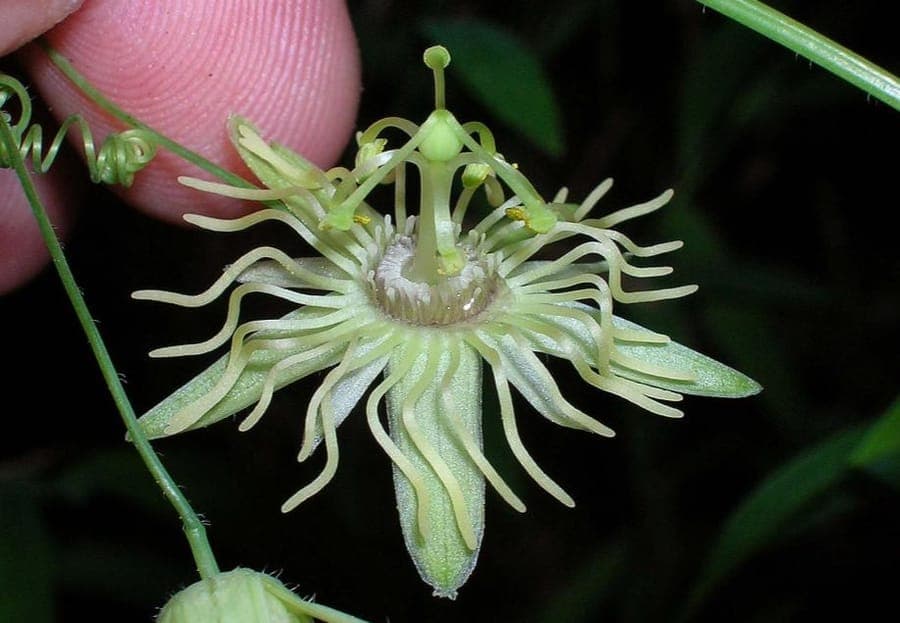
TheAlphaWolf / CC BY-SA 3.0, via Wikimedia Commons
Yellow passionflower: complete guide
Passiflora lutea
Want to see Yellow passionflower: complete guide in your garden?
1 minute, no credit card
Overview
The yellow passionflower (Passiflora lutea) is a native American climbing plant that has proven to be a highly ornamental addition to warm-temperate gardens. Given its spectacular flowers with bright yellow color and intricate structure, this plant is a true eye-catcher. The plant grows as a vigorous climber that lends itself perfectly to pergolas, garden walls, and focal points.
Appearance and bloom
Passiflora lutea grows to approximately 3-4 meters long with thin, three-lobed leaves. The flowers are the real stars: they appear from June to September in yellow with pink or red accents. Each flower has the characteristic passionflower structure with radially arranged filaments (corona). After flowering, modest green fruits follow. The green foliage remains attractive throughout the season, ensuring continuity.
Ideal location
Yellow passionflower needs sun for optimal flowering. Plant it in a location with at least 6-8 hours of direct sunlight per day. A warm, protected position is preferred, especially in cooler regions where it can benefit from reflected warmth from walls. In warm areas, it can also do well with some afternoon shade.
Soil
Well-draining soil is essential, as yellow passionflower dislikes wet feet. A mixture of garden soil with sand or gravel ensures optimal drainage. Add organic material when planting. The pH can range from 4.5 to 8.0 (very flexible). Ensure water does not accumulate.
Watering
During the growing season (May to October), keep soil regularly moist, especially during warm periods. Ensure water never stands. In winter, reduce watering significantly. Check moisture regularly, as drought can cause leaf drop.
Free design
Want to see Yellow passionflower: complete guide in your garden? Make a free design now.
Pruning
Regular pruning keeps the plant in shape and promotes denser growth. Pruning can be done after flowering in fall or early spring. Remove dead wood and overlapping shoots. The plant tolerates aggressive pruning well and readily regrows stronger.
Maintenance calendar
May-June: Preparation for blooming period, extra watering, begin weekly feeding. July-August: Feed every two weeks, water regularly, enjoy flowers. September-October: Blooming ends, gradually reduce watering, stop feeding. November-April: Minimal maintenance, little to no water, frost protection.
Winter hardiness
Yellow passionflower is not winter hardy in cold areas. Below -5 degrees Celsius, above-ground growth dies. In warm climates (zone 8 and warmer), it can overwinter outdoors. In colder regions, you must bring it to a greenhouse or protected location. Good news: even if it freezes, it often recovers from the roots in spring.
Companion plants
Combine yellow passionflower with other heat-loving climbers such as clematis or jasmine. At the base, you can plant low-growing summer-flowering species. Ensure the base of the plant is not too densely planted.
Closing
The yellow passionflower is a stunning addition to warm gardens where spectacular flowers are desired. Its vigorous growing nature, attractive foliage, and intricate flowers make it a true showstopper. With good drainage and regular feeding, you will enjoy years of tropical blooms. Buy a healthy plant and position it in a sunny spot. Complete your garden with gardenworld.app where you can perfectly position these types of plants in your garden design.
Visit gardenworld.app for a complete garden design with exotic climbing plants.
Want to see Yellow passionflower: complete guide in your garden? Make a free design now.
Upload a photo, pick a style, and get a photorealistic design with plant list in under a minute.
No credit card required


Similar plants
Passiflora antioquiensis: complete guide
Passiflora antioquiensis
Passiflora antioquiensis is a Colombian banana passionflower with hanging pink blooms. Discover trellising, soil and winter care.
Purple passionflower: complete guide to growing Passiflora incarnata
Passiflora incarnata
Full growing guide for Passiflora incarnata, the hardy purple passionflower for zones 5-9. Planting, pruning, winter care and companion plants included.
Passiflora tenuiloba: complete guide
Passiflora tenuiloba
Birdwing passionflower blooms exotically and grows rapidly. Learn how to cultivate this passion flower in your garden as a vine or container plant.