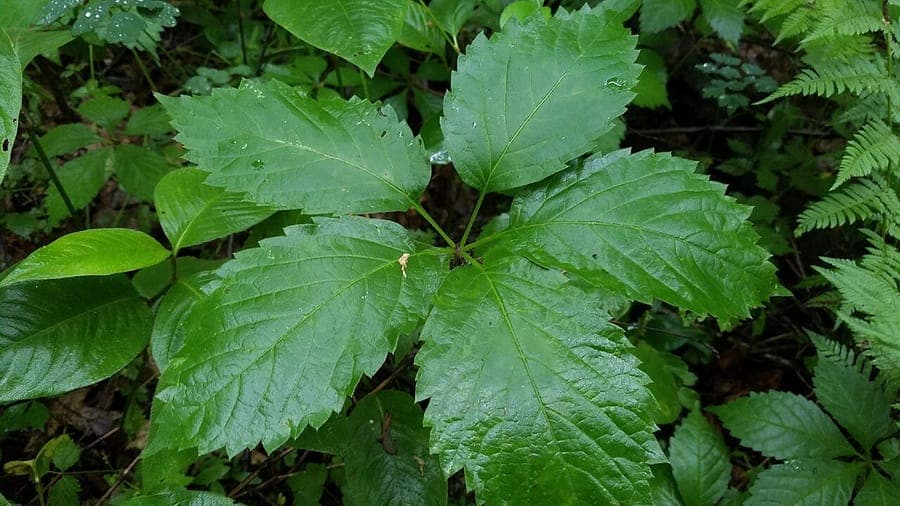
cassi saari / CC BY-SA 4.0, via Wikimedia Commons
False Virginia creeper: complete guide
Parthenocissus inserta
Want to see False Virginia creeper: complete guide in your garden?
Full design in HD: €7.99
Look after your False Virginia creeper with the GardenWorld app
Identify plants with your camera and get a care calendar with reminders for this plant.


Overview
False Virginia creeper (Parthenocissus inserta), also called common jungfernrebe or common wild vine, is a fast-growing climbing plant from the Vitaceae family. This is the same family as grapes and true grapevine. False Virginia creeper is native to North America but has become widely naturalized in Europe. With its rapid growth, strong grip and beautiful fall coloration, this plant is ideal for covering walls, fences and pergolas.
Appearance and Bloom
False Virginia creeper grows as a strong climbing plant with numerous tendril-like ends that grip surfaces. The leaves are hand-shaped, divided into usually five small leaflets. During the growing season, the leaves are dark green, but in fall they change to gold, orange and red. The flowers are small and inconspicuous, greenish in color. After flowering, small blue berries form that are eaten by birds. Most spectacular is the fall color change.
Ideal Location
False Virginia creeper can grow from full sun to deep shade, although full sun provides the most beautiful fall color. Plant these climbers against south or west walls for maximum fall effects. The plant is flexible and can grow on virtually any surface: walls, fences, trellises, pergolas, trees and even rock formations. In half shade, the plant will grow more slowly but still thrive.
Soil
False Virginia creeper is not fussy about soil. The plant grows in almost all soil types, from sand to clay. Well-drained soil helps, but the plant can also tolerate wetter conditions than many other climbing plants. The plant accepts acidic soil to alkaline soil. Soil nutrients are beneficial but not required. Once established, the plant is very independent.
Free preview
Want to see False Virginia creeper: complete guide in your garden? Make a free preview of your design.
Watering
During the first growing season after planting, water regularly until the plant is well established. After that, the plant can tolerate much dryness, especially in temperate climates with normal rainfall. During very dry periods, occasional watering can help, especially for young plants. Once established, supplemental water is usually not needed in temperate regions.
Pruning
False Virginia creeper requires pruning to keep it under control, especially because it grows so fast. Cut back to desired size in early fall. Remove dead wood in early spring. Check annually that the plant is not growing in unwanted places, especially along gutters or roofs. In some locations, growth-limiting pruning may be needed to prevent damage to structures.
Maintenance Calendar
Spring: Prune frost-damaged branches. Summer: Monitor growth and prune as needed. Fall: Enjoy the color and do heavy pruning after first frost. Winter: The plant is leafless in temperate climates.
Winter Hardiness
False Virginia creeper is very hardy and can tolerate temperatures down to about -25 to -30 degrees Celsius. The plant is native to North America where winters can be severe. This makes it excellent for temperate and cooler climates. Protection is not needed except in extremely cold areas.
Companion Plants
False Virginia creeper works well as a standalone climber on walls and structures. It can be combined with other climbing plants such as ivy (Hedera) for more vertical biodiversity. Plant at the base of trees for interesting texture contrasts. Ground plants feel comfortable at the foot of the climbing plant where shade is provided.
Closing
False Virginia creeper is a spectacular climbing plant for fast coverage and dramatic fall effects. With its robustness, adaptability and minimal maintenance needs, it's a perfect choice for gardens with large vertical spaces. For more plant advice and designs, visit gardenworld.app/nl and gardenworld.app/en.
Frequently asked questions about False Virginia creeper
Is False Virginia creeper winter hardy?
False Virginia creeper is very hardy and can tolerate temperatures down to about -25 to -30 degrees Celsius. The plant is native to North America where winters can be severe.
When and how do you prune False Virginia creeper?
False Virginia creeper requires pruning to keep it under control, especially because it grows so fast. Cut back to desired size in early fall.
How much water does False Virginia creeper need?
During the first growing season after planting, water regularly until the plant is well established. After that, the plant can tolerate much dryness, especially in temperate climates with normal rainfall.
Where does False Virginia creeper grow best?
False Virginia creeper can grow from full sun to deep shade, although full sun provides the most beautiful fall color. Plant these climbers against south or west walls for maximum fall effects.
What soil does False Virginia creeper need?
False Virginia creeper is not fussy about soil. The plant grows in almost all soil types, from sand to clay.

See it in your garden
See False Virginia creeper in your garden
One photo of your garden and a few questions. You see the result in about a minute.
Try it with a photoIdentify this plant in your own garden. Identify a plant
Similar plants
Catbird grape: complete guide
Vitis palmata
Discover the Catbird grape (Vitis palmata), a hardy wild grapevine that draws songbirds. Learn about location, pruning, and year-round care.
Monkshoodvine: complete guide
Ampelopsis aconitifolia
Discover Monkshoodvine. Learn how to care for this plant in your garden.
Vitis girdiana: complete guide to this resilient desert wild grape
Vitis girdiana
Discover Vitis girdiana, the Desert Wild Grape: a resilient native vine from California and Mexico. Perfect for dry, warm gardens and pergola screening.
