
Catbird grape: complete guide
Vitis palmata
Want to see Catbird grape: complete guide in your garden?
1 minute, no credit card
Overview
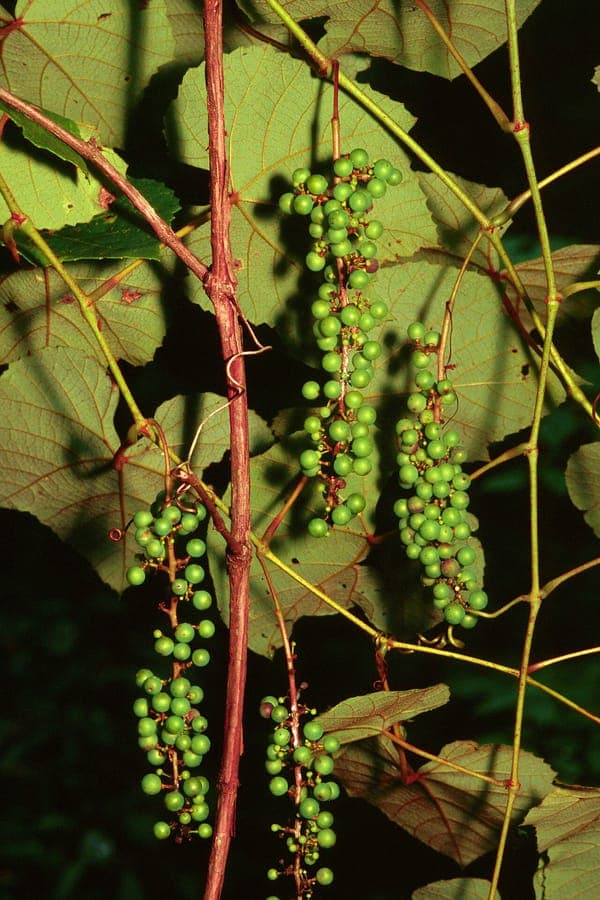
The Catbird grape (Vitis palmata) is an elegant, deciduous vine from the grape family (Vitaceae), native to the south-eastern United States. From Texas and Oklahoma to Florida and Georgia, this wild grape grows along riverbanks, swamp margins and moist woodland edges, climbing high into trees and shrubs by means of slender tendrils. Its botanical name palmata refers to the hand-shaped, lobed leaves, one of the most recognisable features of this species. Unlike the familiar wine grape (Vitis vinifera), Vitis palmata is not grown for its fruit but valued for its graceful form, its rapid coverage of fences and pergolas, and the way its small black berries attract songbirds such as the grey catbird, the source of its English common name.
Anyone looking for a tough, native-inspired climber for a wildlife garden can bring an authentic slice of North American woodland to the back yard with Vitis palmata. At gardenworld.app we see growing interest in lesser-known, ecologically valuable climbers like this one, precisely because they demand little maintenance while offering shelter and food for birds and insects. Although the species rarely sits on the shelf at mainstream garden centres, it can be sourced through specialist native-plant nurseries, and with a little patience it develops into a handsome, natural green structure.
Appearance and bloom
Vitis palmata is a woody, multi-stemmed climber that clings to its surroundings using thin tendrils. It grows at a moderate pace and can add several metres of new growth in a single season once established. The leaves are fresh green, finely textured and deeply three- to five-lobed, giving the plant an ornamental, almost sculptural silhouette reminiscent of a wild form of a classic grapevine. In late spring and early summer, typically around May and June, small, inconspicuous white flowers appear in clustered inflorescences. They are not showy, but they are fragrant and highly attractive to bees and other pollinators.
After pollination, the characteristic small, glossy black berries develop in late summer, gathered in loose clusters. These fruits are conspicuous enough to draw birds from a distance, and a heavily laden vine in September is a genuine spectacle of chattering birdlife. The autumn foliage colour is worthwhile too: the green leaves turn yellowish-brown and occasionally take on a faint reddish tint before dropping, after which the bare, twisting tendrils form a graphic winter feature in the garden.
Ideal location
This climber is happiest in a sunny to lightly shaded spot, ideally with at least five to six hours of direct sunlight a day for the best flowering and fruit set. In its natural habitat, Vitis palmata often grows at woodland edges, climbing towards the light, so a position against a fence, pergola, tree or tall trellis matches its natural behaviour well. Give the plant plenty of support to climb: a sturdy lattice, wires or a robust pergola are ideal, since the tendrils grip firmly and the plant can put on considerable size once well rooted.
Allow enough room around the plant, since Vitis palmata can reach a spread of three to five metres in full growth. Avoid fully exposed, windy sites with no shelter at all, as young shoots can snap there. A position against a south- or east-facing wall, or beside a sturdy tree, offers the perfect combination of light and shelter.
Soil
Vitis palmata is not particularly fussy about soil, but performs best in a slightly acidic to neutral medium with a pH between 5.5 and 7.0. Well-drained, moderately moisture-retentive ground is ideal; the plant naturally grows in riverbeds and along banks, so some soil moisture is appreciated, as long as there is no prolonged waterlogging. Heavy clay can be improved by working in generous compost and coarse sand, so the roots avoid sitting in wet, oxygen-poor ground.
When planting, dig a hole roughly twice as wide as the root ball. Work compost or well-rotted manure into the excavated soil before returning the climber to the hole. A 5 to 7 cm layer of mulch around the base, kept clear of the stem itself, keeps the ground moist and suppresses weeds, which matters especially during the first growing season for good establishment.
Free design
Want to see Catbird grape: complete guide in your garden? Make a free design now.
Watering
In the first year after planting, Vitis palmata needs regular watering to build a deep root system. Give the plant a thorough soak twice a week, particularly during hot, dry stretches in June, July and August. Check the soil by pushing a finger a few centimetres in; if it feels dry, it is time to water. Once the plant is well established after a year or two, it becomes considerably more drought-tolerant, and weekly watering during longer dry spells is generally enough.
Avoid overwatering, since consistently waterlogged soil can cause root rot, particularly in heavier ground. In autumn and winter, additional watering is rarely needed unless there is an exceptionally dry spell without rainfall. A mulch layer helps the soil retain moisture more effectively and considerably reduces how often you need to water.
Pruning
Prune Vitis palmata preferably in late winter, between January and early March, while the plant is still dormant and sap has not yet started to rise. Pruning during this window prevents excessive sap loss from the cuts. Remove dead, damaged or overly congested growth and thin the plant to maintain good light penetration and air circulation between the stems, which helps prevent fungal disease.
For good fruit set, cut back the previous season's side shoots to two or three buds, similar to the pruning technique used for cultivated grapes. Young plants in their first two to three years are best pruned lightly to allow a strong main framework of stems to develop. Always use clean, sharp pruning tools to prevent infection, and remove cut material from the ground so fungal spores are not left behind.
Maintenance calendar
January/February: Best window for structural pruning while the plant is still dormant. March/April: New shoots appear; tie them to the support and apply a first organic feed. May/June: Flowering period; check for aphids and mildew, water during dry spells. July/August: Fruit set; keep the soil evenly moist and thin out excess growth. September: The black berries ripen and attract birds; enjoy the spectacle. October/November: Autumn leaf colour; gradually reduce watering. December: Winter dormancy; check the support structure is sturdy ahead of winter storms.
Winter hardiness
Vitis palmata is hardy in USDA zones 6 to 9, which covers much of north-western Europe, although severe, prolonged frost below minus fifteen degrees Celsius can damage young shoots in exceptional winters. Mature plants with a solid, woody main framework are considerably more frost-resistant than young specimens. Protect young plantings in their first two winters with a thick layer of mulch around the base and, if needed, some frost fleece around the base of the stem when severe frost is forecast.
Choose a somewhat sheltered spot away from biting north-easterly wind to limit damage to shoots that have not yet fully woodened. Once mature, this wild grape is a reliable, hardy addition that asks for little extra care during the cold months.
Companion plants
Vitis palmata pairs beautifully with other native-inspired planting in a wildlife border. Consider combining it with butterfly bush (Buddleja), elder (Sambucus) or honeysuckle (Lonicera) for a layered, bird-friendly hedge. At the base of the climber, shade-loving perennials such as ferns, lungwort (Pulmonaria) or hostas can form an attractive green carpet that camouflages the bare lower part of the vine.
For a more formal approach, combine the plant with ornamental shrubs that also offer autumn colour, such as spirea (Spiraea) or viburnum (Viburnum). A trip to a well-stocked garden centre for sturdy trellis, compost and a good organic fertiliser lays the foundation for a healthy start, even though you will need to source the plant itself through a specialist nursery.
Closing
Vitis palmata is not a plant for gardeners chasing a showy, flower-filled climber, but it is a surprisingly valuable choice for anyone wanting to shape their garden as a living ecosystem. The combination of fast growth, elegantly lobed foliage and an autumn harvest that draws birds into the garden makes this wild grape a unique addition to any natural planting scheme.
With the right position, moderately moisture-retentive soil and annual winter pruning, Vitis palmata grows into a robust, low-maintenance climber that lasts for decades. Discover on gardenworld.app how to work this distinctive vine into a complete garden design, tuned to both aesthetics and biodiversity.
Want to see Catbird grape: complete guide in your garden? Make a free design now.
Upload a photo, pick a style, and get a photorealistic design with plant list in under a minute.
10,000+ gardens designed already
No credit card required


Similar plants
Riverbank Grape (Vitis riparia): complete guide
Vitis riparia
Discover the riverbank grape, a vigorous climbing vine for pergolas and screens. Low-maintenance, hardy, and perfect for natural garden designs with evergreen privacy screening.
Summer grape: complete guide
Vitis aestivalis
Vitis aestivalis is a vigorous American climber with dark blue-black fruit and dramatic foliage. Perfect for pergolas, trellises, and wildlife gardens.
Frost grape: complete guide
Vitis vulpina
Frost grape (Vitis vulpina) is a hardy, fragrant American vine with sweet-scented flowers, dark berries, and golden autumn foliage.