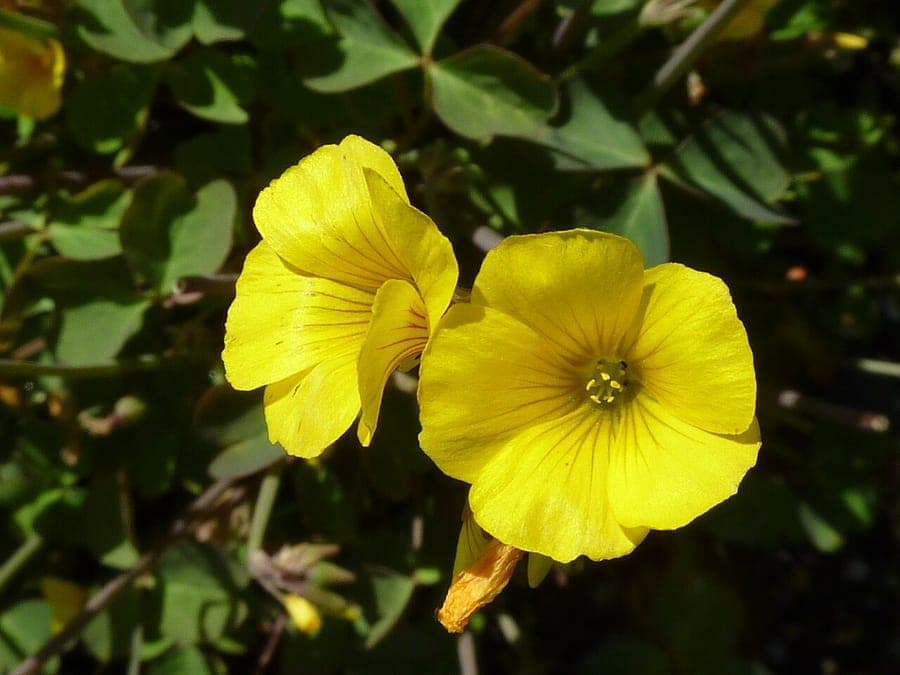
Magnus Manske / CC BY-SA 3.0, via Wikimedia Commons
Oxalis valdiviensis: complete guide
Oxalis valdiviensis
Want to see Oxalis valdiviensis: complete guide in your garden?
Full design in HD: €7.99
Look after your Oxalis valdiviensis with the GardenWorld app
Identify plants with your camera and get a care calendar with reminders for this plant.


Overview
Oxalis valdiviensis, known as Chilean yellow-sorrel, is an attractive flowering plant from South America. This plant belongs to the Oxalidaceae family and is valuable for gardens seeking yellow accents. It grows in temperate mountain regions of Chile and Argentina, indicating that it is a relatively cool-loving plant.
Appearance & bloom
This plant grows as a low, clumping specimen with clover-like, trifoliate leaves that are sometimes reddish-tinted. The flowers are bright yellow, small but abundant and appear throughout the growing season. The plant typically reaches 20-30 cm height. The blooms contrast beautifully against the green foliage.
Ideal location
Oxalis valdiviensis grows best in full sun to light partial shade. In very hot climates, it appreciates afternoon shade. The plant loves well-drained locations. Plant it where sunlight can reach but not in full shade.
Soil
Provide well-draining, light soil. This plant tolerates poor soil well and even grows in impoverished earth. For optimal growth, add some compost. pH 7.0-7.5 is ideal. Heavy clay soil should be broken up with sand.
Free preview
Want to see Oxalis valdiviensis: complete guide in your garden? Make a free preview of your design.
Watering
Oxalis valdiviensis is quite drought-tolerant once established. Water regularly during the establishment period, then moderate moisture needs. Excessive water can cause root rot. In dry seasons you can provide extra water, but the plant prefers not too wet.
Pruning
Minimal pruning needed. Remove dead flowers to stimulate more blooming. After winter you can cut back withered portions. Plant is naturally compact and clump-forming.
Maintenance calendar
Spring: Plant begins to grow, water regularly. Summer: Maintenance care, water in dry periods. Fall: Bloom continues, water normally. Winter: In warm zones plant grows through, in cold zones plant dormant.
Winter hardiness
This plant can tolerate mild frost down to approximately -5 to -10C. Winter protection is recommended in cold climates. Mulch around plants or move potted specimens indoors. In Mediterranean climates it can survive outdoors.
Companion plants
Oxalis valdiviensis grows well with other full-sun growers like sedums and other Chilean mountain plants. Low-growing, so good for front of borders.
Closing
Oxalis valdiviensis brings cheerful yellow to your garden with minimal maintenance. This Chilean plant grows beautifully in well-drained, sunny spots. Enjoy its flowers and characteristic foliage. For more plant advice visit gardenworld.app!
Frequently asked questions about Oxalis valdiviensis
Is Oxalis valdiviensis winter hardy?
This plant can tolerate mild frost down to approximately -5 to -10C. Winter protection is recommended in cold climates.
When and how do you prune Oxalis valdiviensis?
Minimal pruning needed. Remove dead flowers to stimulate more blooming.
How much water does Oxalis valdiviensis need?
Oxalis valdiviensis is quite drought-tolerant once established. Water regularly during the establishment period, then moderate moisture needs.
Where does Oxalis valdiviensis grow best?
Oxalis valdiviensis grows best in full sun to light partial shade. In very hot climates, it appreciates afternoon shade.
What soil does Oxalis valdiviensis need?
Provide well-draining, light soil. This plant tolerates poor soil well and even grows in impoverished earth.

See it in your garden
See Oxalis valdiviensis in your garden
One photo of your garden and a few questions. You see the result in about a minute.
Try it with a photoIdentify this plant in your own garden. Identify a plant
Similar plants
Purple shamrock: complete guide
Oxalis triangularis
Everything about purple shamrock (Oxalis triangularis): light, watering, planting the rhizomes, dormancy, overwintering and why it is toxic to cats and dogs.
Oxalis incarnata: complete guide
Oxalis incarnata
Discover the charming lilac oxalis for your front garden. Full growing guide, care tips and design ideas for this delicate summer bloomer.
Lifeplant: complete guide
Biophytum sensitivum
Lifeplant is a fascinating houseplant with sensitive leaves that fold when touched. Discover how to grow this tropical wonder and where to find it.
