
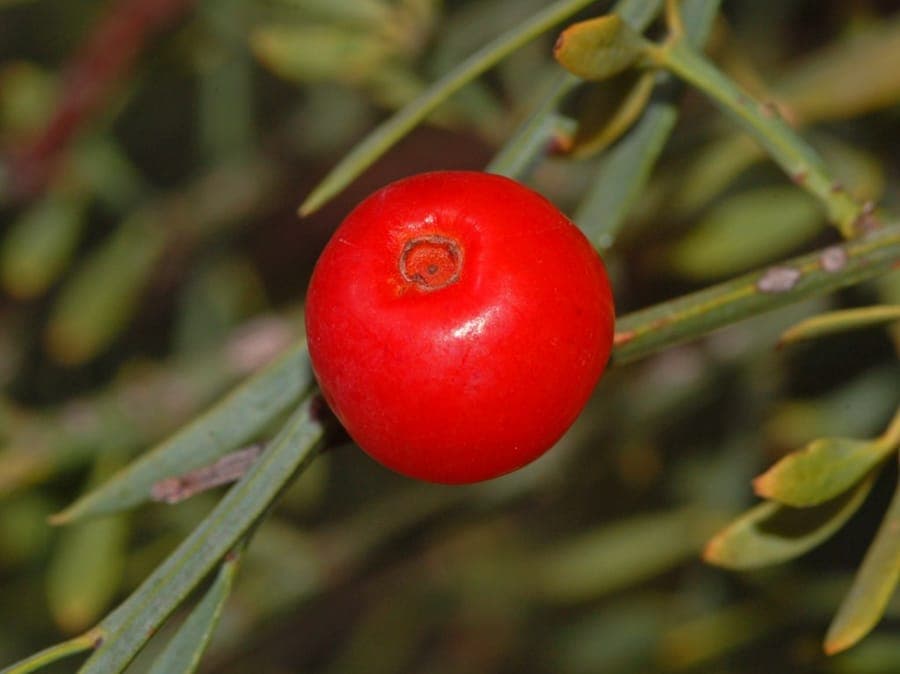
Hectonichus / CC BY-SA 3.0, via Wikimedia Commons
White Osyris: complete guide
Osyris alba
Want to see White Osyris: complete guide in your garden?
1 minute, no credit card
Overview
The White Osyris (Osyris alba), also called Poet's Cassia, is a Mediterranean shrub found from Portugal to the Middle East. This plant is renowned for its fine, grey-green foliage and red berry-like fruits that provide food for birds. It is a semi-parasitic plant that collaborates with other plants for nutrition.
Osyris alba belongs to the Family Santalaceae and is perfect for gardeners wanting to create bird-friendly gardens. The plant thrives in dry, stony soils where little else grows.
Appearance and Bloom
The plant reaches 1 to 2 meters tall, sometimes taller, with narrow, grey-green, almost needle-like leaves. The foliage is highly elegant and fine-textured. The flowers are small and inconspicuous, yellow-green, appearing May to July.
After flowering, the plant produces red, approximately 8-millimeter fruits very attractive to birds. These berries grow along thin, woody branches. The fruits ripen in October-November and remain long on the plant.
This is a semi-parasite: the plant lives partially at the expense of root connections to neighboring plants. This does not strongly harm neighbors.
Ideal Location
Osyris alba grows best in warm, sunny spots with full sun exposure. The plant tolerates partial shade but flowers and fruits better with plenty of sun. Plant in open, windier locations.
The plant is very drought-tolerant and endures full desiccation for long. Perfect for stony slopes, dry rock faces, or gardens with limited water availability. The plant also tolerates sea wind and salt.
On gardenworld.app we suggest using this plant in dry, Mediterranean garden corners. Perfect on south-facing terrain.
Soil
Osyris alba grows on any soil but prefers slightly alkaline, mineral-rich ground. The plant tolerates chalky soils well. The plant also tolerates very poor soils where limited nutrition is available.
The ideal pH range is 7.0 to 7.5. Since the plant lives semi-parasitically, it needs no extra fertilizer. The plant demands no special soil preparation.
When planting in pots, use standard potting soil with extra sand or gravel for drainage.
Free design
Want to see White Osyris: complete guide in your garden? Make a free design now.
Watering
Osyris alba is very drought-tolerant and needs hardly supplemental water after planting. During the first growing season water regularly until well established. After that, virtually no extra water needed.
The plant tolerates extremely dry conditions. Even in prolonged drought it manages well. Water only during severe drought. The plant prefers dry to normal moist conditions.
On gardenworld.app we recommend not frequently misting this plant. The plant grows better under dry conditions.
Pruning
Osyris alba needs no pruning but you can shape it as desired. Prune in summer after flowering. Remove dead branches carefully. This stimulates denser growth.
The plant can be cut to about half height to stimulate more compact formation. Pruning after fruit-bearing is also possible.
Maintenance Calendar
January-February: Monitor for damage. No extra care needed. March-April: Growth begins. Water as needed. May-July: Bloom. Enjoy the yellow flowers. August-October: Fruits ripen. Observe bird activity.
Winter Hardiness
Osyris alba is hardy to approximately -5 degrees Celsius. In moderately cold regions it can stay outside with protection. In very cold areas grow in pots and bring indoors.
The plant thrives better in Mediterranean and warm temperate climates. In Benelux region it is better planted in very protected positions, close against south-facing house walls.
Companion Plants
Combine Osyris alba with other Mediterranean, drought-tolerant shrubs such as Cistus, Lavandula, Rosmarinus, and other grey-leaved plants. These combinations create beautiful Mediterranean garden scapes.
On gardenworld.app we recommend planting this plant in groups for better bird attraction. Ensure minimum spacing of 1 to 1.5 meters between plants.
Closing
The White Osyris is a beautiful, bird-friendly shrub for those with warm, dry garden spots. Although it makes specific location demands, it grows in suitable conditions practically by itself. With proper placement you will enjoy fine foliage and red berries.
Find this plant through specialist nurseries for best selection. Start creating your Mediterranean bird garden on gardenworld.app today!
Want to see White Osyris: complete guide in your garden? Make a free design now.
Upload a photo, pick a style, and get a photorealistic design with plant list in under a minute.
No credit card required


Similar plants
Juniper Dwarf Mistletoe: complete guide
Arceuthobium oxycedri
Full profile of Arceuthobium oxycedri, the juniper dwarf mistletoe: biology, host range, identification, and garden management advice.
Meadow Flax: complete guide
Thesium pyrenaicum
Cultivate Meadow Flax (Thesium pyrenaicum): delicate alpine plant, white flowers, acid soil preference, sparse nutrition, and Pyrenean mountain garden care.
Thesium humile: complete guide
Thesium humile
Discover Low Bastard Toadflax, a modest herb with fine foliage and tiny white flowers. Perfect wild plant for Mediterranean drought gardens.