
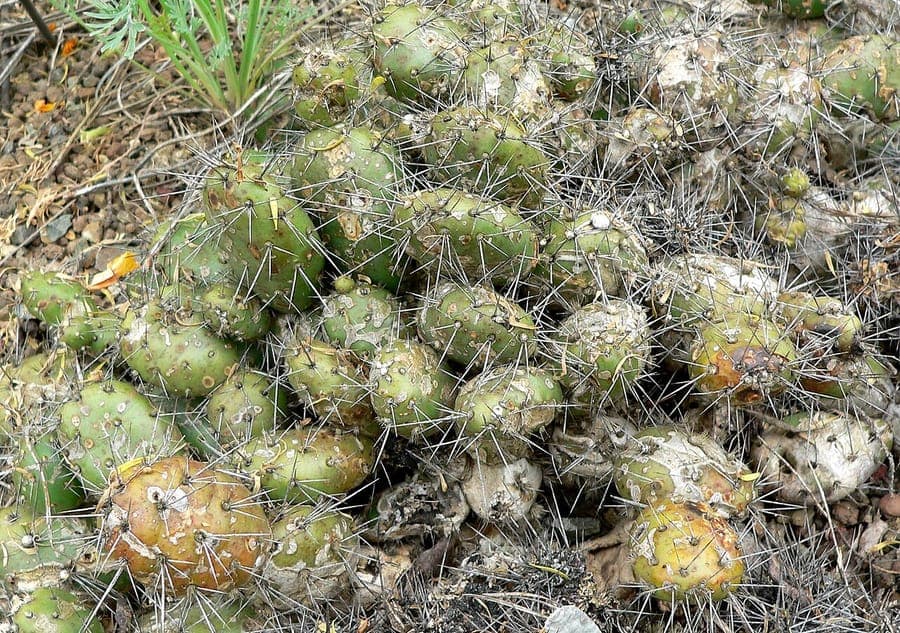
Stan Shebs / CC BY-SA 3.0, via Wikimedia Commons
Opuntia fragilis: complete guide
Opuntia fragilis
Want to see Opuntia fragilis: complete guide in your garden?
1 minute, no credit card
Overview
The brittle cactus (Opuntia fragilis), also called brittle prickly-pear, jumping cactus, or little pricklypear, is a remarkable dwarf prickly pear species native to Canada and the northern United States. What makes this species exceptional is its outstanding cold hardiness compared to tropical cactus species.
This compact, prolifically branching plant produces small, rigid stem segments that break apart easily - hence the Latin name fragilis. This characteristic, combined with its hardiness, makes it an ideal choice for northern European gardens where it can survive and even thrive year-round outdoors.
Appearance and Bloom
Opuntia fragilis is a compact, densely-branching cactus with small, thin, rounded stem segments (cladodes) in dark green to gray-green hues. These segments carry short yellow or brown spines and irritating glochidiae that require careful handling.
During late spring and early summer, brilliant yellow flowers appear - surprisingly large blooms for such a diminutive plant. Small red-brown fruits follow, containing edible seeds. The plant typically reaches 15-30 centimeters in height with lateral spread up to 50 centimeters.
Ideal Location
Place the brittle cactus in full sun with at least six to eight hours of direct daily sunlight. In shaded locations, growth slows dramatically and the plant becomes less vigorous. A south or west-facing spot is perfect.
This species thrives in windy exposures where air circulation prevents root rot and strengthens stems. Unlike many tender cacti, Opuntia fragilis is one of the few species genuinely hardy enough for Dutch outdoor cultivation.
Soil
Use extremely well-draining, mineral-rich potting mix - standard potting soil will cause root rot within weeks. An ideal blend contains four parts coarse sand or gravel, two parts small stones, and one part organic matter.
Alternatively, use commercial cactus soil enhanced with extra sand for superior drainage. Excellent drainage is essential - containers must have ample drainage holes.
Free design
Want to see Opuntia fragilis: complete guide in your garden? Make a free design now.
Watering
The brittle cactus is extraordinarily drought-tolerant and requires minimal water. Water once every three to four weeks during the growing period (May through September). Always verify the soil is completely dry before watering.
During fall and winter, withhold water almost entirely - only water if the plant appears severely shriveled after extended drought. Underwatering is far preferable to overwatering.
Pruning
Pruning is rarely necessary. You may remove dead or damaged segments by carefully breaking them off or cutting with sharp pruning shears. Allow cut segments to dry several days before removing them from the container.
The plant regenerates excellently from cuttings - simply place broken segments in dry cactus soil and they will root within weeks.
Maintenance Calendar
Spring (March-May): Begin watering cautiously once temperatures exceed 10 degrees Celsius. Repot if severely pot-bound.
Summer (June-August): Water regularly - approximately once every three weeks. Apply light monthly cactus fertilizer.
Fall (September-October): Gradually reduce watering. Move outdoor specimens to protected locations.
Winter (November-February): Withhold water almost completely. Can remain outdoors in most Dutch regions with proper care.
Winter Hardiness
Opuntia fragilis is remarkably winter-hardy - significantly more so than its southern relatives. In many Dutch regions (particularly central and southern Netherlands), it can be permanently planted outdoors in well-draining soil in sunny, protected locations.
In northern regions, protect with horticultural fleece. Ensure the planting site never becomes waterlogged - moisture is more damaging than frost.
Companion Plants
The brittle cactus pairs beautifully with:
- Other hardy cacti (Echinocereus)
- Alpine succulents (Sempervivum, Sedum)
- Fine ornamental grasses (Festuca species)
- Mediterranean herbs (Thymus, Teucrium)
Final Thoughts
Opuntia fragilis is a true jewel for Dutch gardeners seeking winter-hardy, low-maintenance cacti. With exceptional cold tolerance, reliable yellow blooms, and compact growth, it's essential for any xeriscaping garden.
This species proves cacti can genuinely survive and prosper in northern climates. Add it to your collection today from your local garden center.
Want to see Opuntia fragilis: complete guide in your garden? Make a free design now.
Upload a photo, pick a style, and get a photorealistic design with plant list in under a minute.
No credit card required

