
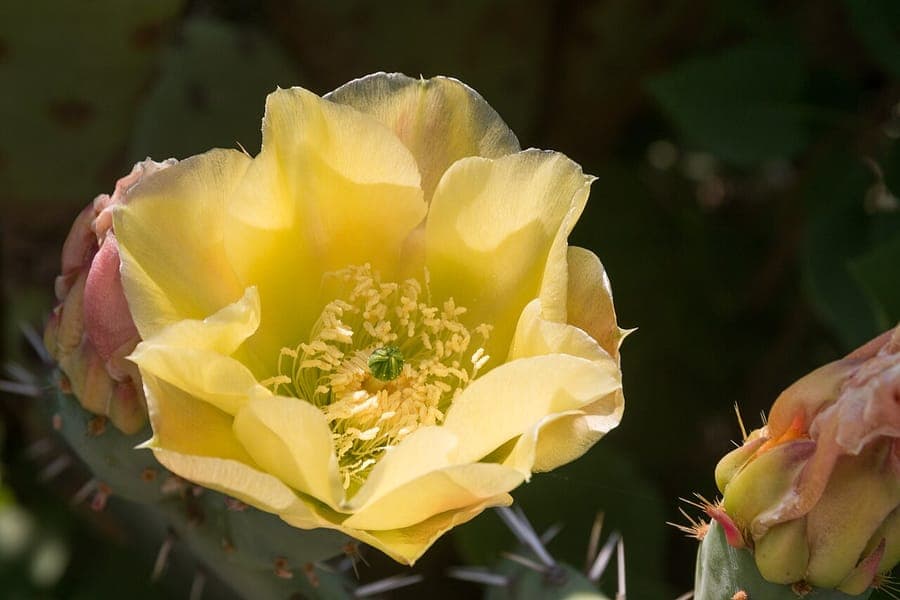
Daniel VILLAFRUELA. / CC BY-SA 4.0, via Wikimedia Commons
Opuntia engelmannii: complete guide
Opuntia engelmannii
Want to see Opuntia engelmannii: complete guide in your garden?
1 minute, no credit card
Overview
The Engelmann's prickly pear, scientifically known as Opuntia engelmannii and commonly called Cowtongue cactus or Cactus apple, is a robust and fascinating member of the Cactaceae family. Native to the southwestern United States and Mexico, this species thrives in arid, sun-drenched environments. While it won't experience the extreme heat of its native habitat in Dutch gardens, it makes an excellent summer specimen and can even overwinter in protected spots in warmer regions.
This remarkable plant captivates gardeners with its edible fruits (tunas), distinctive flat stem segments, and bright yellow flowers that bloom reliably each year. In containers, it typically reaches about 50 centimeters tall, though specimens in ideal conditions can grow substantially larger.
Appearance and Bloom
The Engelmann's prickly pear displays the characteristic flat, oval-shaped stems (cladodes) in a dusty greenish-gray tone. These segments are armed with sharp yellow spines and tiny, irritating hair-like structures called glochidiae - always handle with care and wear gloves!
During late spring and early summer, stunning yellow to orange flowers emerge from the pad margins. Following pollination, vibrant red-orange fruits develop - the legendary cactus apples prized for their delicious, sweet flesh. The entire plant radiates a minimalist desert aesthetic that complements contemporary garden designs beautifully.
Ideal Location
Position your Opuntia engelmannii in a spot receiving full, direct sunlight for at least six hours daily. This cactus absolutely thrives in intense sun and performs poorly in shade. South or west-facing locations are ideal for maximum growth.
This hardy species tolerates dramatic temperature swings and strong wind better than many tender cacti. However, protect it from prolonged frost exposure unless you've gradually acclimated the plant to cold conditions.
Soil
Use a highly draining, mineral-rich potting mix - standard potting soil retains too much moisture and inevitably causes root rot. A blend of three parts sand, two parts pumice or clay pebbles, and one part organic matter works excellently.
Excellent drainage is non-negotiable; always plant in containers with generous drainage holes. Never use peat moss, as it holds moisture far too effectively.
Free design
Want to see Opuntia engelmannii: complete guide in your garden? Make a free design now.
Watering
Opuntia engelmannii exhibits remarkable drought tolerance and requires minimal irrigation. Water only when the soil is completely dry - typically once every two to three weeks during the growing season (spring and summer).
Reduce watering frequency significantly during fall and winter. A completely dry period lasting several weeks is appropriate during dormancy. Overwatering remains the single most common cause of death in cultivated specimens.
Pruning
Pruning is generally unnecessary, though you may remove old or damaged stem segments with a clean, sterilized knife or pruning saw. Make clean cuts flush against the base of the segment, handling the spines with great respect.
The plant also regenerates excellently from cuttings: segments left to dry for several days in a warm location will root readily when placed in dry potting mix.
Maintenance Calendar
Spring (March-May): Water cautiously, begin light fertilizing once growth appears obvious. Repot into larger containers if the plant has become pot-bound.
Summer (June-August): Water regularly - approximately once every two weeks. Apply specialized cactus fertilizer monthly for robust growth.
Fall (September-October): Gradually reduce watering frequency. Move outdoor specimens to a sheltered location for winter protection.
Winter (November-February): Water sparingly or not at all. Keep in a frost-free greenhouse or bright indoor location. Withhold all fertilizer.
Winter Hardiness
Opuntia engelmannii is not fully hardy in the Netherlands. The species tolerates temperatures down to approximately -10 to -12 degrees Celsius, below which damage occurs.
In most European climates, you must either protect outdoor specimens with horticultural fleece or move them indoors for winter. In southern Netherlands regions, very well-protected outdoor locations under thick mulch might allow winter survival.
Companion Plants
The Engelmann's prickly pear pairs beautifully with other drought-tolerant specimens:
- Additional cacti (Echinocereus, Rebutia)
- Tender succulents (Echeveria, Sedum)
- Frost-hardy alpines (Sempervivum)
- Mediterranean herbs (Lavandula, Rosmarinus)
Final Thoughts
The Engelmann's prickly pear represents the pinnacle of low-maintenance, high-impact gardening. Its dramatic architecture, spectacular blooms, and edible fruits offer visual splendor - and occasional culinary rewards!
Want an exceptionally easy succulent that thrives on neglect yet delivers stunning results? Opuntia engelmannii deserves a place in your collection. Find healthy specimens at your local garden center.
Want to see Opuntia engelmannii: complete guide in your garden? Make a free design now.
Upload a photo, pick a style, and get a photorealistic design with plant list in under a minute.
No credit card required

