
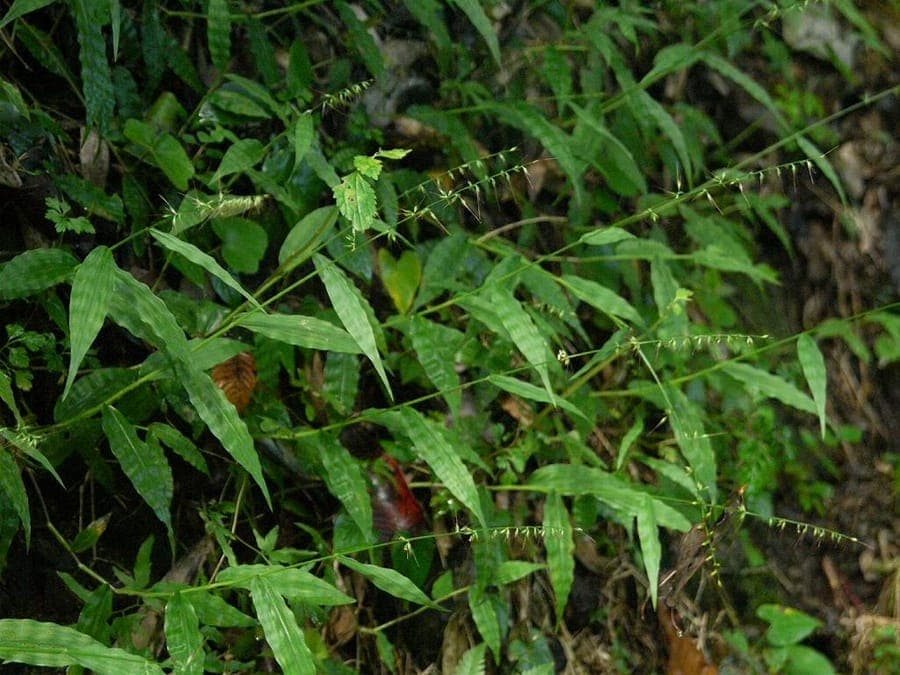
keisotyo / CC BY-SA 3.0, via Wikimedia Commons
Wavyleaf basketgrass: complete guide
Oplismenus undulatifolius
Want to see Wavyleaf basketgrass: complete guide in your garden?
1 minute, no credit card
Overview
The Oplismenus undulatifolius, also known as Wavyleaf basketgrass or wavy-leaved basketgrass, is a decorative grass species from tropical and temperate regions of Asia, Africa, and Australia. This plant from the Poaceae family is known for its graceful growth habit and soft, wavy foliage. The undulatifolius refers to the wavy leaf margins that give this plant its characteristic appearance. This is a relatively unknown but exceptionally attractive grass that grows well in partial shade zones and moist soils.
Appearance and bloom
The Wavyleaf basketgrass forms loose tufts of fine, greenish leaves that are 10-15 cm long and only 0.8-1.2 cm wide. The leaf margins are characteristically wavy - giving the plant its name. The plant reaches a height of 30-45 cm. The flower panicles are simple, upright branches, with flowers that are small and inconspicuous, usually from February to September depending on climate zone. The flower panicles give an airy, pleasant structure to the plant.
Ideal location
The Oplismenus undulatifolius grows best in partial to light shade locations. The plant does not tolerate full sun well, especially in warm climates where leaf burn occurs. Ideal locations are under deciduous trees or under garden structures with 30-50% shade. The plant does well along garden streams, marshy areas, and other places with more humid conditions. Avoid windy corners that might damage the wavy foliage.
Soil
The Wavyleaf basketgrass requires regularly moist, nutrient-rich soils. A pH range of slightly acidic to neutral (5.5-7.0) is ideal. This grass species grows best in soils with plenty of organic material - add compost regularly. The soil may be clayey to sandy, as long as it retains sufficient moisture. Avoid dry, poor soils where the plant will clearly decline. In poor soils, regular fertilization is essential for healthy growth.
Free design
Want to see Wavyleaf basketgrass: complete guide in your garden? Make a free design now.
Watering
The Oplismenus undulatifolius needs regular, ample water supply. Keep the soil continuously moist - not waterlogged, but also not dry. This grass thrives excellently in gardens with natural water sources such as marshy zones. In dry periods, regular supplemental watering is necessary. Daily misting of the foliage can be beneficial, especially in dry summers. This plant is exceptionally suitable for gardens with heavy rainfall.
Pruning
The Wavyleaf basketgrass requires minimal pruning. Let the grass take on its natural form. Dead or yellowing leaves can be carefully removed from the base. If the plant becomes too dense, thin out old stems. In early spring you can mow the grass short (to 10-15 cm) to stimulate new growth - this is optional. Avoid heavy pruning in fall.
Maintenance calendar
February-March: Check for winter damage. Thin out if needed. March-April: Mow grass short to encourage new growth. April-September: Regular water supply during growing season. Add nutrients monthly. September-October: Reduce fertilization. October-November: Reduce watering as season progresses. January-February: Quiet period; minimal care.
Winter hardiness
The Oplismenus undulatifolius is moderately hardy and tolerates temperatures down to about -5 to -8 degrees Celsius. In very cold climates, above-ground parts will die, but roots can survive and produce new growth in spring. Protect the plant in severe winters with a substantial 10 cm mulch layer. In temperate gardens without extreme frosts, the grass grows without protection.
Companion plants
The Wavyleaf basketgrass works beautifully together with other shade-loving perennials. Plant together with Hostas, Carex, and other ornamental grasses for texture contrast. Add flowering plants such as Astilbe and Rodgersia for color. In marshy zones, Gunnera and Ligularia can work well together. The plant forms a fine background texture for larger perennials.
Closing
The Oplismenus undulatifolius is an elegant grass that transforms moisture-loving and partial shade-filled gardens. The wavy foliage creates a unique, dynamic texture that moves pleasantly in wind. With regular watering and feeding, this grass will provide ornamental value for years. For garden centers with ornamental grasses, we recommend making contact.
Want to see Wavyleaf basketgrass: complete guide in your garden? Make a free design now.
Upload a photo, pick a style, and get a photorealistic design with plant list in under a minute.
No credit card required


Similar plants
Sporobolus pungens: complete guide
Sporobolus pungens
Sporobolus pungens is a stoloniferous Mediterranean coastal grass with outstanding salt and drought tolerance, perfect for seaside and dry gardens.
Mediterranean aegilops: complete guide
Aegilops biuncialis
Everything about Aegilops biuncialis, a Mediterranean annual grass with ornamental spikes and outstanding drought tolerance for dry gardens.
Silver bluestem: complete guide
Bothriochloa saccharoides
Full guide to Bothriochloa saccharoides (silver bluestem): site, soil, watering, winter hardiness, pruning, and garden companions.