
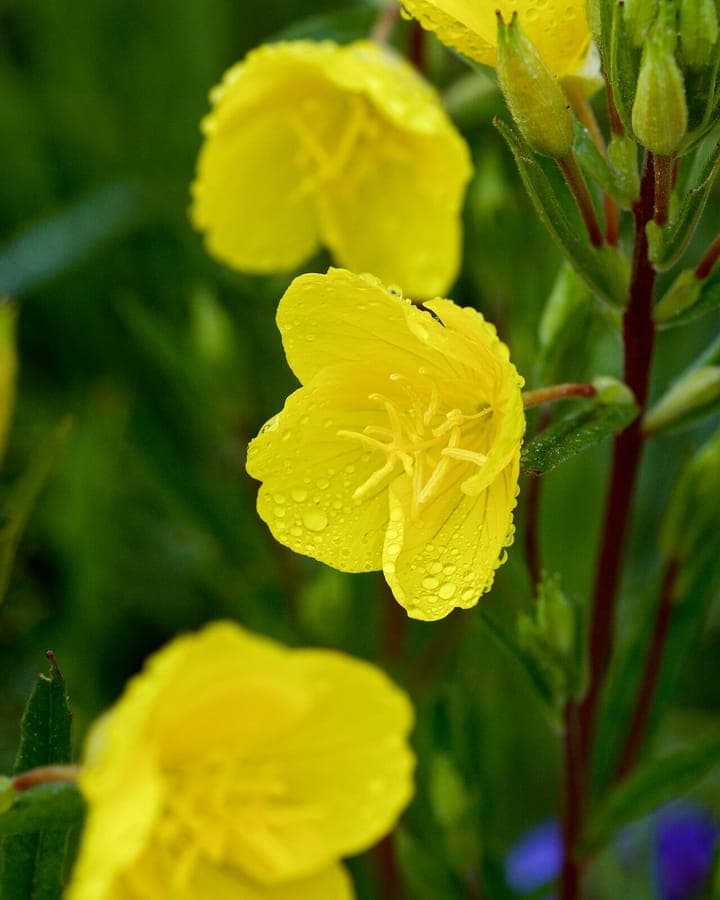
Eric Hunt / CC BY-SA 4.0, via Wikimedia Commons
Meadow evening primrose: complete guide
Oenothera pilosella
Want to see Meadow evening primrose: complete guide in your garden?
1 minute, no credit card
Overview
Oenothera pilosella, known as the meadow evening primrose or meadow sundrops, is a perennial herb in the family Onagraceae native to the moist prairies, open woodland edges, and streamside meadows of the eastern and central United States. Its natural range covers Ohio, Illinois, Indiana, Iowa, Michigan, Wisconsin, Missouri, Virginia, West Virginia, Pennsylvania, and several other states. It was formally described by the botanist Rafinesque in 1820 and has since accumulated synonyms including Kneiffia pratensis, Oenothera pratensis, and Oenothera fruticosa var. pilosella.
Unlike the tall biennial common evening primrose (Oenothera biennis) whose flowers open at dusk, Oenothera pilosella blooms by day - bright lemon-yellow cups that open in the morning and stay open throughout daylight hours. This makes it far more useful as a border plant where visitors and gardeners can appreciate the flowers during the day. The species is classified as stoloniferous, meaning it spreads by underground runners to form gradually expanding clumps - well-behaved enough for managed borders yet vigorous enough to cover ground effectively.
For European gardeners seeking a long-blooming, low-maintenance yellow-flowered perennial for sunny to lightly shaded positions, meadow evening primrose deserves wider recognition. It tolerates a broad range of soil types, survives modest drought, and thrives in mixed borders alongside other prairie-origin plants. Use the design tools at gardenworld.app to plan prairie-inspired borders that showcase this cheerful plant to full advantage.
Appearance & bloom cycle
Oenothera pilosella grows as a compact, multi-stemmed clump reaching 30 to 60 cm in height. The stems are slender and upright, bearing softly hairy, lance-shaped leaves with a notably silky texture - the specific epithet pilosella means 'finely hairy', and the plant lives up to that name throughout its foliage. Basal leaves are larger, up to 10 cm long and broadly lanceolate; stem leaves are smaller and sessile. The overall texture is soft and the plant has a neat, well-mannered appearance in the border.
The flowers are the main attraction: four broad, heart-shaped petals in vivid lemon yellow, lightly veined, arranged symmetrically around a central style bearing a cross-shaped stigma. Individual flowers are 3 to 5 cm across. They open fully in the morning and remain open throughout the day, closing at night. Each bloom lasts only one day, but the plant carries numerous buds that open in continuous succession over the long blooming period, ensuring a constant display of fresh flowers from late May through to August.
The yellow colour is vibrant and clear, neither orange-tinged nor washed out - a cool, fresh lemon yellow that combines easily with white, blue, and purple-flowered neighbours. After flowers fade, small cylindrical seed capsules develop. In autumn, the foliage and stems often take on reddish tints, providing an attractive secondary display. In winter, the plant retreats fully below ground, re-emerging from the stoloniferous root system the following spring.
Ideal location
Meadow evening primrose performs best in a full sun to partial shade position. Full sun - six or more hours of direct light daily - produces the densest bloom and most compact growth habit. In partial shade (three to five hours of sun), flowering is somewhat reduced but still worthwhile, and the plant's soft foliage remains attractive. Avoid deep shade, where the plant becomes leggy and seldom flowers adequately.
In its native habitat it grows in moist tallgrass prairie and open floodplain meadows, which signals that it tolerates more soil moisture than many prairie plants. This makes it suitable for positions that receive occasional waterlogging or that stay somewhat moist after heavy rain - a border alongside a lawn edge that drains slowly, or a gentle slope that captures runoff. It is one of the more moisture-tolerant members of the evening primrose genus.
Exposure to wind is not a problem; the plant handles open, exposed positions well. It works beautifully in naturalistic prairie borders, cottage garden borders, wildflower meadows, and as a long-flowering edging plant along paths or garden boundaries. It can also be grown in large containers (at least 25 cm diameter) on sunny terraces, with regular watering to compensate for the reduced soil volume.
Soil requirements
Oenothera pilosella is adaptable to a wide range of soils, growing well in sandy loams, clay loams, and silty soils, provided drainage is at least moderate. Its preferred pH range is 5.8 to 7.2, covering mildly acidic to neutral conditions. It handles clay better than many prairie plants, especially if the clay is not heavily compacted or permanently waterlogged.
For best results, incorporate 5 to 8 cm of well-rotted garden compost or leaf mould into the planting area before planting. This improves drainage on heavy clay, enhances moisture retention on light sandy soils, and adds moderate fertility that promotes healthy flowering without excessive leafy growth. Avoid very rich, freshly manured soils, which can lead to lush but bloom-poor plants.
Annual top-dressing with a thin layer of garden compost or a balanced slow-release fertiliser in early spring maintains soil structure and provides steady nutrition. Mulching around the plant with fine bark chips, leaf mould, or composted straw helps retain moisture, regulate temperature, and suppress weeds throughout the growing season.
Free design
Want to see Meadow evening primrose: complete guide in your garden? Make a free design now.
Watering
This species has moderate water needs - more than a true xeric prairie plant like Mentzelia or Gaillardia, but considerably less than moisture-loving border perennials like Astilbe or Rodgersia. In a typical season with average rainfall across the UK, Netherlands, or Belgium, no supplemental watering is needed once the plant is established.
During extended dry spells of two weeks or more, water deeply once per week, soaking the root zone to at least 20 to 25 cm depth rather than providing shallow daily sprinkles. Deep watering encourages deep root development and improves long-term drought resilience. Allow the top few centimetres of soil to dry out between waterings to prevent the surface staying perpetually damp, which can encourage fungal disease on the soft, hairy foliage.
Newly planted specimens in their first growing season need more regular watering - approximately every five to seven days for the first six weeks after planting, then gradually reducing frequency as root establishment progresses. Drip irrigation at soil level is ideal for this species. Overhead irrigation in warm, humid weather can encourage fungal spotting on the fine-textured, soft leaves.
Pruning
Minimal pruning is required. The main seasonal task is cutting back stems after flowering or in late autumn to 10 to 15 cm above ground level. This keeps the plant compact, prevents untidy old stems from matting down over winter, and promotes vigorous new growth the following spring. The stems can alternatively be left standing through autumn and winter for decorative effect and as wildlife habitat, then cut back in February or March before new growth begins.
If the plant spreads more vigorously than desired via its underground stolons, control it by digging around the perimeter of the clump in spring or autumn, severing and removing the outermost stolons. The removed pieces, each with roots attached, transplant readily to other areas or can be shared with other gardeners. This division process also rejuvenates older clumps that may become woody at the centre after four or five years.
Deadheading individual flowers during the blooming season is not necessary - spent flowers drop cleanly and new ones open daily throughout the blooming period. If you want to limit self-seeding, remove the developing seed capsules before they ripen and split in August and September.
Maintenance calendar
February–March: Cut back old stems to 5–10 cm above ground. Top-dress around the plant with garden compost. Remove any stolons that have spread beyond the desired boundary.
April–May: Watch for new basal growth emerging. Water if the spring is unusually dry. Mulch around the plant to retain moisture and suppress weeds.
June–July: Peak flowering period. Enjoy the continuous lemon-yellow display. Water once per week if no rain falls for more than 10 days.
August: Flowering begins to decline. Cut stems back to 10–15 cm if a tidier appearance is wanted for autumn. Watch for any signs of powdery mildew in hot, dry conditions - improve air circulation if needed.
September: Divide and transplant stolons if you want to expand the planting or share with others. Autumn division establishes readily.
October–November: Final cut-back if not already done. Apply a 5 cm mulch of leaf mould or composted bark. The plant retreats below ground.
December–January: No maintenance needed. The root system is dormant and fully hardy.
Winter hardiness
Oenothera pilosella is reliably hardy across Western and Central Europe. It tolerates temperatures down to -20 °C, placing it in USDA hardiness zones 4 to 8. In the United Kingdom, the Netherlands, Belgium, Germany, and northern France it overwinters without any protection, dying back completely above ground and re-emerging from its stoloniferous root system in spring.
The main winter risk is prolonged waterlogging on very heavy clay soils, which can damage the crown and root system. On well-drained soils, no winter protection is needed whatsoever. On slow-draining clay, a collar of organic mulch around the crown helps insulate roots while allowing excess moisture to percolate away gradually. Container-grown plants are more vulnerable than border plants and benefit from being moved to a cold but frost-free position in regions that regularly experience temperatures below -15 °C.
Spring re-emergence is typically in March or early April, noticeably earlier than later-waking perennials. The plant may produce basal rosettes that stay semi-evergreen through mild winters in sheltered positions in the south of England and comparable climates.
Companion plants
Meadow evening primrose combines beautifully with a wide range of summer perennials in prairie, cottage, and naturalistic border styles:
- Echinacea purpurea (purple coneflower): simultaneous pink-purple blooms that form a classic prairie pairing with the lemon yellow of Oenothera.
- Rudbeckia fulgida 'Goldsturm': warm yellow and brown daisies blooming slightly later to extend the yellow theme into autumn.
- Veronicastrum virginicum (Culver's root): tall white spires providing vertical structure above the lower-growing Oenothera.
- Agastache foeniculum (anise hyssop): blue-purple flower spikes that attract bees and butterflies; drought-tolerant once established.
- Sanguisorba officinalis (great burnet): dark burgundy bobbles on tall stems; thrives in the same moist prairie conditions.
- Phlox paniculata dwarf varieties: white or pink flat-topped heads that harmonise with yellow in a soft, cottage-garden palette.
- Molinia caerulea (purple moor grass): elegant arching clumps adding movement and transparency to the planting.
- Geranium pratense (meadow cranesbill): violet-blue blooms in June and July that create a complementary colour contrast.
Conclusion
The meadow evening primrose is a reliable, versatile, and underused perennial that earns its place in any sunny or lightly shaded border. Its clear yellow day-blooming flowers, extended blooming period from late May to August, adaptability to a wide range of soil types, and good winter hardiness make it an excellent foundation plant for prairie-style and cottage garden designs.
For a personalised garden layout incorporating meadow evening primrose alongside complementary perennials, visit gardenworld.app and create a design tailored to your garden's exact conditions and style preferences.
Want to see Meadow evening primrose: complete guide in your garden? Make a free design now.
Upload a photo, pick a style, and get a photorealistic design with plant list in under a minute.
10,000+ gardens designed already
No credit card required


Similar plants
Shortfruit evening primrose: complete guide
Oenothera brachycarpa
Everything about Oenothera brachycarpa - the shortfruit evening primrose from the American Southwest. Growing tips, placement and care for your garden.
Sundrops (Oenothera tetragona): complete guide
Oenothera tetragona
Everything about Oenothera tetragona - the cheerful daytime-blooming sundrops perennial. Growing tips, placement, pruning and care for a long summer display.
Seabeach evening primrose: complete guide
Oenothera humifusa
Full guide to Oenothera humifusa, the seabeach evening primrose native to the US Atlantic coast. Yellow blooms, silvery foliage, drought-tolerant.