
Christian Ferrer / CC BY-SA 4.0, via Wikimedia Commons
Oenothera biennis: complete guide
Oenothera biennis
Want to see Oenothera biennis: complete guide in your garden?
1 minute, no credit card
Overview
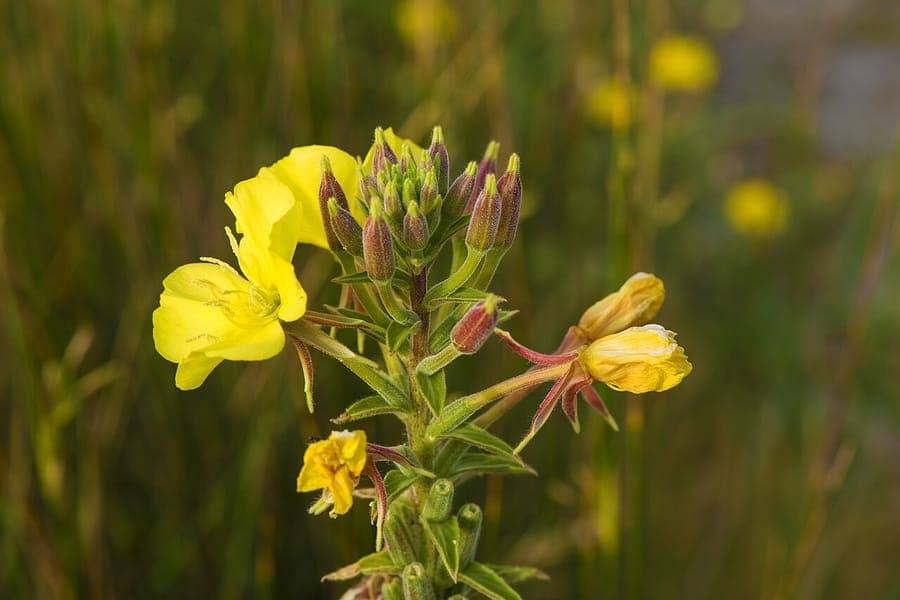
Oenothera biennis, commonly known as evening primrose or German-rampion, is a versatile biennial plant from the evening primrose family (Onagraceae). Originally from North America, the plant is now distributed worldwide. In the first year, the plant forms a low rosette of leaves, in the second year a strong flower stem rises with numerous yellow flowers. The plant is known for its valuable seed oil (evening primrose oil), medicinal applications and bird food.
Evening primrose is widely cultivated in gardens as an ornamental plant and for health preferences. The seeds contain gamma-linolenic acid (GLA), an essential fatty acid used in nutritional supplements. The plant attracts many insects and serves as important food for birds.
Appearance and bloom
In the first growing year, evening primrose forms a compact, low rosette of elongated, leathery leaves. These leaves are gray-green to dark green, lightly hairy and have a characteristic red midvein. The leaves can reach 8-15 cm long.
In the second year, a sturdy, upright stem grows 60-150 cm tall. The stem is light red to brownish and covered with fine hairs. Flowers appear from June to October in terminal clusters. Each flower is approximately 2-3 cm across, bright yellow, and opens in the late afternoon (hence the name evening primrose). The flowers have four broad petals and are highly fragrant. After pollination, cylindrical seed pods develop containing many small brown seeds.
Ideal location
Evening primrose thrives in full sun. The plant requires at least 6-8 hours of direct sunlight daily for optimal growth and abundant flowering. In warm climates, some afternoon shade may be acceptable, but full sun is strongly recommended.
Position the plant in a warm, sunny location in the garden, along garden walls or in flower borders. The plant also grows excellently in pots, containers on terraces or balconies. Avoid locations with poor air circulation where fungal diseases may develop.
Soil
Evening primrose grows in diverse soil types but prefers well-drained, light sandy to loamy soils. The plant is highly tolerant of poor soils and grows equally well on very nutrient-rich soils without problems. The soil must be well-draining without stagnation.
The plant thrives in neutral to slightly acidic soils with pH 5.5-7.0. Avoid very wet, clayey soils that cause waterlogging. In containers, universal potting soil or a mix of garden peat with sand works well. Add no extra fertilizer unless soil is very poor.
Free design
Want to see Oenothera biennis: complete guide in your garden? Make a free design now.
Watering
Evening primrose is a drought-tolerant plant requiring moderate water. Once established, the plant can tolerate prolonged drought through its deep root system. Water regularly in the first growing year for good root development. In the second year, water during dry periods.
Excessive water is harmful and can cause rotting. Let the soil dry somewhat between waterings. In containers, water more than in open ground. Usually water at the base of the plant to prevent leaf disease.
Pruning and maintenance
Evening primrose requires little pruning. However, regularly remove withered flowers to encourage further blooms and reduce self-seeding (unless you want to harvest seed). Remove dead stems in spring before the new growing season begins.
If you want to harvest seed yourself, let several seed pods ripen and dry on the plant. Harvest the brown, dry seed pods and let them dry further before scattering seed. This helps natural formation next year.
Maintenance calendar
April-May: Sow seeds directly or grow seedlings for transplanting. June-July: Plant blooming richly, support heavy growth. August-October: Abundant bloom, remove spent flowers. November-March: Dormancy period, remove dead stems in March. Next year: Second growing year with bloom, increase watering.
Winter hardiness
Oenothera biennis is winter hardy in temperate and cold climates to USDA zone 3 (-40 degrees Celsius). The plant is highly frost tolerant. In the first year, protective basal leaves form, in the second year the stems may suffer frost damage.
In very cold winters, a layer of mulch of 5-8 cm around the plant provides protection, although usually not necessary. The plant succeeds in regrowing from seed next season.
Companion plants
Excellent plant companions for evening primrose include other biennial flowers such as rose campion (Silene coronaria), spurred snapdragon (Linaria maroccana) and sweet William (Dianthus barbatus). These plants share the same growth preference and flowering period.
Also combine evening primrose with perennial plant types and grasses for structural contrasts.
Conclusion
Evening primrose is a versatile, reliable plant that promises new bloom each year. With minimal care, this plant grows vigorously and produces abundant bird food and medicinal oil. The yellow flowers and pleasant fragrance create evening garden enjoyment.
For gardeners seeking easy-growing, practical plants, Oenothera biennis is a perfect choice. Available at garden centers and seed suppliers throughout Europe. Consult local retailers for availability.
More information is available on gardenworld.app with thousands of plant knowledge articles and garden design ideas.
Want to see Oenothera biennis: complete guide in your garden? Make a free design now.
Upload a photo, pick a style, and get a photorealistic design with plant list in under a minute.
No credit card required


Similar plants
Shortfruit evening primrose: complete guide
Oenothera brachycarpa
Everything about Oenothera brachycarpa - the shortfruit evening primrose from the American Southwest. Growing tips, placement and care for your garden.
Sundrops (Oenothera tetragona): complete guide
Oenothera tetragona
Everything about Oenothera tetragona - the cheerful daytime-blooming sundrops perennial. Growing tips, placement, pruning and care for a long summer display.
Seabeach evening primrose: complete guide
Oenothera humifusa
Full guide to Oenothera humifusa, the seabeach evening primrose native to the US Atlantic coast. Yellow blooms, silvery foliage, drought-tolerant.