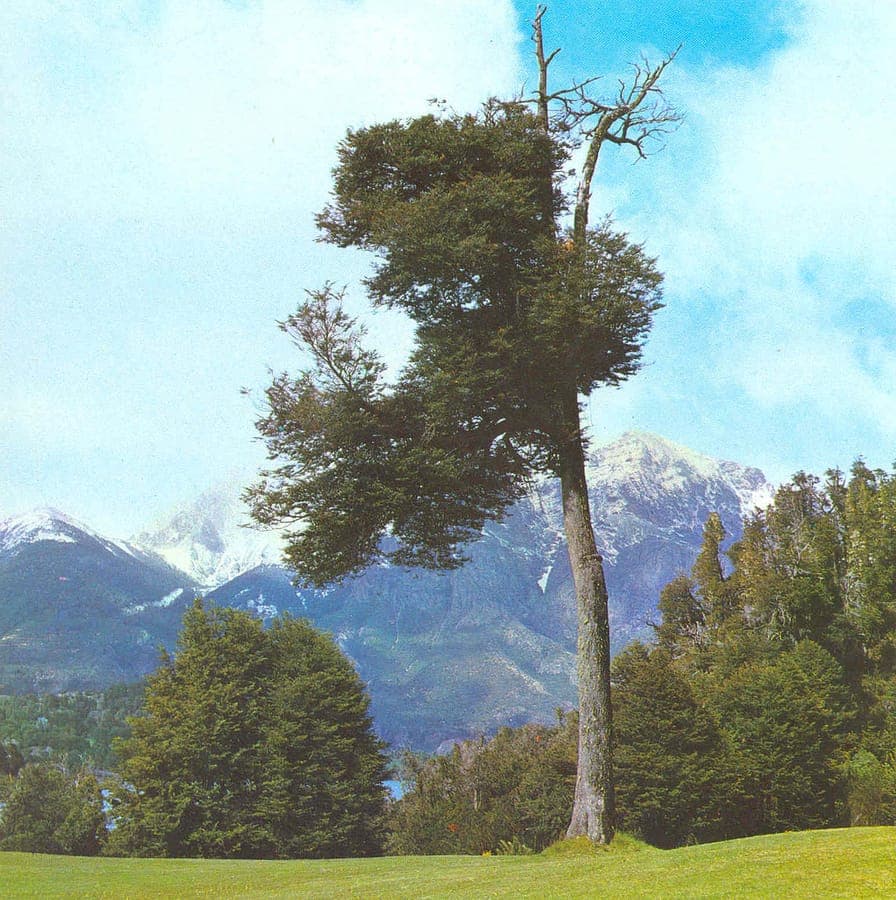
Wikimedia Commons / Public domain, via Wikimedia Commons
Nothofagus dombeyi: complete guide
Nothofagus dombeyi
Want to see Nothofagus dombeyi: complete guide in your garden?
Full design in HD: €7.99
Look after your Nothofagus dombeyi with the GardenWorld app
Identify plants with your camera and get a care calendar with reminders for this plant.


Overview
The Nothofagus dombeyi, known as Coigue or Coihue, is a magnificent deciduous tree native to Chile and Argentina. This tree is an important part of the rainforests of Southern Chile and belongs to the Nothofagaceae family. With its glossy leaves and frost-resistant properties, the Coigue is an excellent choice for gardens in temperate climates throughout the Netherlands, Belgium and France.
Appearance and bloom
The Nothofagus dombeyi grows into a majestic tree reaching 30 to 50 meters in height in its natural habitat, though cultivars remain significantly smaller. The leaves are small, glossy green and retain their color longer than many other deciduous trees. The leaves display a fine texture and give the tree an elegant appearance. The flowers are inconspicuous, but the tree produces interesting seed capsules in summer that are dispersed with a wing-like structure.
Ideal location
This tree thrives best in a spot with plenty of light to partial shade. In Dutch and Belgian climates, full sun can promote growth. Protect the young tree from strong wind, especially in the first growing season. The Coigue performs well in temperate climates and is suitable for gardens in the Netherlands, Belgium, France and Germany.
Soil
The Nothofagus dombeyi prefers well-draining, nutrient-rich soils. Ideal is a slightly acidic to neutral soil with plenty of organic matter. Add sufficient compost or peat moss when planting. The tree tolerates moderately infertile soils as long as drainage is good. Avoid heavy clay soils without drainage.
Free preview
Want to see Nothofagus dombeyi: complete guide in your garden? Make a free preview of your design.
Watering
After planting, the tree must be watered regularly, especially in the first growing year. Ensure the soil does not dry out, but avoid waterlogging. In normal Dutch and Belgian summers, extra water is usually not needed, but during dry periods the tree needs extra water. Mature trees require less maintenance but appreciate some extra water in very dry summers.
Pruning
The Nothofagus dombeyi is a moderately growing tree that does not require much pruning. Remove dead or damaged branches in early spring. For shaping a beautiful crown, you can perform light corrective pruning. Avoid large pruning wounds as this can attract pathogens.
Maintenance calendar
- March: Check tree for winter damage, remove dead branches
- April-May: Extra fertilization during growth, check for disease
- June-July: Regular watering during dry periods
- August-September: Preparation for autumn, reduce fertilization
- October-November: Final major watering before frost occurs
- December-February: Winter rest, no maintenance needed
Winter hardiness
The Nothofagus dombeyi is reasonably winter hardy to around -15 to -20 degrees Celsius, meaning this tree thrives in most parts of the Netherlands, Belgium, France and Southern Germany. Protection may be useful in extremely winter regions.
Companion plants
Combine the Coigue with other species for optimal growth and beauty. Suitable companion plants are other Nothofagus species, well-growing ground covers such as ivy, and shade-giving shrubs like rhododendrons.
Closing
The Nothofagus dombeyi is a beautiful choice for anyone looking for an impressive deciduous tree with hardiness and elegance. With attention to location, soil and water, this tree grows into a showpiece in any garden. Find more information and plant recommendations at gardenworld.app/en.
For professional advice and plant recommendations, consult gardenworld.app/en for a complete garden analysis.
Frequently asked questions about Nothofagus dombeyi
Is Nothofagus dombeyi winter hardy?
The Nothofagus dombeyi is reasonably winter hardy to around -15 to -20 degrees Celsius, meaning this tree thrives in most parts of the Netherlands, Belgium, France and Southern Germany. Protection may be useful in extremely winter regions.
When and how do you prune Nothofagus dombeyi?
The Nothofagus dombeyi is a moderately growing tree that does not require much pruning. Remove dead or damaged branches in early spring.
How much water does Nothofagus dombeyi need?
After planting, the tree must be watered regularly, especially in the first growing year. Ensure the soil does not dry out, but avoid waterlogging.
Where does Nothofagus dombeyi grow best?
This tree thrives best in a spot with plenty of light to partial shade. In Dutch and Belgian climates, full sun can promote growth.
What soil does Nothofagus dombeyi need?
The Nothofagus dombeyi prefers well-draining, nutrient-rich soils. Ideal is a slightly acidic to neutral soil with plenty of organic matter.

See it in your garden
See Nothofagus dombeyi in your garden
One photo of your garden and a few questions. You see the result in about a minute.
Try it with a photoIdentify this plant in your own garden. Identify a plant
Similar plants
Magellan's Beech: complete guide
Nothofagus betuloides
Nothofagus betuloides, commonly known as Magellan's Beech, is an evergreen tree from South America. Learn about care, ideal conditions, and landscape applications.
Rauli beech: complete guide
Nothofagus alpina
Discover the majestic Rauli beech from South America. Learn how to select, grow, and maintain this imposing tree in your garden. Perfect addition for large landscapes.
Nothofagus obliqua: complete guide
Nothofagus obliqua
Discover the Patagonian oak: an impressive tree species with elegant leaves from South America. Perfect choice for large gardens and park landscapes.
