
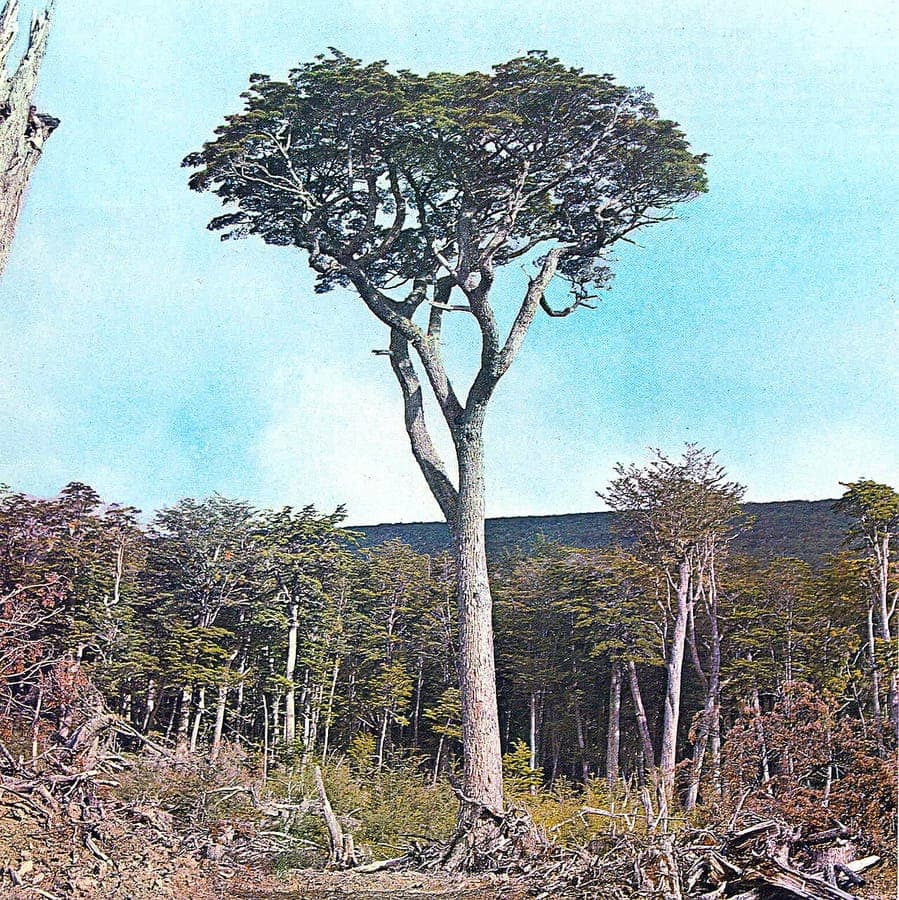
Wikimedia Commons / Public domain, via Wikimedia Commons
Magellan's Beech: complete guide
Nothofagus betuloides
Want to see Magellan's Beech: complete guide in your garden?
1 minute, no credit card
Overview
Magellan's Beech, scientifically named Nothofagus betuloides, is a remarkable evergreen tree from the Nothofagaceae family. Native to the rugged mountains of southern Chile and Argentina, this species has adapted to thrive in cold, windy environments where few other trees flourish. The name "betuloides" refers to its beech-like appearance, with small, delicate leaves that create an elegant canopy. This tree brings a touch of Patagonian wilderness to temperate gardens worldwide.
For those seeking a distinctive evergreen that combines year-round visual interest with remarkable hardiness, Magellan's Beech stands out as an exceptional choice. Whether you're designing a specimen planting or want a windbreak that doubles as living art, this tree delivers. Discover more plant insights and design inspiration at gardenworld.app.
Appearance and bloom
The defining feature of Nothofagus betuloides is its small, glossy foliage arranged in delicate patterns along slender branches. The leaves remain emerald green throughout the year, providing constant color and texture. Unlike many evergreens, these leaves are soft and fine-textured rather than needle-like or harsh, creating a graceful appearance. The tree develops into a dense, pyramidal to conical form that works beautifully as a focal point or screen.
Small yellow flowers appear in spring, though they're subtle and easily overlooked. The real ornamental value comes from the bark, which ages beautifully with attractive gray-brown coloring and interesting patterns that become more pronounced as the tree matures. This makes it visually appealing even in winter landscapes.
Ideal location
Magellan's Beech thrives in full sun to partial shade, requiring at least four to six hours of direct sunlight daily for optimal growth. While it tolerates shadier positions, growth slows considerably. For best results and most vigorous development, choose a spot receiving significant light exposure throughout the day.
The tree handles windy sites remarkably well, having evolved in the wind-exposed mountains of Patagonia. This makes it ideal for exposed locations where many other trees struggle. However, moderate windbreak protection is beneficial in extremely harsh coastal or prairie conditions.
Soil
Nothofagus betuloides prefers well-draining soil with neutral to slightly acidic pH (5.5 to 7.0). The tree adapts to various soil types but performs best when organic matter is incorporated. Heavy clay soils should be amended with sand and compost to improve drainage. Waterlogging can be problematic, so ensure water moves freely away from the root zone.
When planting, dig a generous hole and mix native soil with high-quality compost or bark chips. This creates an optimal environment for root establishment and early growth. Avoid compacting soil around the base, as roots need good aeration.
Free design
Want to see Magellan's Beech: complete guide in your garden? Make a free design now.
Watering
During the first year after planting, establish a regular watering schedule to help the root system develop properly. Water deeply two to three times per week unless rain is abundant. Once established (after two to three years), Nothofagus betuloides requires minimal supplemental water and tolerates moderate drought well.
In mature trees, water during extended dry periods to prevent stress. A thick organic mulch layer helps retain soil moisture and maintain stable root-zone temperatures. Avoid waterlogging, which is more damaging than occasional drought.
Pruning
Pruning is minimal. This tree naturally develops an elegant, symmetrical form without intervention. Remove dead, damaged, or diseased branches as soon as noticed. Light structural pruning can be done in late winter or early spring before growth begins, but avoid heavy pruning that disrupts the natural architecture.
If you prefer a more compact form, train the tree from youth with regular, light pruning rather than severe cuts later. The tree's natural habit is already graceful, so respect its form when pruning.
Maintenance calendar
Spring (March-April): Check for winter damage and apply slow-release fertilizer. Summer (May-September): Monitor water needs and watch for pests or disease signs. Autumn (October-November): Clear fallen leaves and prepare the tree for winter dormancy. Winter (December-February): Minimal intervention needed; protect young trees from severe frost if necessary.
Regular inspection throughout the year helps catch problems early. Healthy, established trees require surprisingly little active management.
Winter hardiness
Magellan's Beech is hardy to approximately -15 to -18 degrees Celsius in mature form. This makes it suitable for temperate to cool climates throughout northern Europe. Young specimens may need protection during their first winter or two in very cold regions. The tree's evolutionary history in high-altitude Patagonian forests gives it exceptional cold tolerance.
Extreme temperatures below -20 degrees Celsius may cause foliage damage, though the tree typically recovers. In most of continental Europe, this tree requires no winter protection once established.
Companion plants
Magellan's Beech pairs beautifully with other South American plants and temperate exotics. Combine with other fine-textured evergreens like Griselinia littoralis or Acca sellowiana for varied form and texture. Underplant with shade-tolerant groundcovers to create layered interest. Visit gardenworld.app for more planting combination ideas and professional design guidance.
Conclusion
For gardeners seeking something distinctive with character and minimal fuss, Magellan's Beech is an outstanding choice. This tree rewards your patience with decades of quiet elegance and reliable performance. Plant it in well-draining soil, provide ample light, and enjoy a living connection to Patagonia's wild beauty. For professional design consultation and personalized planting recommendations, visit gardenworld.app.
Want to see Magellan's Beech: complete guide in your garden? Make a free design now.
Upload a photo, pick a style, and get a photorealistic design with plant list in under a minute.
No credit card required


Similar plants
Rauli beech: complete guide
Nothofagus alpina
Discover the majestic Rauli beech from South America. Learn how to select, grow, and maintain this imposing tree in your garden. Perfect addition for large landscapes.
Nothofagus obliqua: complete guide
Nothofagus obliqua
Discover the Patagonian oak: an impressive tree species with elegant leaves from South America. Perfect choice for large gardens and park landscapes.
Antarctic beech: complete guide
Nothofagus antarctica
Learn all about the Antarctic beech: cultivation, care and benefits of this impressive tree.