
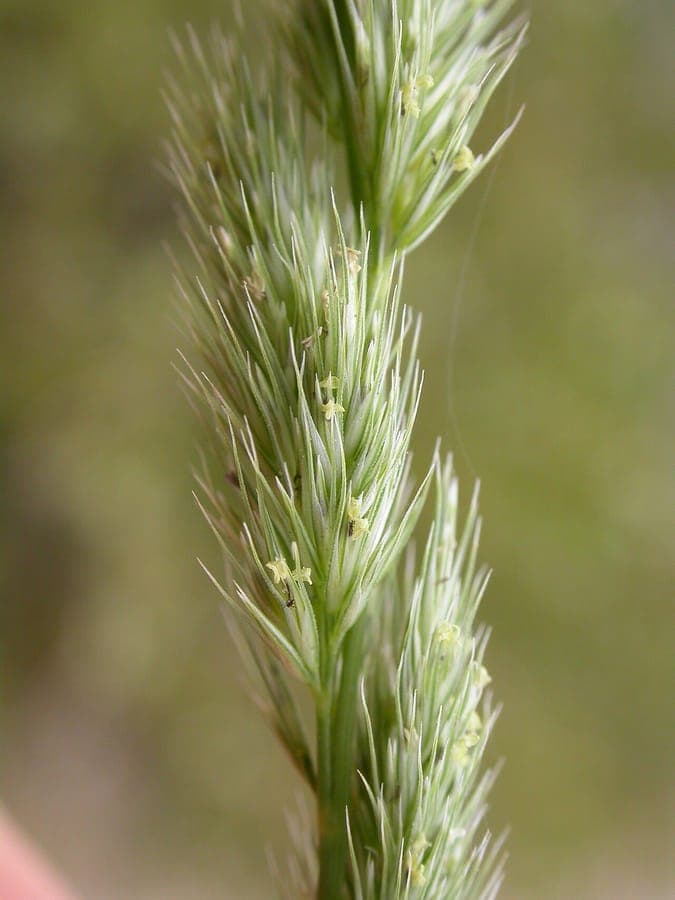
Matt Lavin / CC BY-SA 2.0, via Wikimedia Commons
Spike muhly: complete guide
Muhlenbergia glomerata
Want to see Spike muhly: complete guide in your garden?
1 minute, no credit card
Overview
Muhlenbergia glomerata, commonly called spike muhly, bog muhly, bristly muhly, or marsh muhly, is a rhizomatous, upright-growing grass in the family Poaceae. Its native range is among the most northerly of any Muhlenbergia species, extending from the Yukon and Northwest Territories of Canada south through nearly all Canadian provinces and into the northern and central United States, reaching as far south as Colorado, Utah, Virginia, and North Carolina. In this vast subarctic to temperate range, the species inhabits bogs, fens, wet meadows, and the margins of slow-moving streams and rivers.
The botanical name glomerata (from Latin glomus, a ball or cluster) refers to the tightly condensed, clustered arrangement of its flower spikelets. In the garden, spike muhly fills a genuine gap: it is one of the few ornamental grasses that genuinely thrives on wet, peaty, even waterlogged soils, opening up planting possibilities on sites that defeat most other grasses. For ideas on designing a naturalistic bog garden or wet streamside planting, gardenworld.app offers professional visualisation tools that bring your garden vision to life.
Appearance and bloom cycle
Muhlenbergia glomerata grows as a firmly upright, moderately dense clump of 40 to 100 cm in height. The stems are stiffer and more erect than in most related species, giving the plant a more architectural, vertical character. Leaves are narrow (2-5 mm wide), linear, and a fresh mid-green. The overall appearance is neater and more structured than the arching, graceful forms typical of the genus.
Flowering occurs from August through September. The inflorescences are dense, spike-like, contracted panicles that stand erectly above the foliage - more compact and bristly than the diffuse plumes of many related species. The florets are yellowish with brownish glumes. After flowering, small brown seeds ripen in October and November. These are taken eagerly by finches, sparrows, and buntings foraging along wetland margins in autumn.
In autumn the foliage turns golden-brown, and the compact, erect seed heads remain in good condition well into winter, providing structure and food resources in the coldest months. The plant's upright habit means it holds its form in wind better than many other members of the genus.
Ideal location
Spike muhly is one of the few ornamental grasses genuinely adapted to wet and even seasonally flooded conditions. In its natural habitat it grows in bogs, fens, and on the banks of slow rivers where the soil remains saturated for much or all of the growing season. In the garden, this makes it an excellent choice for pond margins, stream banks, wet ditches, and low-lying areas prone to winter waterlogging.
Full sun is preferred, but the plant tolerates light shade provided soil moisture is consistently high. On dry, well-drained soils it will not perform well and is unlikely to survive long term. The plant is therefore best suited to genuinely wet garden spots rather than to ordinary borders with irrigation.
The rhizomatous growth habit means the plant spreads gradually, eventually occupying a circle of 60-120 cm in diameter. Allow room for this expansion when planting, or contain the spread by cutting back the outermost rhizomes each spring.
Soil
Unlike most ornamental grasses, spike muhly performs best on heavy, moisture-retentive, and even waterlogged soils. Peat, clay, silty loam, and riverbank alluvium are all acceptable substrates. The pH tolerance runs from 5.3 to 7.5 - covering slightly acidic to neutral conditions typical of boggy and riparian environments.
On poor, sandy, or quickly draining soils the plant will struggle. If you wish to grow it in a position that is not naturally wet, improve the site substantially by digging in large amounts of well-rotted compost and clay-based materials, and consider lining the planting hole with a sheet of pond liner to hold moisture. A layer of sphagnum moss or peat in the planting hole also helps retain water around the roots.
No heavy fertilisation is needed. Boggy soils are often naturally fertile, and spike muhly is adapted to growing on nutrient-modest wetland substrates. A light top-dressing of well-rotted compost in spring is sufficient in most garden situations. Look for suitable moisture-retentive composts at your local garden centre.
Free design
Want to see Spike muhly: complete guide in your garden? Make a free design now.
Watering
Spike muhly is a genuine moisture-lover and should not be planted in situations where reliable wetness cannot be maintained. On a pond margin or in a bog garden with a constant water table, no supplemental watering is needed at all. In wetter garden positions improved with moisture-retentive substrate, regular watering in dry summers is essential - daily in prolonged droughts.
Newly planted specimens at moister locations need watering every two to four days for the first four to six weeks until the roots reach the local water table. In containers the plant is demanding: the substrate must never dry out completely. Use pots with a self-watering reservoir, or stand the container in a tray of water to guarantee permanent moisture at the roots.
In truly waterlogged positions the plant can stand with its lower stems in up to 5-10 cm of water, which replicates its preferred natural habitat most closely.
Pruning
As with most ornamental grasses, autumn or winter pruning of spike muhly is not recommended. The erect, compact seed heads retain their structural quality through the coldest months and feed overwintering birds. Leave the plant standing until late winter.
The optimal cutting time is February to early March, just before new shoots emerge from the base rhizomes. Cut the entire clump back to 10-15 cm above ground level with sharp secateurs or garden shears. If the clump has spread too widely via rhizomes, dig back the outer edge with a sharp spade in early spring and either replant the divisions or discard them.
A light dressing of slow-release organic fertiliser or well-rotted compost immediately after cutting back gives the plant a good start to the new growing season.
Maintenance calendar
Month-by-month care guide for Muhlenbergia glomerata:
- January-February: leave the plant undisturbed; seed heads provide bird food.
- March: cut back to 10-15 cm; trim back rhizome spread if needed.
- April: new shoots emerge; apply light compost top-dressing.
- May-June: active growing season; wet sites need no supplemental watering.
- July: monitor moisture in dry spells; pond margins are typically self-sufficient.
- August-September: flowering period; enjoy the erect, bristly plumes.
- October-November: seeds ripen; leave standing for birds and winter structure.
- December: fully dormant and hardy; no action needed.
Winter hardiness
Muhlenbergia glomerata is among the hardiest species in the genus, native to subarctic Canada including the Yukon and Northwest Territories. It is rated to USDA zone 3, tolerating temperatures as low as -40 degrees Celsius. For all of northern and western Europe, this represents an enormous margin of safety. No winter protection is needed in any normal European garden climate.
The underground rhizomes survive even the most severe frost periods intact, pushing up fresh growth in spring regardless of how harsh the winter has been. On wetland sites that freeze solid in winter, the plant is well adapted to this cycle of freeze and thaw, having evolved in subarctic conditions where such extremes are the norm.
Companion plants
Spike muhly is most at home in boggy and wetland planting schemes. Effective companions include:
- Typha minima (dwarf bulrush): the round brown flower heads create a classic contrast with the erect muhly plumes.
- Iris sibirica (Siberian iris): elegant blue flowers and upright foliage complement the vertical character of spike muhly.
- Caltha palustris (marsh marigold): golden-yellow flowers in early spring bring colour before the muhly fully leafs out.
- Carex acuta (tufted sedge): the dark green, arching leaves contrast pleasingly with the brighter green of the muhly.
- Lythrum salicaria (purple loosestrife): the vivid pink spires rising over a mature muhly clump bring bold summer colour to the pond margin.
- Scirpus sylvaticus (wood club-rush): the broader, more diffuse flower heads of the rush add depth to an otherwise uniform planting.
To see how these wetland companions work together in a real garden layout, upload your garden photo at gardenworld.app and receive a personalised planting visualisation.
Closing
Muhlenbergia glomerata is a specialist grass for wet, boggy, and waterlogged garden situations - and in those conditions it is outstanding. Its extraordinary winter hardiness, its adaptation to peaty and clay-rich soils, and the compact, windproof seed heads that persist into winter make it a dependable, long-lived choice for pond margins, bog gardens, and rain gardens. In an era of increasing rainfall extremes in northern Europe, moisture-tolerant plants like this deserve a far greater place in garden design.
Want to see Spike muhly: complete guide in your garden? Make a free design now.
Upload a photo, pick a style, and get a photorealistic design with plant list in under a minute.
10,000+ gardens designed already
No credit card required


Similar plants
Wirestem muhly: complete guide
Muhlenbergia frondosa
Complete care guide for Muhlenbergia frondosa: ideal site, soil, watering, pruning, winter hardiness and planting combinations.
Alkali muhly: complete guide
Muhlenbergia asperifolia
Full growing guide for Muhlenbergia asperifolia: location, soil, watering, pruning, winter hardiness and garden design ideas.