
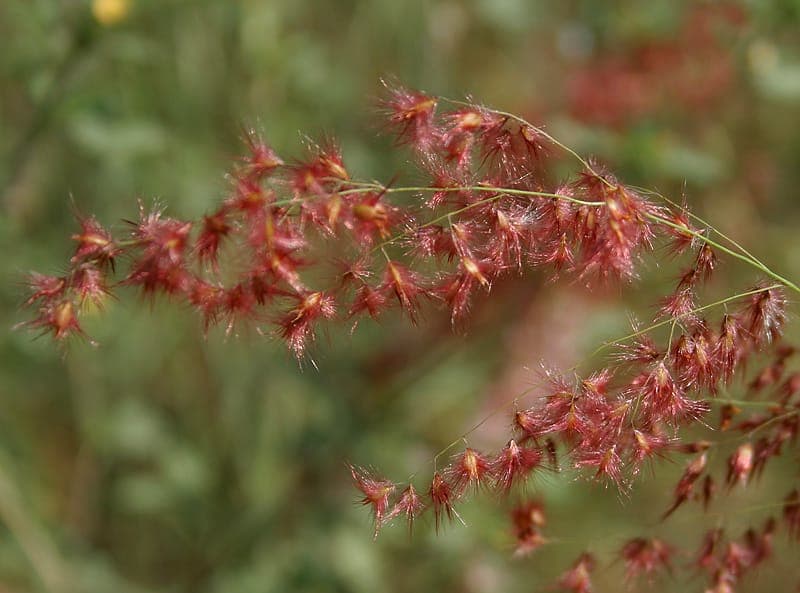
J.M.Garg / CC BY-SA 4.0, via Wikimedia Commons
Red Natal grass: complete guide
Melinis repens
Want to see Red Natal grass: complete guide in your garden?
1 minute, no credit card
Overview
Red Natal grass, botanically known as Melinis repens, is an elegant ornamental grass native to Africa, particularly the savanna regions. This compact grass is renowned for its fine, delicate flower spikes and characteristic pink to reddish plumes that appear during the growing season. For gardeners seeking a plant that adds color, movement, and texture to their landscape, Red Natal grass offers an excellent choice. It thrives in warm, sunny environments and requires minimal maintenance. At gardenworld.app, you can integrate this charming grass perfectly into a modern garden design that gives your outdoor space a dynamic, Mediterranean feel.
This grass distinguishes itself through its graceful habit and striking flowers that attract birds. Whether you are cultivating a Mediterranean garden or simply seeking low-maintenance ornamental grasses with color, Melinis repens is a valuable addition. Its compact size makes it suitable for containers, borders, and as accents in hardscape gardens.
Appearance & Bloom Period
Melinis repens is a compact ornamental grass that typically reaches 60 to 90 cm in height with a spread of approximately 45 to 60 cm. The blades are very fine, linear, and soft, with a silvery-green to olive-green color. They form dense tufts that remain attractive throughout the year. What truly distinguishes this grass, however, are the flower spikes. These appear mid to late summer (July to October) and are wonderfully delicate: slender, upright plumes bearing numerous tiny flowers in shades of pink to deep red.
These plumes are not only visually stunning but also capture light in a manner that catches the low light of evening beautifully. After flowering ends, the dried plumes often persist through winter, adding structure and interest to the winter garden. The seed heads also remain attractive to birds that enjoy feeding on the seeds.
Ideal Location: Sun and Warmth
Red Natal grass performs best in locations with full sun. A minimum of 6 hours of direct sunlight per day is required; more is better. In shade, the grass will become leggy, weaker, and produce far fewer flowers. It also prefers warm locations: this grass originates from Africa and appreciates temperatures of at least 15-20 degrees Celsius. In temperate regions, it grows best in warmer locations and protected sites.
Place this grass against a wall that radiates heat, in full sun where it is protected from strong winds. Windbreaks can help, but limit them to protection from extremely strong winds - gentle movement is actually beneficial as it causes the plumes to sway elegantly.
Soil & Drainage Requirements
Melinis repens is not fussy about soil composition, provided drainage is excellent. This grass cannot tolerate wet feet and absolutely will not tolerate waterlogging. Sandy or loamy soil with good drainage is ideal. If you live in an area with heavier clay soil, improve it by adding sand and organic matter.
The plant prefers moderately fertile soil; excessive nutrition leads to lush vegetative growth at the expense of flowers. Neutral to slightly acidic soils (pH 6.0-7.5) are fine. For containers and pots, use well-draining potting mix combined with sand. Ensure drainage holes do not become blocked.
Free design
Want to see Red Natal grass: complete guide in your garden? Make a free design now.
Watering: Moderate to Sparing
Once established, Red Natal grass is drought-tolerant and requires minimal supplemental watering. During the first year after planting, provide regular water until the plant is well-established, approximately two months. Water when the top 3-5 cm of soil feels dry to the touch.
Once established, this grass only requires additional water during exceptionally dry periods. Prevent waterlogging; this can lead to root rot and fungal diseases. In container culture, you must water more frequently than in the ground, but ensure the pot drains well.
Maintenance & Pruning
Red Natal grass requires minimal pruning. In late winter or early spring (March), cut the plant back to approximately 15 cm above ground level. This encourages fresh, healthy growth during the growing season. Use sharp pruning shears. You can deadhead old flowers if desired, but many prefer to leave them for their winter interest. Remove dead or diseased portions at any time.
The plant is typically quite resistant to disease and pests if drainage is good. No fertilization is really necessary; if desired, apply a light dose of slow-release fertilizer in spring.
Maintenance Calendar
- January - February: Plan to cut plant back to 15 cm in early March. Check winter drainage conditions.
- March - April: Planting season. Plant new specimens or divide established plants. Begin light watering as growing season begins.
- May - June: Water regularly during dry spells. Plant grows and begins forming flower buds.
- July - August: Blooming period. Water regularly during dry spells. Enjoy the flowering plumes. No fertilization needed.
- September - October: Blooming continues. Gradually reduce watering as temperatures cool.
- November - December: Minimal maintenance. Leave dried plumes for winter structure. No watering needed unless extremely dry.
Winter Hardiness
Red Natal grass is moderately winter hardy and can overwinter outdoors in temperate regions, especially in protected locations and not in the coldest microclimates. USDA zones 8 to 11. In very cold winters, extreme temperatures below -15 degrees Celsius may cause damage. If you live in a very cold climate, consider container cultivation so you can move the plant indoors.
Leave the grass standing through winter; the dried plumes provide structure and protection for the plant's heart. Cut back only in spring.
Companion Plants
Melinis repens combines beautifully with:
- Nepeta (Catmint): Purple flowers contrast nicely with pink plumes.
- Lavandula (Lavender): A classic pairing; both love sun and dry conditions.
- Salvia (Sage): Various species with complementary flower colors enhance the effect.
- Santolina (Cotton Lavender): Yellow with striking foliage creates tonal repetition.
- Cistus (Rock Rose): Mediterranean partner with similar requirements.
Available at garden centres across the UK and Europe.
Conclusion
Red Natal grass is a low-maintenance ornamental grass that provides much pleasure with minimal effort. Its elegant flowers, compact growth, and drought tolerance make it ideal for modern, sunny gardens. Once established, it asks for little more than spring pruning. For integration into your garden design, consult gardenworld.app. Enjoy this charming grass!
Want to see Red Natal grass: complete guide in your garden? Make a free design now.
Upload a photo, pick a style, and get a photorealistic design with plant list in under a minute.
No credit card required


Similar plants
Sporobolus pungens: complete guide
Sporobolus pungens
Sporobolus pungens is a stoloniferous Mediterranean coastal grass with outstanding salt and drought tolerance, perfect for seaside and dry gardens.
Mediterranean aegilops: complete guide
Aegilops biuncialis
Everything about Aegilops biuncialis, a Mediterranean annual grass with ornamental spikes and outstanding drought tolerance for dry gardens.
Silver bluestem: complete guide
Bothriochloa saccharoides
Full guide to Bothriochloa saccharoides (silver bluestem): site, soil, watering, winter hardiness, pruning, and garden companions.