
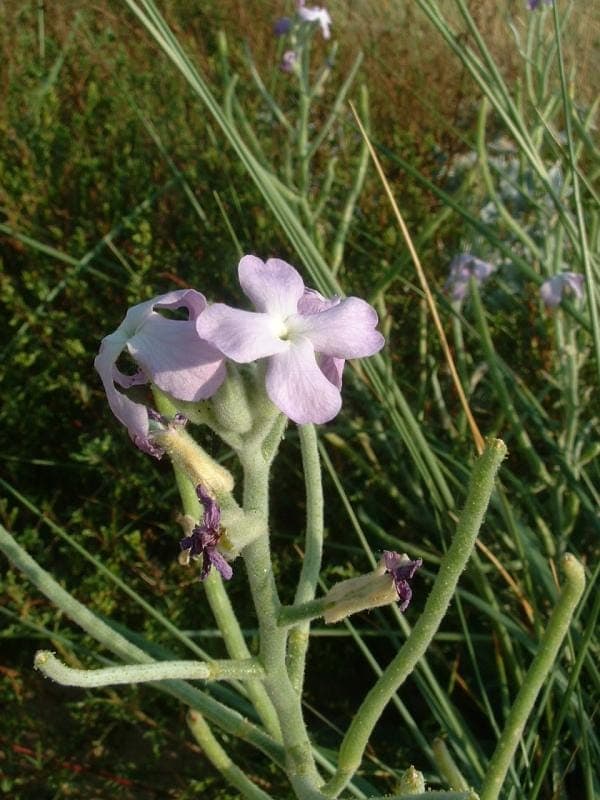
J.F. Gaffard Jeffdelonge at fr.wikipedia / CC BY-SA 3.0, via Wikimedia Commons
Sea stock: complete guide
Matthiola sinuata
Want to see Sea stock: complete guide in your garden?
1 minute, no credit card
Overview
Sea stock (Matthiola sinuata) is a fascinating annual plant from the Brassicaceae family. This plant grows naturally on coasts around the Mediterranean and is found from Morocco to Turkey. The plant is known for its pleasant scent and purple flowers that appear late spring through summer.
Appearance and bloom
Sea stock grows into a plant 12-24 inches tall with a compact, upright form. The stems are clearly visible and grayish-hairy. The leaves are green, somewhat wavy, and sometimes finely toothed at the edges.
The flowers appear in long, loose spikes and are usually purple to violet colored. Some varieties have white or pink flowers. The flowers emit a pleasant, sweet fragrance, especially in the evening. After flowering, narrow pods form containing fine seeds.
Ideal location
Sea stock grows best in a very sunny spot. The plant needs at least 6-8 hours of direct sunlight daily. More sun equals better flowering.
Provide good air circulation. The plant tolerates wind well due to its coastal origins. A location with air movement from all sides works well.
Soil
Sea stock loves chalky and dry soils. This is one of the most important characteristics of this plant. Ensure the soil is well-draining, as the plant cannot tolerate waterlogging.
A sandy or gravelly soil with some chalk is ideal. Add lime or crushed shells if your soil is acidic. The pH should be between 7.0 and 7.5 for optimal growth.
Avoid heavy, nutrient-rich soils. This plant thrives on poor soils.
Watering
Sea stock is a drought-loving crop. Once well-established, it needs little water. Ensure the soil dries well between waterings.
During the growth period, you can water moderately, especially if there is no rain. However, avoid stagnant moisture around the roots.
Excess moisture leads to root rot and fungal diseases. This is a common problem.
Free design
Want to see Sea stock: complete guide in your garden? Make a free design now.
Sowing and planting
Sea stock is usually grown from seed. Sow in April-May directly where you want the plant to grow. The seeds do not need to be covered; they need light to germinate.
Sow at a spacing of approximately 8 inches apart for mature growth. Thin later if needed. The plant grows quickly and flowers by summer.
If you buy seedling plants, plant them out after the last frost date.
Pruning and maintenance
Sea stock requires little maintenance. You can remove spent flowers to prolong blooming. This process is called deadheading.
Remove yellowed or diseased leaves quickly. This prevents spreading of problems. The plant grows compactly and does not need pruning.
Maintenance calendar
April: Sow directly or plant seedlings.
May-June: Plant grows. Minimal maintenance.
July-August: Flowers at peak. Deadhead regularly.
September-October: Flowering diminishes. Plant may set seed.
November: Plant reaches end of season. Annual plant dies off.
Pests and diseases
Sea stock is relatively disease-resistant. However, excess moisture can lead to fungal diseases. Ensure good air circulation.
Cabbage whiteflies can sometimes occur. These insects can make small holes in leaves. In most cases, treatment is not necessary.
Companion plants
Sea stock combines nicely with other Mediterranean plants like lavender, sage, or santolina. Place them together in dry, sunny corners of your garden.
With silver-leaved plants like artemisia, it forms a beautiful color contrast.
Closing
Sea stock is a unique annual plant that brings Mediterranean warmth to your front yard. Perfect for dry, sunny spots where other plants struggle. For more inspiration and plant recommendations, visit gardenworld.app and get a free front yard design. Discover how gardenworld.app can create your ideal garden landscape.
Want to see Sea stock: complete guide in your garden? Make a free design now.
Upload a photo, pick a style, and get a photorealistic design with plant list in under a minute.
No credit card required


Similar plants
Brassica cretica: complete guide
Brassica cretica
Brassica cretica, the Cretan cabbage, grows wild on Aegean cliffs. Discover how to grow this drought-tolerant, yellow-flowered Mediterranean perennial.
Corsican cabbage: complete guide
Brassica insularis
Corsican cabbage is a rare Mediterranean rock cabbage with white flowers and blue-green leaves. Location, soil and winter protection.
Prostrate cabbage: complete guide
Brassica procumbens
Prostrate cabbage is a creeping North African cliff plant with yellow flowers. Discover location, soil type and winter protection.