
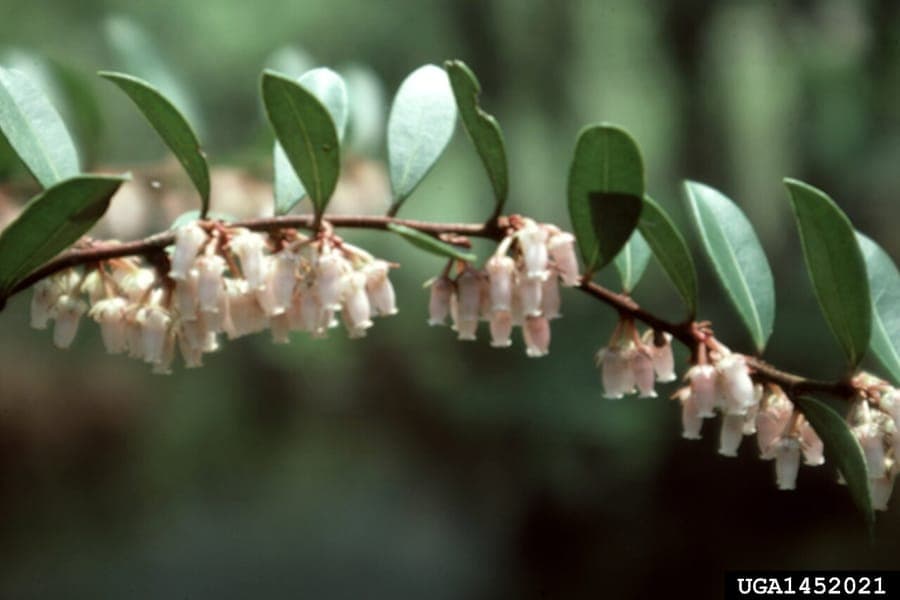
Richard Carter, Valdosta State University, Bugwood.org / CC BY 3.0 us, via Wikimedia Commons
Fetterbush lyonia: complete guide
Lyonia lucida
Want to see Fetterbush lyonia: complete guide in your garden?
1 minute, no credit card
Overview
Fetterbush lyonia (Lyonia lucida) is a native evergreen shrub belonging to the heath family (Ericaceae), closely related to blueberries, pieris, and rhododendrons. It grows naturally in the coastal plains and wetland margins of the southeastern United States, ranging from Virginia down through Florida and west to Louisiana. The common name 'fetterbush' refers to the plant's dense, interlocking branches, which could literally fetter livestock attempting to push through thickets in the wild.
In garden settings, however, Fetterbush lyonia earns a far friendlier reputation. It is prized for its shiny, leathery evergreen foliage, its charming spring flowers, and its ability to thrive in damp, shaded conditions where many other shrubs struggle. If you are planning a woodland garden, a rain garden, or a shaded border, this plant belongs on your shortlist. On gardenworld.app, you can generate a tailored planting design that integrates Fetterbush lyonia as a structural anchor in challenging spots.
Appearance & bloom cycle
Lyonia lucida typically grows 60-150 cm tall and wide, forming a rounded, dense mound of arching branches. In ideal conditions, mature specimens can reach up to 2 metres. Young stems are reddish and become grey-brown with age. The leaves are the showiest feature outside of flowering season: glossy, deep green, leathery, and ovate with a slightly wavy margin and a pronounced midrib. They persist year-round, giving the shrub structural value throughout the winter months.
Flowering occurs from March through May. The blooms are small but produced in abundance - urn-shaped or tubular bells in shades of pink, deep rose, or occasionally white, hanging in clusters along the previous year's stems. They resemble pieris flowers closely and are equally attractive to early pollinators including bumblebees and solitary bees. After flowering, small brown seed capsules form and persist on the branches, providing subtle winter interest.
In autumn, the foliage of some specimens takes on bronze or reddish tints, adding a further season of visual interest before the winter.
Ideal location
Fetterbush thrives in partial shade to light shade. In nature it grows beneath pine and oak canopy, at the edges of swamps and along stream banks - conditions easily replicated in gardens by placing it under light deciduous or evergreen trees, on a north-facing slope, or against the shaded side of a wall or building.
Full sun is tolerable if moisture is consistently available, but the glossy leaf colour may dull under prolonged direct sun exposure. Deep shade significantly reduces flowering. A position receiving morning sun and afternoon shade is ideal in temperate European gardens. The plant tolerates urban conditions and brief periods of drought better than many of its Ericaceae relatives.
Soil requirements
As a member of the heath family, Lyonia lucida is specific about soil chemistry. It requires acid to moderately acid soil, with a pH between 3.5 and 6.0. Alkaline or neutral soils will cause chlorosis (yellowing) and stunted growth. If your garden soil has a neutral or alkaline pH, soil acidification before planting is essential.
The soil should be moist but well drained - the plant cannot tolerate waterlogging over extended periods, despite its wetland associations. A sandy loam enriched with ericaceous compost or peat moss provides an excellent growing medium. A thick mulch of pine bark, wood chip, or leaf mould helps maintain soil moisture and acidity. Avoid lime-based fertilisers or wood ash near this plant.
Watering
Consistent moisture is key for Fetterbush lyonia. Although established plants have reasonable drought tolerance, they should not dry out completely. During summer heat, water regularly, especially in the first two years after planting while the root system establishes. A 7-10 cm mulch layer around the base reduces moisture loss significantly and keeps roots cool.
In winter, water requirements drop considerably but the plant should not enter prolonged drought. For established plants in temperate climates, natural rainfall is usually sufficient outside dry spells. Always use rainwater or softened water where possible, as tap water in many areas is hard and will gradually raise soil pH.
Free design
Want to see Fetterbush lyonia: complete guide in your garden? Make a free design now.
Pruning
Fetterbush lyonia needs minimal pruning. The natural habit is well-shaped without intervention. Remove dead or damaged branches at the base after flowering in May. Light shaping to control size can be done immediately after flowering - this is important because the flower buds for the following spring form on mature wood later in the growing season.
Never prune in autumn, as this removes the following year's flower buds. Hard renovation pruning is possible if the shrub has become overgrown - it regenerates vigorously from old wood - but expect to forgo flowering for one or two seasons. For routine maintenance, an annual light trim after blooming keeps the plant compact and encourages fresh, bushy growth.
Maintenance calendar
- January: Dormant. Check mulch depth. Protect roots if severe frost is forecast.
- February: Inspect for winter damage. Remove broken stems cleanly.
- March: Flowering begins. Enjoy the blooms. No fertilising yet.
- April: Peak bloom. Keep soil moist. Avoid disturbing pollinators.
- May: Flowering ends. Light pruning and shaping now. Apply ericaceous fertiliser.
- June: Active growth. Water regularly in dry weather. Renew mulch.
- July: Summer heat. Extra watering if prolonged dry spell. Check for aphids.
- August: Continued growth. No pruning. Maintain moisture.
- September: Growth slows. Reduce feeding.
- October: Mulch up around the base for winter. No pruning.
- November: Rest period begins. No action needed.
- December: Evergreen foliage provides winter structure. Enjoy it.
Use gardenworld.app to build a personalised maintenance schedule matched to your USDA zone and local conditions.
Winter hardiness
Lyonia lucida is rated hardy in USDA zones 6-9. In much of the UK and coastal Western Europe (broadly zone 8), it overwinters reliably without protection. In colder inland regions (zone 7 or below) young plants benefit from a thick mulch over the root zone and a temporary fleece wrap during hard frosts.
Established plants can tolerate temperatures down to approximately -15 degrees Celsius before significant leaf damage occurs. Even if top growth is killed in an exceptional frost, the root system often survives and regenerates strongly the following spring. Good drainage is the most important factor: cold combined with waterlogged soil is far more damaging than cold alone.
Companion plants
Fetterbush lyonia sits naturally alongside other acid-loving plants. Rhododendrons and azaleas share its pH requirements and create a layered, woodland atmosphere when planted together. Pieris japonica is a particularly harmonious companion, with a similar flower form but offering earlier blooms. Blueberries and lingonberries act as productive low-level companions at the base.
For textural contrast, ferns such as Dryopteris or Osmunda are outstanding partners. Golden sedge (Carex elata 'Aurea') brings a bright accent to shaded settings. Hydrangea serrata or H. macrophylla extend the flowering season into summer once Fetterbush has finished. Avoid lime-loving neighbours such as lavender or rosemary, which need alkaline conditions incompatible with this shrub.
Closing
Fetterbush lyonia is an underappreciated gem for gardeners working with acid soils, shade, and damp conditions. Its year-round evergreen structure, reliable spring flowering, and low maintenance demands make it a strong structural choice for woodland gardens, rain gardens, and shaded borders alike.
In the UK, it is available from specialist garden centres focusing on woodland or ericaceous plants, particularly those stocking native American species. Plant in groups of three or five for maximum impact. Given the right conditions, Fetterbush lyonia will reward you with decades of glossy foliage and delicate spring blooms with very little effort on your part.
Want to see Fetterbush lyonia: complete guide in your garden? Make a free design now.
Upload a photo, pick a style, and get a photorealistic design with plant list in under a minute.
10,000+ gardens designed already
No credit card required


Similar plants
Zenobia pulverulenta: complete guide
Zenobia pulverulenta
Everything about Zenobia pulverulenta (honeycup): siting, acid soil, pruning and the fragrant white bells, in this complete care guide.
Dwarf huckleberry: complete guide
Gaylussacia dumosa
Everything about dwarf huckleberry (Gaylussacia dumosa): acidic soil, partial shade, pruning and care for this compact North American berry shrub.
Drooping leucothoe: complete guide
Leucothoe fontanesiana
Everything about drooping leucothoe (Leucothoe fontanesiana): shade tolerance, soil, watering, pruning, hardiness and companion plants.