
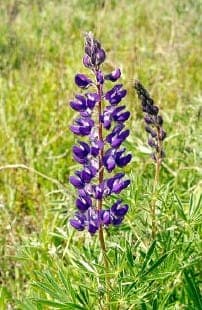
Unknown authorUnknown author / Public domain, via Wikimedia Commons
Lupinus sericeus: complete guide
Lupinus sericeus
Want to see Lupinus sericeus: complete guide in your garden?
1 minute, no credit card
Overview
Lupinus sericeus, the Silky Lupine (also known as Pursh's Lupine), is an elegant alpine perennial from the western Rocky Mountains. This plant is renowned for its velvety, hairy, silvery-white foliage and densely packed flower spikes in shades of purple to blue. The species name sericeus refers to the soft, silky texture of the foliage.
Appearance and Bloom
The Silky Lupine forms an elegant plant 40 to 60 centimeters tall. Leaves are palmately compound, green with silky hair layers that give a silvery-white sheen. The foliage remains attractive throughout the season, providing color even after flowers fade.
From May to July, densely packed flower spikes appear on upright stems. Flowers are predominantly purple to blue, sometimes with white markings, about 8 to 10 millimeters long. They are highly attractive to bees and wild pollinators. After flowering, hairy seed pods form and persist into autumn.
Ideal Location
Silky Lupine thrives in full sun, requiring 6 to 8 hours of direct sunlight daily. Partial shade produces leggy plants with fewer flowers. This is a true alpine plant tolerant of wind and cold. Plant it where it experiences moderate air movement.
Soil
Silky Lupine thrives in lightly fertile, well-draining soil. Like all lupines, it can fix its own nitrogen via root nodules. Sand, gravel, and loamy soil are ideal. Neutral to slightly acidic pH (6.0-7.2) is perfect. Excessive fertilizer causes the plant to sprawl with fewer flowers.
Watering
Once established, Silky Lupine is highly drought-tolerant. During the first two years, water regularly, especially during dry spells. After that, water only during prolonged drought. Ensure water drains freely - wet feet are fatal for this plant.
Free design
Want to see Lupinus sericeus: complete guide in your garden? Make a free design now.
Pruning
Silky Lupine requires minimal pruning. Remove spent flower spikes to prevent seed maturation and encourage possible second bloom. Prune cautiously and minimally because this plant recovers slowly from damage.
Allow some seed to drop for natural plant regeneration in subsequent years. If collecting seed yourself, harvest when pods turn brown but before they split open.
Maintenance Calendar
April-May: First shoots appear. Begin watering. May-June: Full growth and initial flowering. June-July: Peak bloom. Heavy insect activity. August: Seed formation. Reduce watering. September-October: Seeds ripen. Plant prepares for dormancy. November-March: Dormancy. Remove dead material.
Winter Hardiness
Silky Lupine is highly cold-hardy to USDA Zone 4 (-29 degrees Celsius minimum). This is a true perennial returning year after year. Old plants can persist 8 to 12 years. In heavy snow, tip dieback may occur, but the plant regrows from the base.
Companion Plants
Combine Silky Lupine with:
- Indian Paintbrush (Castilleja)
- Alpine Aster (Aster alpinus)
- Thermopsis (Thermopsis)
- Snow-on-the-mountain (Silene alba)
- Geranium species
- Alpine Thyme (Thymus polytrichus)
They form beautiful alpine meadows with other high-elevation wildflowers.
Closing Thoughts
Silky Lupine is an excellent choice for gardeners seeking to create alpine gardens in temperate climates. With its soft, silvery-white foliage and purple flower spikes, it brings elegance and tranquility. Plant it in dry, sunny locations and let it thrive with minimal intervention.
Want to see Lupinus sericeus: complete guide in your garden? Make a free design now.
Upload a photo, pick a style, and get a photorealistic design with plant list in under a minute.
No credit card required

