
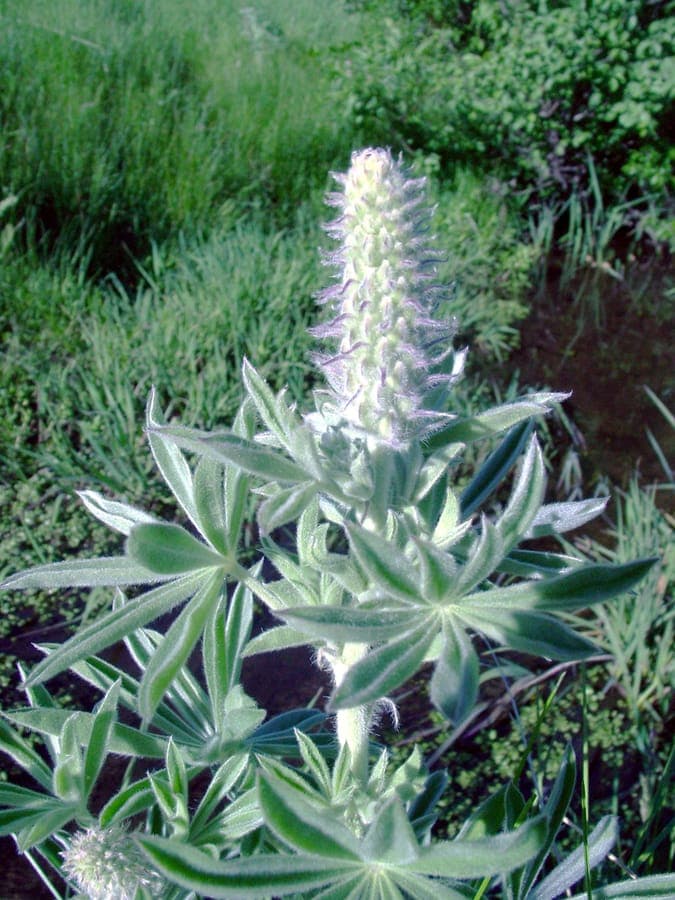
Wallace Keck / Public domain, via Wikimedia Commons
Lupinus leucophyllus: complete guide
Lupinus leucophyllus
Want to see Lupinus leucophyllus: complete guide in your garden?
1 minute, no credit card
Overview
Lupinus leucophyllus, the Velvet Lupine, is an alpine plant from the western Rocky Mountains of North America. This compact perennial is renowned for its striking, velvety, silvery-white foliage and dense spikes of purple or blue flowers. The species name leucophyllus means "white-leaved," referring to the distinctive leaf color.
Appearance and Bloom
The Velvet Lupine forms a tidy, well-proportioned plant approximately 30 to 50 centimeters tall. Leaves are palmately compound (finger-like), green with dense, soft hairs that give them a silvery-white appearance. This fine foliage remains attractive throughout the growing season.
From June to July, dense flower spikes appear at stem tips. The flowers are purple to blue, about 1 centimeter long, creating an impressive display. Bees and bumblebees visit these flowers regularly. After flowering, small, hairy seed pods develop containing viable seed.
Ideal Location
Velvet Lupine thrives in full sun - minimum 6 hours of direct sunlight daily. In partial shade, plants become leggy and flower sparsely. This is an alpine plant tolerant of wind exposure. Plant it where wind is not a concern, as wind actually strengthens stems and improves plant structure.
Soil
Velvet Lupine thrives in well-draining, moderately fertile soil. Like all lupines, it belongs to the legume family with root nodules that fix atmospheric nitrogen. Excessive fertilizer leads to more foliage than flowers. Sand, gravel, and loamy soil are ideal. Neutral to slightly acidic pH (6.0-7.0) is perfect.
Watering
Once established (after one growing season), Velvet Lupine is highly drought-tolerant. During establishment, water regularly, especially the first four weeks. After that, water only during prolonged drought. Ensure water drains freely - wet feet lead to problems.
Free design
Want to see Lupinus leucophyllus: complete guide in your garden? Make a free design now.
Pruning
Velvet Lupine requires minimal pruning. Remove spent flower spikes to encourage a possible second flush of flowers. Remove dead foliage and stems in early spring. This plant is long-lived and regrows slowly from hard pruning.
Seeds often self-sow in gardens. Allow some seed to drop for natural regeneration, or remove spent flowers for control.
Maintenance Calendar
April: First shoots appear. Begin watering. May: Plant grows out. Full foliage and bud development. June-July: Peak bloom. Frequently visited by pollinators. August: Seed formation. Reduce watering. September-October: Seeds ripen. Plant prepares for dormancy. November-March: Dormancy. Remove dead material.
Winter Hardiness
Velvet Lupine is highly cold-hardy to USDA Zone 4a (-34 degrees Celsius minimum). This is a true perennial returning year after year. Old plants can persist 10-15 years or longer. The plant does not lose all foliage - in mild winters, some leaves remain green.
Companion Plants
Combine Velvet Lupine with other alpine plants:
- Sempervivum species
- Sedum species
- Saxifrage species
- Eyebright (Euphrasia)
- Valerian (Valeriana)
- Kidney Vetch (Anthyllis vulneraria)
They thrive in rock gardens and alpine meadows with drought-tolerant companions.
Closing Thoughts
Velvet Lupine is a fascinating alpine treasure for gardeners seeking height and resilience. With its silvery-white foliage and purple flower spikes, it brings a piece of western wilderness to temperate gardens. Plant it in full sun, well-draining soil, and enjoy reliable years of blooms with minimal maintenance.
Want to see Lupinus leucophyllus: complete guide in your garden? Make a free design now.
Upload a photo, pick a style, and get a photorealistic design with plant list in under a minute.
No credit card required

