
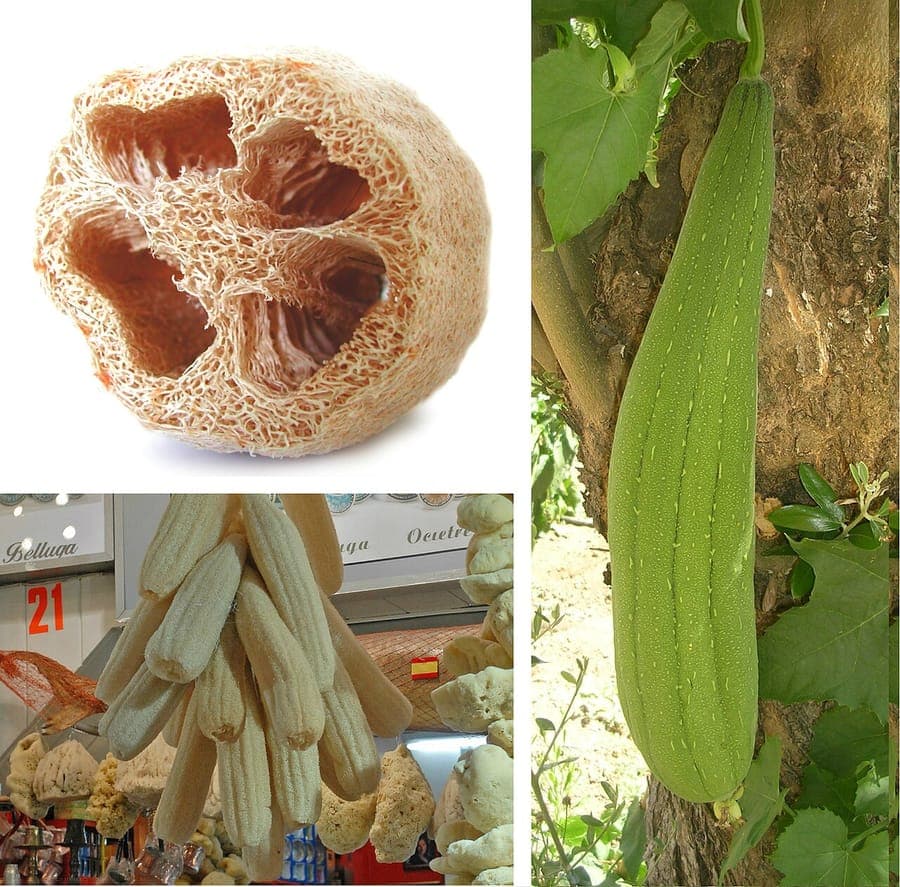
Uploaded by User:Tomas nevado (right photo), Jerry Crimson Mann (upper left photo), Rik Schuiling / TropCrop - Tropical Crops Services (bottom left photo), montage by User:RoRo. / CC BY-SA 3.0, via Wikimedia Commons
Sponge gourd: complete guide
Luffa aegyptiaca
Want to see Sponge gourd: complete guide in your garden?
1 minute, no credit card
Overview
The sponge gourd (Luffa aegyptiaca), also widely known simply as loofah or dishcloth gourd, is an annual climbing plant from the cucumber family (Cucurbitaceae). Native to the Indian subcontinent, this vigorous vine has been cultivated for thousands of years across South Asia and has since spread throughout tropical and subtropical regions worldwide. Most people know it as the source of the familiar loofah bath sponge - the fibrous interior of the dried fruit - but in much of Asia, young fruits are eaten as a vegetable with a flavour somewhere between courgette and cucumber. The plant is also a genuine ornamental: its broad leaves, rapid scrambling growth, and bright golden-yellow flowers create a lush, theatrical screen on a pergola or garden fence.
In northern Europe, sponge gourd is most reliably grown under glass or in a polytunnel, but warm summers allow outdoor cultivation in a sheltered spot. Starting plants on a warm windowsill in March dramatically increases the chance of a full harvest before autumn frosts arrive. Gardeners looking for inspiration on incorporating productive climbers into an attractive garden design will find a wealth of ideas at gardenworld.app.
Appearance and flowering period
Luffa aegyptiaca is a fast-growing annual that can reach 8–10 metres under ideal conditions. The leaves are large - 15–25 cm across - broadly heart-shaped to shallowly five-lobed, and lightly rough to the touch, resembling cucumber foliage. The angular, ribbed stems attach themselves to any support with strong, branched tendrils.
The plant is monoecious: male and female flowers appear on the same plant. Female flowers are solitary in the leaf axils; male flowers appear in clusters of five to fifteen. Both are bright to lemon-yellow and measure 5–7 cm across, opening in the morning and closing by midday. In the UK and northern Europe, flowering typically occurs between July and September depending on when seeds were sown and prevailing temperatures. Bees and bumblebees are the primary pollinators, so planting companion flowers nearby is beneficial.
Fruits are smooth-skinned, cylindrical, and initially dark green. They develop quickly: from pollination to harvest-ready fruit in as little as 60–90 days under warm conditions. Fruits destined for the kitchen should be harvested at 15–20 cm, when the skin is still smooth and glossy. Fruits left to mature fully can reach 30–60 cm in length and weigh up to 500 grams. As they ripen, the skin yellows and eventually turns brown and papery, shrinking tightly around the fibrous sponge network inside.
Ideal location
Sponge gourd demands a warm, sheltered, full-sun position with at least eight hours of direct sunlight daily. In the UK, a south-facing wall or fence is ideal: the radiated warmth from brickwork extends the growing season and protects against cool nights. Greenhouses, polytunnels, and lean-to structures with good ventilation are excellent alternatives for reliable cropping.
In the open garden, choose the most sheltered corner available, shielded from cold north and east winds. Plants should not go outdoors until nighttime temperatures reliably stay above 12 °C - usually from late May or early June in the UK. Sponge gourd is truly at home in USDA hardiness zones 10–12; in temperate climates it is grown as a tender annual.
Always provide robust support structures before planting. A mature vine carrying full foliage and multiple large fruits can weigh considerable amounts; flimsy netting or thin canes will fail by midsummer. Sturdy bamboo or metal trellises at least 200–250 cm tall, tensioned wire supports, or a purpose-built pergola are all suitable. Spacing between plants should be 100–150 cm to allow good air movement.
Soil requirements
Luffa aegyptiaca performs best in well-drained, light to medium-textured, humus-rich soil with a pH of 6.0–6.8. Heavy clay soils or waterlogged conditions cause root rot and stunted growth; the deep taproot system - which can reach 60 cm - requires good oxygen penetration.
Before planting, dig planting holes of 40 × 40 × 40 cm and backfill with a mixture of garden compost, well-rotted manure, and a small amount of coarse grit or perlite to improve drainage on heavier soils. Container-grown plants need a substrate combining coir, loam-based compost, and perlite in roughly equal proportions, with a slow-release granular fertiliser incorporated at planting.
A base dressing of well-rotted farmyard manure or balanced pelleted fertiliser in spring, followed by monthly liquid feeds of tomato fertiliser during the growing season, supports strong fruiting. Avoid over-application of nitrogen-heavy fertilisers, which promote lush leafy growth at the expense of flower and fruit set.
Watering
Consistent moisture is critical, particularly during flowering and rapid fruit development in summer. The soil should remain evenly moist - never waterlogged - throughout the growing season. Applying a 5–8 cm mulch of straw, composted bark, or grass clippings around the base of the plant conserves moisture, moderates soil temperature, and suppresses weeds.
During hot spells when temperatures regularly exceed 28 °C, a mature sponge gourd growing in open ground can require up to 4–5 litres of water per day. Drip irrigation directed at the root zone is the most efficient method and avoids wetting foliage, which can encourage fungal diseases. Water in the morning to allow any splash on leaves to dry quickly during the day.
Container-grown plants dry out much faster than those in open ground. Check the top 5 cm of compost daily and water as soon as it begins to feel dry. Use a pot of at least 60 litres per plant to provide adequate moisture buffering and reduce the frequency of watering.
Free design
Want to see Sponge gourd: complete guide in your garden? Make a free design now.
Pruning
Targeted pruning improves fruit set significantly. Train the main stem vertically along the support structure until it reaches the desired height - typically 200–250 cm - then pinch out the growing tip to encourage lateral shoot development. Most fruits form on secondary side shoots.
Side shoots that have produced three leaves without showing a flower bud can be shortened back to two leaves above the base. This redirects the plant's energy towards productive branches. Remove faded male flower clusters promptly to reduce the risk of fungal problems. Any damaged, yellowing, or diseased leaves should be cut away cleanly as soon as they appear.
For the kitchen, harvest fruits when they are 15–20 cm long and still firm with smooth, glossy green skin. For natural sponges, leave selected fruits to hang on the vine until they are fully dry and the skin turns brown and papery - this usually takes until September or October in the UK. Cut the dried fruit, soak it briefly in warm water to loosen the skin, peel it away, shake out the seeds (keep them for next year), and the sponge is ready.
Maintenance calendar
January – February: Check stored seeds. Order fresh seeds from specialist suppliers or reputable garden centres if needed.
March: Sow seeds indoors on a warm windowsill or heated propagator at 24–28 °C. Germination takes 7–14 days. Sow one seed per 9 cm pot, 2 cm deep.
April: Pot on seedlings to 1-litre containers once the first true leaf appears. Supplement natural light with a grow lamp if window light is insufficient. Check and repair trellises and supports.
May: Begin hardening off plants outdoors during warm daytime hours. Apply the first liquid feed. Do not plant outside until the risk of frost has passed (late May to early June).
June: Plant out at the permanent position, spacing plants 100–150 cm apart. Apply mulch. Water regularly. Begin training the main stem and carry out first pruning.
July – August: Peak growing season. Water daily in dry weather. Feed weekly with tomato fertiliser. Harvest young fruits for cooking at 15–20 cm. Monitor for powdery mildew and treat with a dilute bicarbonate solution if needed.
September: Allow remaining fruits to ripen and dry on the vine for sponge use. Collect and dry seeds on a rack in a well-ventilated space.
October – November: Remove the plant after the first frost. Compost all plant material. Clean and store supports dry for next season.
Winter hardiness
Sponge gourd is completely frost-tender and cannot survive even a brief frost. Temperatures below 10 °C cause the plant to decline rapidly; it will die at the first hard frost. In the UK and northern Europe, it is grown exclusively as a tender annual with no possibility of overwintering outdoors.
Only the seeds survive winter. After thorough drying, store them in a paper envelope in a cool, dark, dry location at 5–15 °C. Properly dried and stored seeds retain viability for up to five years. Seeds harvested in 2026 can be used successfully for the 2027, 2028, or later growing seasons.
Gardeners with a heated greenhouse or conservatory can keep the plant growing longer into autumn, hand-pollinating late female flowers with a soft brush when bees are no longer active.
Companion plants
Sponge gourd pairs well with several other warm-season crops. Classic companions include climbing or bush French beans grown at the base of the structure - their root nodules fix atmospheric nitrogen, subtly benefiting the luffa. Basil (Ocimum basilicum) planted nearby repels aphids and whitefly while attracting pollinators.
Maize provides a natural living frame for sponge gourd in warm gardens, echoing the traditional Mesoamerican three-sisters combination. Squash or courgette planted at the base creates a living mulch that retains moisture and suppresses weeds. French marigolds (Tagetes patula) planted around the bed deter root-knot nematodes in the soil.
Avoid following sponge gourd with cucumber, melon, or other cucurbits in the same bed in successive years, as they share susceptibility to the same soil-borne pathogens. A rotation interval of at least three years between cucurbit crops in the same spot is strongly recommended.
Closing thoughts
The sponge gourd is a dual-purpose plant of remarkable versatility: a productive summer vegetable in the kitchen and a supplier of fully biodegradable natural sponges for the bathroom. Given the warmth and shelter it needs, it rewards with rapid, vigorous growth, cheerful golden-yellow flowers, and an impressive harvest. The key to success in northern climates is starting early under glass and providing robust, tall support structures.
Curious how a pergola planted with productive climbers like sponge gourd could work in your own front garden design? At gardenworld.app you can upload a photo of your garden and receive a personalised design showing exactly how tropical and exotic climbers can transform an everyday outdoor space into something extraordinary.
Want to see Sponge gourd: complete guide in your garden? Make a free design now.
Upload a photo, pick a style, and get a photorealistic design with plant list in under a minute.
10,000+ gardens designed already
No credit card required


Similar plants
Kiwano: complete guide
Cucumis metuliferus
Everything about growing kiwano: location, soil, watering, and harvesting this striking African horned cucumber with spiny orange fruits.
Cucumis prophetarum: complete guide
Cucumis prophetarum
Wild cucumber is a fascinating climbing plant with remarkable spiky fruits. Learn how to grow this exotic annual from seed to harvest for decorative interest.
Momordica dioica: complete guide
Momordica dioica
Spine gourd: vigorous climbing vegetable with edible spiky fruits. Perfect growing conditions and harvest instructions.