
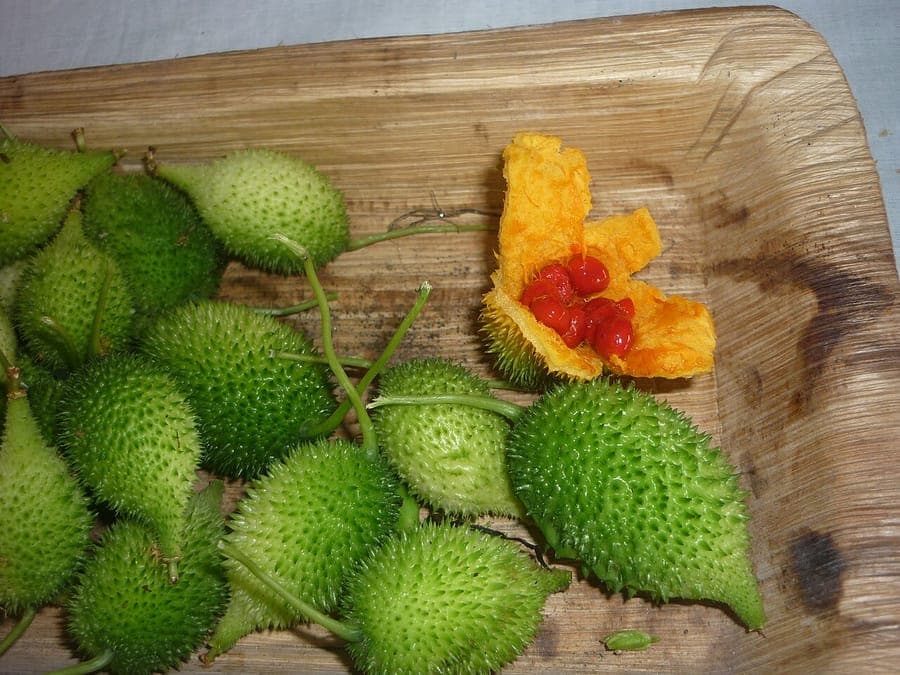
Sivahari / CC BY-SA 3.0, via Wikimedia Commons
Momordica dioica: complete guide
Momordica dioica
Want to see Momordica dioica: complete guide in your garden?
1 minute, no credit card
Overview
Momordica dioica, known as Spine Gourd, Bristly Balsam Pear, or Spiny Gourd, is a vigorous, dioecious climbing plant from the Indian subcontinent and Myanmar. This energetic vine produces interesting spiky green fruits with culinary value, widely used in Asian kitchens. The plant grows quickly, bearing yellow flowers followed by characteristic green fruits with soft spines. Momordica dioica is frost-sensitive and thrives in warm, humid environments. It excels in vertical gardening on pergolas, trellises, and climbing systems.
Appearance and Bloom
Momordica dioica grows as a vigorous, hairy vine with large, deeply lobed leaves reaching 15 centimeters wide. Stems are densely covered with soft hairs. Flowers appear May through August, relatively small at 1-1.5 centimeter diameter, bright yellow with green sepals. Being dioecious (male and female flowers on separate plants), you need both for fruit set. Fruits grow 4-8 centimeters long, oval to elongate, bright green covered with soft, short spines. Fruits ripen slowly, turning orange-yellow at full maturity.
Ideal Location
Momordica dioica thrives in warm, sunny sites with minimum six to eight hours direct sun daily. The plant loves heat and humidity; ideal temperatures range 20-30C. Provide strong supports: trellises, pergolas, fences, or heavy netting for vertical growth. Protect from strong winds damaging vines and flowers. In cool climates, grow as annual; in warm regions, it may persist for multiple years.
Soil
Momordica dioica thrives in well-draining, fertile soil rich in organic matter. Add generous compost or manure before planting. The plant tolerates slightly acidic to neutral soils, ideal pH 6.0-7.5. Ensure no stagnant water; provide good drainage. This plant is hungry; incorporate compost monthly and provide regular feeding. Heavy clay soils require significant amendment with sand and organic material.
Free design
Want to see Momordica dioica: complete guide in your garden? Make a free design now.
Watering
Momordica dioica loves consistently moist soil during growth and fruiting seasons. Water when the top centimeter feels dry. During hot periods, daily watering may be needed. Avoid waterlogging; ensure good drainage. Water at the roots, not foliage, to prevent fungal diseases. In wet seasons, reduce watering if rainfall suffices. Gradually reduce watering at season's end.
Pruning
Momordica dioica grows so vigorously that regular pruning may be needed for control. Cut lateral vines back to desired size. Remove dead, diseased, or damaged growth when observed. If the plant becomes too dense, thin by removing entire vines, allowing sunlight penetration. Pruning encourages more flowering and fruiting. Summer pruning yields better fruiting than winter pruning.
Maintenance Calendar
May-June: Sow seed, warm start, or transplant. July-August: Active growth, regular watering and feeding. August-October: Peak flowering and fruiting, continuous harvesting. October-November: Slowing growth, reduce watering. December-April: In warm regions, continue growth; in cool areas, plant dies off.
Winter Hardiness
Momordica dioica is very frost-sensitive and dislikes temperatures below 10C. In temperate climates, grow as annual, sowing in May after frost danger and harvesting through October. In warm regions (USDA zones 10-11), the plant may overwinter outdoors and persist for multiple years. In cold winters, save seed for replanting next season.
Companion Plants
Momordica dioica combines well with other climbing vegetables: peas, beans, and cucumbers. Underneath, low-growing vegetables like lettuce and spinach thrive. Plant alongside tomatoes and peppers for mixed vertical gardens. Avoid partners using abundant nutrition, as this plant is nutrient-hungry.
Conclusion
Momordica dioica is a nutrient-rich climbing plant producing distinctive spiky fruits for Asian cuisine. With warmth, humidity, feeding, and support, this plant grows vigorously and productively. Consult local nurseries for seed and planting advice. Visit gardenworld.app for guides on vegetable growing and vertical gardening.
Want to see Momordica dioica: complete guide in your garden? Make a free design now.
Upload a photo, pick a style, and get a photorealistic design with plant list in under a minute.
No credit card required


Similar plants
Kiwano: complete guide
Cucumis metuliferus
Everything about growing kiwano: location, soil, watering, and harvesting this striking African horned cucumber with spiny orange fruits.
Sponge gourd: complete guide
Luffa aegyptiaca
Full guide to growing sponge gourd (Luffa aegyptiaca): sowing, care, harvesting edible fruits and drying natural loofah sponges in your garden.
Cucumis prophetarum: complete guide
Cucumis prophetarum
Wild cucumber is a fascinating climbing plant with remarkable spiky fruits. Learn how to grow this exotic annual from seed to harvest for decorative interest.