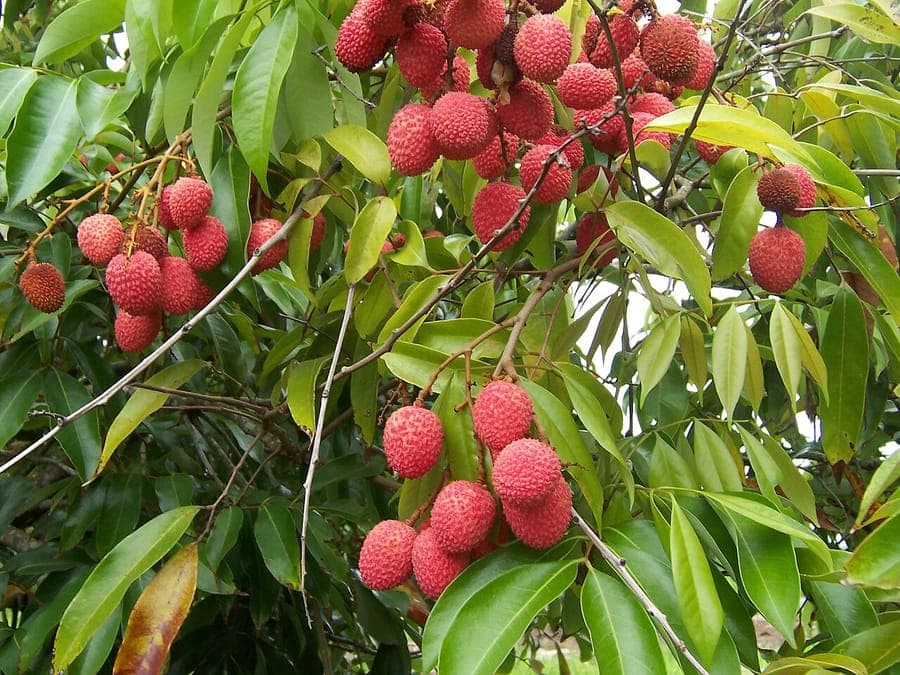
B.navez / CC BY-SA 3.0, via Wikimedia Commons
Litchi chinensis: complete guide
Litchi chinensis
Want to see Litchi chinensis: complete guide in your garden?
Full design in HD: €7.99
Look after your Litchi chinensis with the GardenWorld app
Identify plants with your camera and get a care calendar with reminders for this plant.


Overview
Litchi chinensis, commonly known as lychee or litchi, is a frost-sensitive fruit tree native to southern China. This member of the Sapindaceae family (soapberry family) is prized worldwide for the sweet, succulent white flesh of its fruits. The tree exhibits attractive growth patterns and can reach 10-15 meters in height, though cultivation typically keeps specimens more compact.
Appearance & bloom
Litchi chinensis is an attractive tree with glossy, dark green compound foliage. The tree develops a dense, rounded crown providing valuable dappled shade. In early spring, small yellowish-green flowers appear in compact panicles before fruit set. The distinctive fruits measure approximately 3-4 centimeters in diameter with a rough, bumpy red exterior. Inside lies sweet, translucent white flesh surrounding a large central seed.
Ideal location
Litchi chinensis requires full sun (8+ hours daily) and warm conditions for optimal fruit production. The tree thrives in subtropical and tropical climates with temperatures between 15-30°C. Protect from strong winds that may damage flowering. In Europe, this tree suits only very warm regions or well-heated greenhouse cultivation.
Soil
Litchi chinensis performs best on rich, well-draining soils with pH 5.5-7.0. The tree prefers soils abundant in organic matter. Ensure excellent drainage as waterlogging causes root rot. Incorporate substantial compost at planting and apply organic fertilizer annually.
Watering
Young trees require regular watering until well-established. Mature trees are moderately drought-tolerant but grow better with consistent moisture. Water regularly during growth and flowering seasons. Prevent excessive drying during fruit development, as this affects fruit quality. Reduce watering during winter dormancy.
Free preview
Want to see Litchi chinensis: complete guide in your garden? Make a free preview of your design.
Pruning
Pruning maintains tree shape and optimizes production. Remove dead and diseased wood. Lightly thin canopy for improved air circulation. Conduct pruning in late winter before new growth begins. Remove water sprouts (vigorous shoots from trunk base).
Maintenance calendar
Spring: Prune, apply fertilizer. Summer: Maintain regular watering, monitor for pests. Autumn: Prepare for fruiting, harvest ripe fruit. Winter: Minimal activity, light pruning to prepare for blooming.
Winter hardiness
Litchi chinensis is not winter hardy. Temperatures below 10°C damage flower buds, and freezing injures or kills the tree. This is strictly a plant for warm climates, subtropical regions, or heated greenhouse cultivation. In temperate Europe, grow only in large containers in heated environments.
Companion plants
In tropical gardens, pair Litchi chinensis with other fruit trees such as Mangifera (mango), Artocarpus (breadfruit), and Theobroma (cacao). The tree provides attractive background for smaller tropical plantings. Ensure adequate space for mature growth.
Closing thoughts
Litchi chinensis offers a tantalizing combination of visual appeal and productive fruiting. While cultivation requires frost protection, full sun, and careful management, the sweet fruits justify the effort. This represents an exciting project for gardeners in warm regions. Source young trees from tropical nurseries or specialty fruit tree suppliers.
On gardenworld.app, explore exotic fruit garden designs. Visit gardenworld.app for comprehensive inspiration and plant guidance.
Frequently asked questions about Litchi chinensis
Is Litchi chinensis winter hardy?
Litchi chinensis is not winter hardy. Temperatures below 10°C damage flower buds, and freezing injures or kills the tree.
When and how do you prune Litchi chinensis?
Pruning maintains tree shape and optimizes production. Remove dead and diseased wood.
How much water does Litchi chinensis need?
Young trees require regular watering until well-established. Mature trees are moderately drought-tolerant but grow better with consistent moisture.
Where does Litchi chinensis grow best?
Litchi chinensis requires full sun (8+ hours daily) and warm conditions for optimal fruit production. The tree thrives in subtropical and tropical climates with temperatures between 15-30°C.
What soil does Litchi chinensis need?
Litchi chinensis performs best on rich, well-draining soils with pH 5.5-7.0. The tree prefers soils abundant in organic matter.

See it in your garden
See Litchi chinensis in your garden
One photo of your garden and a few questions. You see the result in about a minute.
Try it with a photoIdentify this plant in your own garden. Identify a plant
Similar plants
Red horse chestnut: a flowering tree for large gardens
Aesculus × carnea
A guide to the red horse chestnut (Aesculus × carnea): position, soil, pruning, diseases, hardiness and the poisonous seeds of this flowering park tree.
Acer pycnanthum: complete guide
Acer pycnanthum
Acer pycnanthum, the Japanese swamp maple, is a fast-growing tree with early red flowers and brilliant autumn color, ideal for damp garden settings.
Freeman maple: complete guide
Acer × freemanii
Everything about the Freeman maple (Acer x freemanii): a fast-growing shade tree with spectacular autumn colour for large gardens.
