
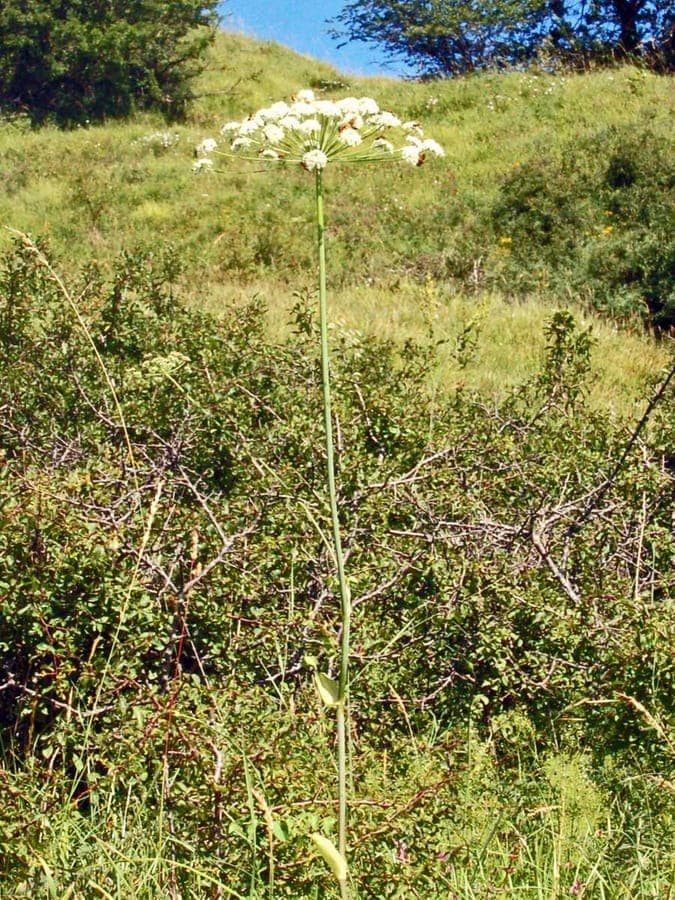
Hectonichus / CC BY-SA 3.0, via Wikimedia Commons
Broadleaf sermountain: complete guide
Laserpitium latifolium
Want to see Broadleaf sermountain: complete guide in your garden?
1 minute, no credit card
Overview
Broadleaf sermountain (Laserpitium latifolium), also known as large sermountain, is a stately biennial to perennial plant from Apiaceae family (carrot family). This alpine plant originates from European mountains and grows at appreciable elevations in various mountain ranges. The plant is renowned for its impressive growth, large broad foliage, and delicate white flower clusters.
Appearance and bloom
Broadleaf sermountain reaches 60-100 cm in height. The plant first forms a basal rosette of large (up to 30 cm), triply-divided leaves with heart-shaped leaflets. In the second year or later, a thick, green stem with numerous side branches emerges. Flowers appear July-August in large, flat white flower umbels of 5-10 cm diameter. Flowers range from white to light pink. Fruits are flat, oval seed-bearing structures with broad wings.
Ideal location
Broadleaf sermountain grows optimally in part shade to sun. Plant locations with morning sun and afternoon shade are ideal. The plant thrives with ample moisture but not waterlogging. This plant tolerates wind and cold winters (USDA zones 5-8).
Soil
Broadleaf sermountain prefers nutrient-rich, well-draining soils with moderate moisture. pH 6.5-7.5 is optimal. Acidic soils (below pH 6) should be amended with lime. The plant grows well in both sandy and clay soils.
Free design
Want to see Broadleaf sermountain: complete guide in your garden? Make a free design now.
Watering
Regular watering during growing period (May-October) is important. Provide approximately 2-3 liters per two weeks during dry spells. The first two years require consistent watering for good establishment. Mature plants tolerate drought better but grow better with moderate moisture.
Pruning
Remove spent flower stems in August-September for a neater appearance and to limit self-seeding. The plant can regenerate if you do not damage basal leaves. Hardy parts can be removed in December-January.
Maintenance calendar
- April-May: Stake young plants; water regularly
- June: Flower stem emergence; water continuously
- July-August: Flowering complete; reduce watering
- August-September: Seed stage; remove stems if desired
- October-March: Rest period; minimal watering
Winter hardiness
Broadleaf sermountain is hardy in USDA zones 5-8 (-29 to -12°C). The plant forms a winter-hardy basal leaf rosette. Extreme frost can damage young plants, but mature plants usually recover.
Companion plants
Broadleaf sermountain combines well with other alpine plants such as angelica, heracleum, and other Apiaceae. Plant around with alpine flora such as primulas and lupines. In mixed borders, this plant creates structure.
Closing
Broadleaf sermountain is perfect for those seeking a stately alpine plant with interest in flowers and structured form. This is not for small gardens but offers beauty in larger, more naturalistic settings. Discover alpine plants and grassland design on gardenworld.app. Get inspired for natural gardens on gardenworld.app.
Want to see Broadleaf sermountain: complete guide in your garden? Make a free design now.
Upload a photo, pick a style, and get a photorealistic design with plant list in under a minute.
No credit card required


Similar plants
Wild angelica: complete guide
Angelica sylvestris
How to grow Wild angelica (Angelica sylvestris) in your garden: care, soil, light, and companion plants. Ideal for damp, shady areas and wildlife gardens.
Cow-parsnip: complete guide
Heracleum sphondylium
Discover cow-parsnip, an impressive European meadow plant with large flower clusters. Perfect for natural meadows and waterside areas.
Rough chervil: complete guide
Chaerophyllum temulum
Discover how to grow and care for Rough chervil: ideal conditions, watering needs, companion plants, and seasonal maintenance. Perfect for wild, low-effort gardens.