
Wikimedia Commons / Public domain, via Wikimedia Commons
Rough chervil: complete guide
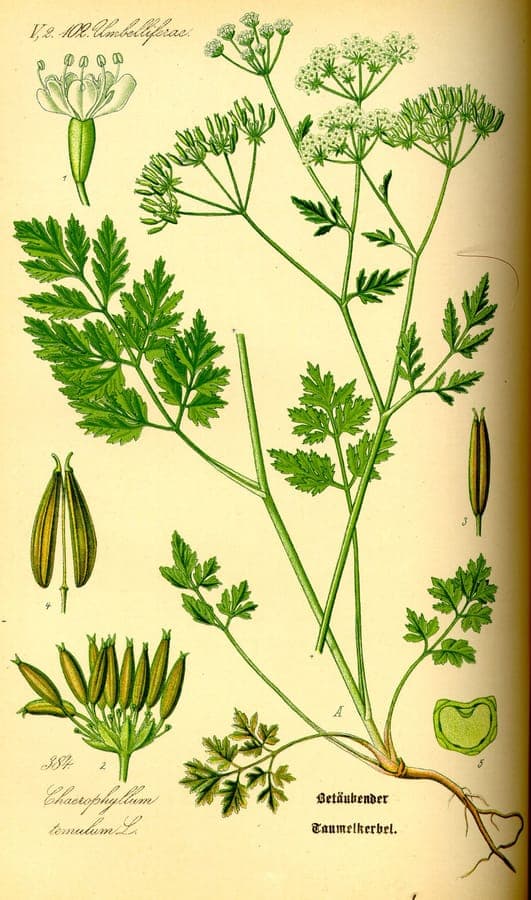
Chaerophyllum temulum
Want to see Rough chervil: complete guide in your garden?
1 minute, no credit card
Overview
Rough chervil (Chaerophyllum temulum) is a biennial or short-lived perennial in the Apiaceae family, commonly found in woodlands and hedgerows across Central and Eastern Europe. Native to countries like Austria, the Baltic States, and Belgium, it thrives in cool, moist environments where it can grow undisturbed. While often mistaken for a weed, rough chervil brings a delicate, natural beauty to wild gardens and shaded corners.
This plant isn't typically sold in mainstream garden centres, but if it finds its way into your plot-either by seed dispersal or natural colonisation-it can add seasonal interest without demanding attention. It's not aggressive, but it does self-seed reliably in favourable conditions. If you're planning a naturalistic garden layout, use gardenworld.app to visualise how rough chervil can fit into shaded borders or under deciduous trees.
Appearance & bloom cycle
Rough chervil grows 40 to 80 cm tall, with upright, slightly hairy stems that often show purple streaks. The leaves are finely divided, fern-like, and dark green, resembling parsley or fennel but with a softer texture. In late spring, from April to June, it produces umbrella-shaped clusters of small white flowers, each inflorescence measuring 3–5 cm across.
The bloom period depends on local climate and site conditions. In sheltered, moist spots, flowering may start as early as late April. The scent is mild, sometimes described as musky or faintly unpleasant-hence one of its French names, "Chérophylle puant" (stinking chervil). After blooming, seeds form and disperse easily by wind and animal movement, allowing new plants to emerge the following year.
The plant typically dies back after seeding, but fresh seedlings often appear in autumn or early spring, continuing the cycle.
Ideal location
Choose a spot with light to partial shade. Rough chervil performs best under the canopy of deciduous trees, along fence lines, or in woodland margins where direct sun is limited to morning or dappled light. Full sun, especially on dry soils, leads to stress and poor growth.
It's ideal for naturalised areas, wildflower meadows, or low-maintenance borders where a tidy, formal look isn't the goal. Avoid high-traffic zones or areas you cultivate frequently, as this disrupts its lifecycle. Use gardenworld.app to map out shaded zones in your garden and determine the best spots for plants like rough chervil that thrive in cooler microclimates.
Soil requirements
This plant prefers moist, humus-rich loam or clay-loam with a pH of 6.0 to 7.0. The soil should retain moisture but drain well-standing water promotes root rot. Sandy soils can work if amended with compost or leaf mould to improve water retention.
Avoid very chalky or alkaline soils, though slight lime content isn't detrimental. Heavy compaction or nutrient-poor sand will limit growth, so enrich the soil before planting if needed.
Free design
Want to see Rough chervil: complete guide in your garden? Make a free design now.
Watering
During active growth (March to June), keep the soil consistently moist. Water deeply once a week during dry spells, especially for young plants. Established plants are somewhat drought-tolerant but perform best with steady moisture.
Mulching with organic material helps conserve moisture and suppress competing weeds. Once flowering ends and the plant dies back in summer, no additional watering is required.
Pruning
Pruning isn't necessary for health, but you can deadhead spent flower heads in late June to prevent excessive self-seeding if you want to control spread. Leaving some seed heads intact supports local wildlife, as birds may feed on the seeds.
Wear gloves when handling the plant-some people experience skin irritation from the sap, particularly when exposed to sunlight (phytophotodermatitis). This is more common with prolonged contact.
Maintenance calendar
- February–March: Check for emerging seedlings. Remove competing weeds.
- April–May: Peak growth and flowering. Ensure consistent moisture.
- June: Flowers fade. Cut back seed stems if needed.
- July–August: Plant senesces. No care required.
- September–October: New seedlings may appear. Thin or relocate as desired.
- November–January: Dormant period. Leave debris to protect soil and overwintering insects.
Winter hardiness
Rough chervil is hardy in USDA zones 5 to 8. In zone 5, it survives winter temperatures down to -20°C with mulch protection. In milder zones (7–8), it often overwinters as rosettes or seedlings under leaf litter. No special winter care is needed.
Companion plants
Pair rough chervil with other shade-tolerant species like wood anemone (Anemone nemorosa), wild garlic (Allium ursinum), or sweet woodruff (Galium odoratum). It also works well near ferns, lungworts (Pulmonaria), or native violets.
Avoid aggressive ground covers or heavy feeders that deplete soil moisture. Opt for open, airy plantings that allow rough chervil space to self-seed naturally.
Closing
Rough chervil isn't a showstopper, but it has quiet charm. It suits gardeners who appreciate spontaneity and low intervention. You won't find it at most garden centres, but if it appears on its own, consider letting it stay. It asks for little and gives back with seasonal texture and habitat value. For inspiration on integrating such plants into your design, visit gardenworld.app and explore native planting schemes that celebrate wildness over perfection.
Want to see Rough chervil: complete guide in your garden? Make a free design now.
Upload a photo, pick a style, and get a photorealistic design with plant list in under a minute.
10,000+ gardens designed already
No credit card required


Similar plants
Whorled carrot: complete guide
Daucus involucratus
Daucus involucratus is a Mediterranean umbellifer with white flower heads framed by lacy bracts. Growing this gravel garden gem.
Daucus muricatus: complete guide
Daucus muricatus
Daucus muricatus, the spiny wild carrot, grows wild on Mediterranean coasts. Discover sowing, June-July bloom, and wildflower meadow use.
Daucus pumilus: complete guide
Daucus pumilus
Daucus pumilus is a dwarf wild carrot relative with white lacy umbels, thriving on dunes and coastal rock in poor, fast-draining soil.