
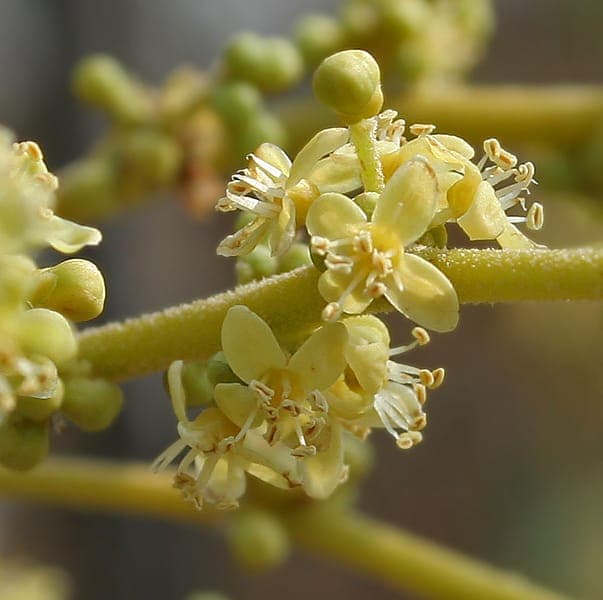
J.M.Garg / CC BY-SA 4.0, via Wikimedia Commons
Lannea coromandelica: complete guide
Lannea coromandelica
Want to see Lannea coromandelica: complete guide in your garden?
1 minute, no credit card
Overview
Lannea coromandelica, also known as Goonja or Indian Ash Tree, is a tropical fruit tree originating from the Indian subcontinent through China and southeastern Asia. This impressive tree thrives beautifully in warm greenhouses and in very warm climates. With its characteristic feathered foliage and interesting fruit production, it is a unique choice for experimental gardeners in temperate climates.
Appearance and Bloom
Goonja is a medium to large tree with elegant, feathered leaves reaching 30-40 cm in length. The tree produces small, inconspicuous yellow-green flowers in panicles during spring. The bark is interestingly furrowed and gray-brown. After blooming, characteristic small red fruits appear that turn orange as they ripen.
Ideal Location
This tropical tree requires full sun and protection from strong winds. Plant this tree only in very warm areas (U.S.D.A. zones 10-11 equivalent) or in a warm greenhouse. The tree appreciates higher humidity. In moderate climates, a south-facing wall or sheltered corner with reflection from stones/tiles is very beneficial.
Soil
Goonja is flexible regarding soil type but prefers well-draining, humus-rich soil. A mixture of potting soil, compost, and perlite or sand is ideal for container growing. In gardens, improve drainage with plenty of organic matter. A pH between 5.5 and 7.0 is optimal.
Watering
This tropical tree loves receiving regular water, especially during the growing season. Water once the top centimeter of soil feels dry. Avoid waterlogging. During rest period (winter) give less water. In dry homes, increase humidity by misting foliage.
Free design
Want to see Lannea coromandelica: complete guide in your garden? Make a free design now.
Pruning
Pruning helps shape and keep the tree compact. Cut back the leader to encourage branching. Unruly branches can be shortened in late spring. Remove crossing branches to improve air circulation. In containers, prune regularly to control tree size.
Maintenance Calendar
Spring: Growing season begins; fertilize every two weeks. Summer: Water regularly. Autumn: Reduce fertilizing. Winter: Minimize water and maintain temperature around 15 degrees. Plant grows slowly in cooler climates - patience is essential.
Winter Hardiness
Goonja is not winter-hardy outside very warm climates. In temperate zones, it survives only in warm greenhouses or very sheltered locations. This tree can lose leaves at temperatures below 10 degrees Celsius. Overwintering in pots is easier for temperature control.
Companion Plants
In warm greenhouses, combine this with other tropicals like Frangipani, Plumeria, and other shade-tolerant tropicals. This tree can serve as anchor specimen with lower tropicals beneath.
Closing Thoughts
Lannea coromandelica is a fascinating choice for gardeners interested in tropical plants. In warm greenhouses, this tree grows successfully. The exotic appearance and interesting fruit production make it a conversation piece. Patience and consistent care are key.
Especially for warm greenhouses: Intratuin and Gamma sometimes have limited tropical assortments but specialized tropical nurseries have better selections.
Want to see Lannea coromandelica: complete guide in your garden? Make a free design now.
Upload a photo, pick a style, and get a photorealistic design with plant list in under a minute.
No credit card required


Similar plants
Skunkbush sumac: complete guide
Rhus trilobata
Everything about Rhus trilobata: siting, soil, autumn colour, pruning, and how this tough ornamental shrub earns a place in any garden.
Winged sumac: complete guide
Rhus copallinum
Everything about Rhus copallinum, the winged sumac with spectacular autumn colour. Location, pruning and garden value in full detail.
Aromatic sumac: complete guide
Rhus aromatica
Full guide to aromatic sumac (Rhus aromatica): planting, soil, care, pruning and companion plants for dry, sunny gardens and slope stabilisation.