
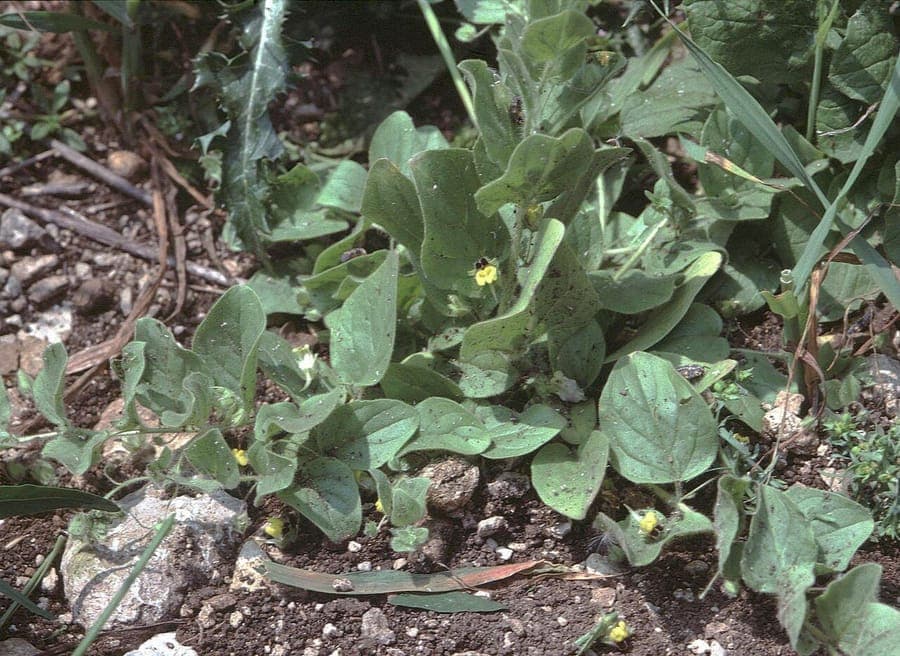
Wikimedia Commons / Public domain, via Wikimedia Commons
Hairy Toadflax: Complete Guide
Kickxia spuria
Want to see Hairy Toadflax: Complete Guide in your garden?
1 minute, no credit card
Overview
Hairy toadflax (Kickxia spuria) is a charming, finely textured herbaceous plant native to Europe, North Africa, and the Mediterranean region. This diminutive, hairy groundcover thrives in moist, undisturbed locations and creates fine-textured carpets in gardens. In temperate climates, it excels in rock gardens, border edges, and on paved surfaces.
Appearance & Bloom
Hairy toadflax forms a low, spreading herb with tiny, ovate leaves that are entirely covered with fine hairs - hence the common name. Plants typically reach 10-25 cm tall, gradually spreading wider. Flowers are small, white to pale pink with purple spots, approximately 5-8 mm across, produced abundantly July-October, often extending into early winter.
Ideal Location
Position in full sun to part shade. Heavy shade results in weak, sparse growth with minimal blooms. The plant tolerates partially shaded locations well. Avoid intensely hot, dry summer sites; hairy toadflax prefers slightly moister microclimates with shelter. The plant handles wind and moisture fluctuations well.
Soil
Hairy toadflax is notably undemanding and grows in virtually all soil types. Sandy, loamy, and clay soils are equally acceptable. The plant thrives in moist, not overly dry locations. Ensure moderate drainage to prevent waterlogging. Both nutrient-rich and poor soils support healthy growth, though moderate fertility is optimal.
Watering
Once established, hairy toadflax is fairly independent. Water regularly during the first growing season. Subsequently, rainfall usually provides sufficient moisture. During extreme drought or in containers, additional watering supports vigor. The plant tolerates brief dry spells well due to its hairy foliage, which reduces water loss.
Free design
Want to see Hairy Toadflax: Complete Guide in your garden? Make a free design now.
Pruning
This herb requires virtually no pruning. Remove yellowed foliage or dead plant matter as desired. Deadheading (removing spent flowers) throughout the season encourages continuous blooming. This is an exceptionally low-maintenance plant.
Maintenance Calendar
- April-May: Sow seed or plant seedlings
- July-October: Enjoy extended flowering; deadhead regularly
- October-November: Collect seed for next season
- November-December: Remove spent plants after frost
Winter Hardiness
Hairy toadflax is not fully winter-hardy in cold climates. It functions as an annual or short-lived perennial. Plants typically die after hard frost. However, many self-seed readily, producing volunteers the following spring.
Companion Plants
Hairy toadflax partners beautifully with other diminutive rock garden plants: sedums, echeveria, sempervivum, and alpine groundcovers. Also excellent for paving crevices and as edging. Visit gardenworld.app for rock garden design inspiration.
Conclusion
Hairy toadflax is a delightful, underappreciated herb deserving far greater recognition. Its fine hairy foliage, extended blooming from summer through autumn, and minimal maintenance needs make it ideal for rock gardens and border edges. Seeds are readily available from specialty nurseries. With minimal care and occasional deadheading, you'll enjoy months of delicate, prolific blooms. For integrated rock garden design featuring fine-textured groundcovers, explore gardenworld.app.
Want to see Hairy Toadflax: Complete Guide in your garden? Make a free design now.
Upload a photo, pick a style, and get a photorealistic design with plant list in under a minute.
No credit card required


Similar plants
White Beardtongue: complete guide
Penstemon albidus
Discover white beardtongue (Penstemon albidus) - elegant perennial with white to cream flowers. Drought-resistant, perfect for prairie and dry gardens.
Longsepal Beardtongue: complete guide
Penstemon calycosus
Discover longsepal beardtongue (Penstemon calycosus) - beautiful perennial with lilac-blue flowers. For partial shade and moist soil. Ideal for naturalized.
Penstemon cusickii: complete guide
Penstemon cusickii
Discover Cusick's beardtongue, a compact alpine flowering plant with violet-pink blooms. Perfect choice for rock gardens and water-wise landscaping.