
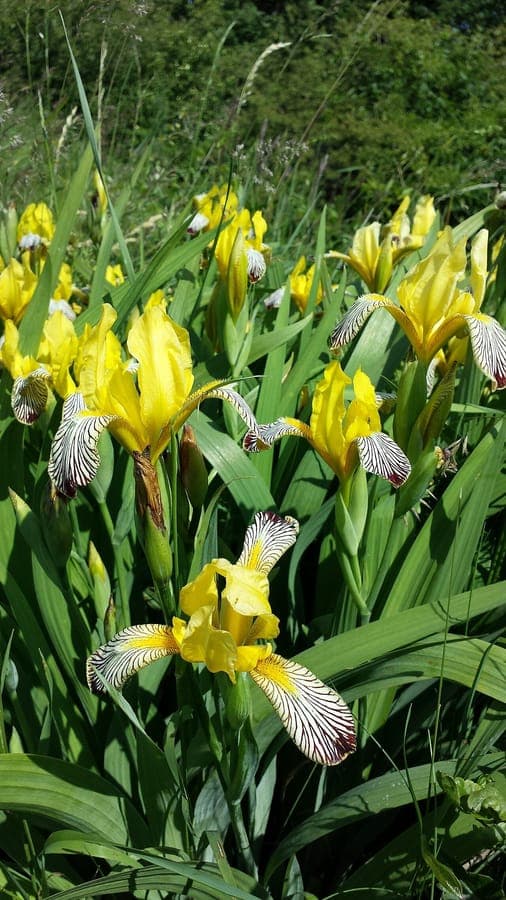
Stefan.lefnaer / CC BY-SA 3.0, via Wikimedia Commons
Variegated iris: complete guide
Iris variegata
Want to see Variegated iris: complete guide in your garden?
1 minute, no credit card
Overview
The Variegated iris (Iris variegata), also known as Hungarian iris or Bunte Schwertlilie, is a classic bearded iris that has been cultivated in gardens for centuries. This iris is characterized by its distinctive bicolor flowers with yellow standards and dark blue-purple falls, giving it a highly decorative appearance.
Native to Eastern and Central Europe, the Variegated iris is a reliable and robust iris that flourishes in virtually every moderately well-maintained garden. It is hardy, low-maintenance, and provides beautiful spring and early summer blooms for years. This is an iris for those who appreciate a classic with a long garden tradition.
Appearance and bloom
The Variegated iris reaches 40 to 70 centimeters in height with upright, grayish-green leaves that provide structure to the garden even when the plant isn't blooming. Flowers are characteristically bicolor: bright yellow standards (upright petals) and dark purple-blue to violet falls (drooping petals).
Each flower lasts only several days, but the plant produces multiple flowers per spike and blooms abundantly from May to June. Flowers are not strongly fragrant, but offer a subtle, delicate scent.
Ideal location
The Variegated iris grows best in fully sunny locations receiving at least 6 to 8 hours of direct sunlight daily. Full sun promotes rich blooms and healthy growth.
Regarding wind tolerance, the Variegated iris is highly robust. It withstands strong winds without issue and performs well in sheltered gardens too.
This iris works beautifully in:
- Classic flower borders
- Rock gardens and pergolas
- Front yards and property dividers
- Wild garden and prairie plantings
Soil
The Variegated iris is highly flexible regarding soil type. It accepts virtually any reasonably-drained soil, even somewhat drier types.
Ideal soil composition:
- Standard garden soil
- Grit or gravel for better drainage (optional)
- Compost or organic matter (10-20%)
The pH range can be broad, from slightly acidic to slightly alkaline (pH 6.0 to 8.0). This iris grows beautifully in moderately-fertile soils but thrives even in poor soils.
If you have very heavy clay, improve it gently with gravel, but nutrition is far less critical than with some other iris species.
Free design
Want to see Variegated iris: complete guide in your garden? Make a free design now.
Watering
The Variegated iris, once established, is fairly drought-tolerant. During the growing season (spring and early summer) keep soil moderately moist. Once established, this iris can survive extended dry spells.
Watering schedule:
- Spring: normal water until moderately moist
- Summer: drought-tolerant; water only during extreme drought
- After planting: water regularly until plant is established (2-3 weeks)
Never water at midday heat, and ensure water doesn't splash on foliage, which can lead to fungal infection.
Pruning
Pruning is minimal but beneficial for the Variegated iris. After blooming, remove spent flowers and unsightly petals to keep the plant tidy. Withered blooms can be gently pinched off their stems.
After the growing season, around August, you can carefully remove dead leaves. The plant can thrive without intensive pruning.
Damaged leaves can be removed throughout the season. Annual renewal treatment (cutting back very old leaves) can be beneficial after 4-5 seasons.
Maintenance calendar
May-June: Full bloom; remove spent flowers July-August: Growth begins to slow; gentle pruning September-October: Winter preparation; minimal maintenance November-April: Winter rest; no special care
Winter hardiness
The Variegated iris is very hardy, especially for Dutch and German climates. This iris thrives in USDA zones 4 to 10. It appreciates fairly cold winters and can withstand extended freezing periods without issue.
Winter preparation is unnecessary beyond standard garden maintenance. The plant can remain outdoors for years without protection.
Companion plants
The Variegated iris pairs nicely with:
- Allium species: purple flowers create nice contrast
- Delphinium and Larkspur: both bloom in spring-summer
- Salvia species: softer contrast
- Nepeta (Catmint): grayish-green foliage combines beautifully
- Lavender: both color and texture match perfectly
Combine this iris carefully with other iris species due to possible cross-pollination.
Closing
The Variegated iris is a quiet witness to garden history - beloved by gardeners for centuries for its reliability and beauty. This is no difficult plant, no diva demanding constant attention. This is a plant that grows, blooms, and beautifies your garden without fuss.
Add this classic iris to your garden design at gardenworld.app and discover how it brings your border to life with its characteristic yellow-purple beauty. You'll likely find this iris at local garden centers.
Include the Variegated iris in your gardenworld.app design and enjoy years of this reliable beauty.
Want to see Variegated iris: complete guide in your garden? Make a free design now.
Upload a photo, pick a style, and get a photorealistic design with plant list in under a minute.
No credit card required


Similar plants
Algerian iris: complete guide
Iris unguicularis
Discover the Algerian iris, a winter bloomer with fragrant flowers. Care instructions, cultivation and maintenance tips for this unique iris species.
Japanese iris: complete guide
Iris japonica
Discover the Japanese iris with its refined gray-green foliage and elegant flowers. Care, cultivation, and maintenance advice for this Asian iris.