
Magnus Manske / CC BY-SA 3.0, via Wikimedia Commons
Algerian iris: complete guide
Iris unguicularis
Want to see Algerian iris: complete guide in your garden?
1 minute, no credit card
Overview
The Algerian iris (Iris unguicularis), also known as Iris stylosa or winter iris, is a rare and fascinating rhizomatous iris known primarily for producing delightful flowers from November through March. Native to North Africa and the Eastern Mediterranean, this iris brings unexpected early bloom to your garden precisely when most plants are dormant.
This is no common iris found in every garden center. Growing from a rhizome, the Algerian iris reaches only 15 to 40 centimeters in height, making it perfect for front gardens, rock gardens, or borders. Most notably, this iris offers fragrance: soft, sweet-scented blooms with hints of violet that greet you on winter mornings.
Appearance and bloom
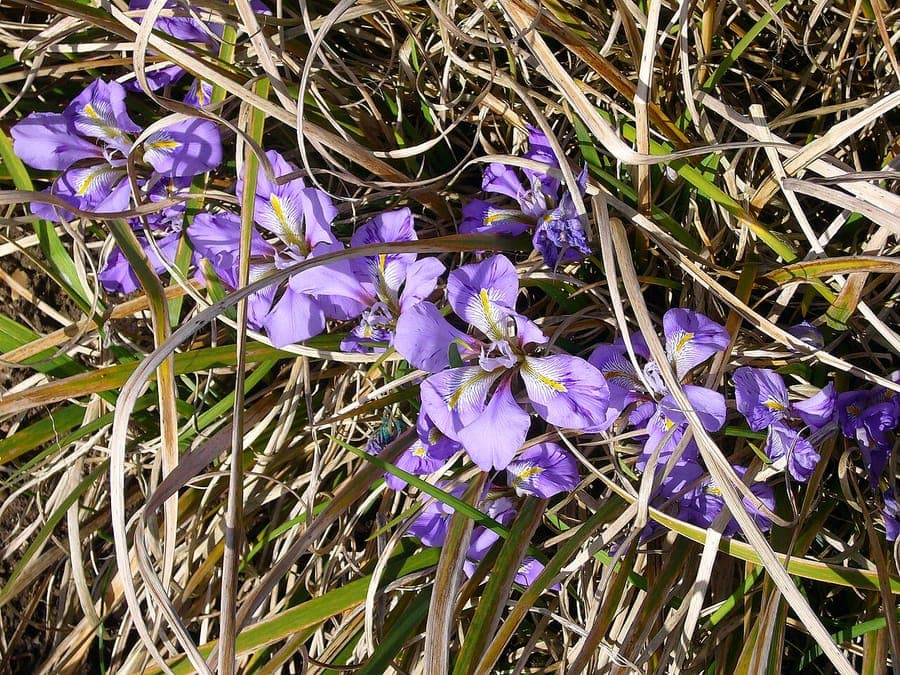
The Algerian iris produces long, narrow leaves of intense green color arranged in upright clumps. Flowers are small, sturdy, and elegant, ranging from deep purple-violet to bright blue, occasionally with silvery accents on the petals. Although each bloom is short-lived, the plant continuously produces new buds throughout winter.
The characteristic long, thin corona ("unguis" literally means nail in Latin) distinguishes this iris from related species. The falls and standards are well-formed, though diminutive, providing refined appearance.
Bloom times are exceptionally early for a reason - from November to March depending on your climate - making this iris a true winter beauty.
Ideal location
The Algerian iris grows best in locations receiving maximum sunlight. Aim for at least 6 hours of full sun daily, though 8+ hours is even better. In warmer climates, consider afternoon shade.
Wind can be problematic, particularly because the flowers produce fragrance you want to preserve. Provide some protection from strong winds.
For positioning, this iris excels in:
- Mediterranean-style gardens with gravel and stones
- Gravel beds and rock gardens
- Containers against warm, sunny walls
- Front borders with south or west exposure
Soil
Drainage is absolutely crucial. The Algerian iris cannot tolerate waterlogged soil and demands excellent drainage. This should be your first priority in planting.
Ideal soil composition includes:
- Grit or coarse sand (25-30% of total)
- Potting soil or universal garden soil (40-50%)
- Compost or humus-rich material (20-25%)
The pH can be neutral to slightly alkaline (pH 6.5 to 7.5 is ideal). This iris thrives in poor, mineral soils and requires minimal feeding.
If you have heavy clay soil, amend it substantially with gravel, sand, and organic matter before planting.
Free design
Want to see Algerian iris: complete guide in your garden? Make a free design now.
Watering
This is an extremely drought-tolerant plant once established. During the growing season (autumn to winter) keep soil slightly moist, but definitely not wet. During summer keep it virtually dry.
Watering schedule:
- Autumn/winter: keep slightly moist
- Spring/summer: very dry, minimal water
- After planting: water regularly until plant is established (first 2-3 weeks)
Overwatering is the primary cause of death for this iris. Excessive water will certainly lead to root rot.
Pruning
Pruning is minimal for the Algerian iris. Remove spent flowers gently after blooming (deadheading). Damaged or yellowed leaves can be cut out. After the growing season, in May or June, you can cautiously remove dead or yellow foliage.
After a few years, you can gently remove some outer, older leaves to create space for new growth, but this is not strictly necessary.
Maintenance calendar
January to March: Enjoy blooms, remove spent flowers April-May: Growth slowing; gentle pruning June-September: Dormant season; minimal water October-November: Growth resumes, increase watering
Winter hardiness
The Algerian iris is less winter-hardy than many other iris species, especially in severe winters. In the Netherlands, this plant is suited to protected locations in warmer regions (USDA zone 7b-10). In colder areas, it is advisable to:
- Grow the plant in a container you can relocate
- Apply a mulch layer (5-10 cm) for frost protection
- Position the plant against warm south or west-facing walls
In very cold regions, it may be better to dig up this iris annually and overwinter it in a greenhouse.
Companion plants
The Algerian iris pairs nicely with:
- Helleborus species (Christmas rose): both bloom in winter
- Liriope muscari: fine texture and late-summer bloom
- Sedum species: equally suited to dry conditions
- Heuchera (Coral Bells): attractive foliage contrast
- Dwarf conifers: structure and winter interest
Avoid placing too close to moisture-loving plants.
Closing
The Algerian iris is a game-changer plant: it brings winter magic and fragrance to your garden precisely when you expect it least. Yes, it demands higher drainage standards than some other irises, but the reward of early, fragrant blooms more than justifies the extra care.
Can't find this plant in Dutch garden centers? Check local specialists or online retailers for availability. Or consult gardenworld.app for further customized advice for your garden.
Add this winter bloomer to your gardenworld.app design and discover how this iris transforms your front garden.
Want to see Algerian iris: complete guide in your garden? Make a free design now.
Upload a photo, pick a style, and get a photorealistic design with plant list in under a minute.
No credit card required


Similar plants
Variegated iris: complete guide
Iris variegata
Discover the variegated iris with its characteristic yellow and blue-purple flowers. Care, cultivation, and maintenance advice for this classic iris.
Japanese iris: complete guide
Iris japonica
Discover the Japanese iris with its refined gray-green foliage and elegant flowers. Care, cultivation, and maintenance advice for this Asian iris.