
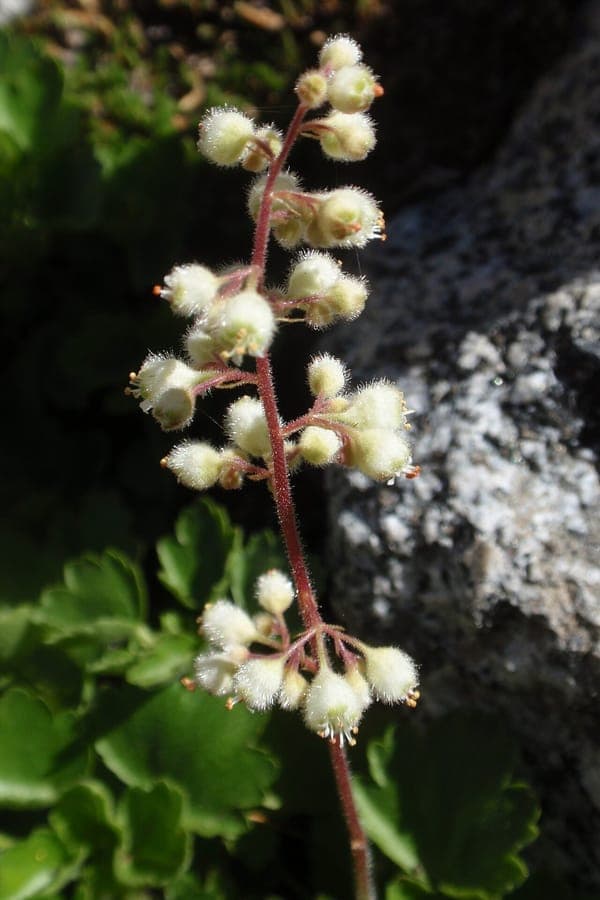
Tom Hilton / CC BY 2.0, via Wikimedia Commons
Merriam's alumroot: complete guide
Heuchera merriamii
Want to see Merriam's alumroot: complete guide in your garden?
1 minute, no credit card
Overview
Merriam's alumroot (Heuchera merriamii) is a delicate alpine plant native to the mountains of Oregon and northern California. This compact heuchera species is renowned for its striking, lobed foliage with interesting color patterns. Despite its modest stature, it brings significant character to rock gardens, alpine troughs, and shaded borders.
Merriam's alumroot is an excellent choice for gardeners seeking delicate, low-growing specimens. With its drought tolerance and shade appreciation, it thrives where many plants struggle.
Appearance and bloom
Merriam's alumroot grows as a compact rosette of leaves, typically 15-25 cm tall. Leaves are round to heart-shaped, roughly 3-8 cm wide, with pronounced veins and interesting texture. Foliage color ranges from green to reddish-brown depending on light availability.
Flowers emerge in spring on slender stems reaching 30-40 cm tall. They are small and soft red to pink, arranged in loose racemes. The blooming period lasts several weeks.
Ideal location
Merriam's alumroot thrives in part shade to shade. It tolerates sunny locations but foliage can scorch in intense afternoon sun in warm regions. In temperate climates, it accommodates more sun.
Plant in a location with excellent drainage and protection from strong winds. This mountain plant values calm conditions.
Soil
Merriam's alumroot requires light, well-draining soil. Add abundant sand, perlite, and gravel to standard garden soil - roughly 40% mineral amendments. This plant tolerates poor soil better than rich soil.
Soil pH should be neutral to slightly acidic. Avoid heavy clay soils and locations where water pools. Many gardeners use alpine grit mix for container cultivation.
Free design
Want to see Merriam's alumroot: complete guide in your garden? Make a free design now.
Watering
Merriam's alumroot is drought-tolerant once established. Water regularly when young until it develops a strong root system. After the first growing season, water only when soil feels very dry.
Excessive water is the greatest threat to this plant. In very wet winters, waterlogging causes root rot. In containers, monitor moisture carefully.
Pruning
Pruning is minimally necessary. Remove yellowed or dead foliage to maintain appearance and health. After flowering, remove spent flower stems, though you may leave them for seed production.
The plant grows low and compact, requiring minimal pruning.
Maintenance calendar
Spring: Plant young specimens after frost danger. Water regularly. No feeding needed.
Summer: Minimal care. Monitor moisture levels regularly. Enjoy blooms.
Autumn: Reduce watering as rainfall season begins. Check for waterlogging.
Winter: Virtually no care needed. Protect against extreme wet conditions.
Winter hardiness
Merriam's alumroot is hardy to USDA zone 5. This means it survives winters in temperate regions. The plant dies back in winter but regrows in spring.
In extremely wet winters, waterlogging can cause problems, so ensure excellent drainage.
Companion plants
Merriam's alumroot pairs beautifully with other alpine plants:
- Other heuchera species for foliage contrast
- Saxifraga (saxifrage) for shared niche
- Sedums and alpine succulents
- Alpine dianthus for bloom contrast
- Ferns for texture
Final thoughts
Merriam's alumroot is a perfect choice for gardeners seeking beautiful, low-growing specimens. With drought tolerance and shade appreciation, it thrives where many plants fail. In rock gardens, alpine troughs, and shaded corners, it brings elegance and character. GardenWorld can help you integrate this unique alpine treasure into your garden.
Want to see Merriam's alumroot: complete guide in your garden? Make a free design now.
Upload a photo, pick a style, and get a photorealistic design with plant list in under a minute.
No credit card required


Similar plants
Korean astilbe: complete guide
Astilbe grandis
Discover Korean astilbe (Astilbe grandis): a tall shade plant with elegant flower plumes for pond edges and borders.
Heuchera pilosissima: complete guide to seaside alumroot
Heuchera pilosissima
Seaside alumroot (Heuchera pilosissima), an elegant North American dwarf perennial with hairy red-tinged foliage and red flower spikes.
Starry saxifrage: complete guide
Micranthes stellaris
Full guide to Micranthes stellaris, the starry saxifrage: location, soil, blooming and garden use. A tough alpine plant for moist, shady rock faces and pond margins.