
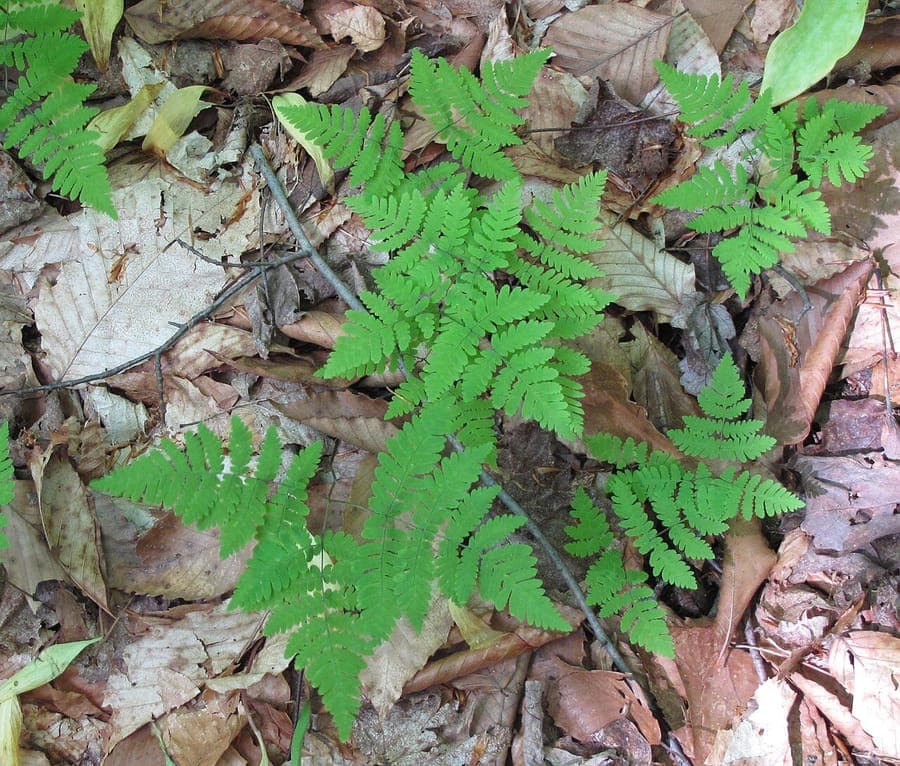
Ayotte, Gilles, 1948- / CC BY-SA 4.0, via Wikimedia Commons
Gymnocarpium disjunctum: complete guide
Gymnocarpium disjunctum
Want to see Gymnocarpium disjunctum: complete guide in your garden?
1 minute, no credit card
Overview
Gymnokarpium disjunctum, commonly known as western oak fern or Pacific oak fern, is an elegant and delicate fern originating from the mountain forests of Alaska to the western United States. This rare fern was first scientifically described in 1965 and forms an interesting part of coniferous forest ecosystems.
The name "oak fern" refers to its natural occurrence in oak tree shade and moisture-rich forest environments where oak species grow.
Appearance
Gymnokarpium disjunctum grows to approximately 15-30 centimeters tall and forms low rosette-like clusters of delicately cut fronds. The fronds are twice-divided (nearly triangular) with very finely articulated segments. This detailed frond structure creates an extremely delicate, almost lace-like appearance.
As a fern, Gymnocarpium disjunctum produces no flowers or seeds like other plants, but reproduces via spores on the undersides of fronds. These spores become visible as brownish sporangia under very moist conditions.
The frond maintains its green color throughout the year in suitable climate.
Ideal Location
This fern thrives best in shady, moist forest environments - this is a true shade-lover. The plant grows excellently in:
- Dense forest shade
- Under larch or coniferous trees
- Moist corner areas
- Natural woodland zones
- Shaded brick walls
- Under overhanging eaves
- Moist rock crevices
The plant tolerates even very low light levels where almost no other greenery grows.
Soil
Gymnokarpium disjunctum requires moist, well-draining soils rich in organic matter. The plant grows optimally on soils that remain consistently moist but not waterlogged.
Optimal soil characteristics:
- pH value: 5.0-7.0 (acidic to neutral)
- Moist but well-draining soil
- Rich in organic matter (leaf mold, compost)
- Humus-rich top layer essential
- Well-draining prevents root rot
When planting, add plenty of leaf mold or peat moss. This supports the very shallow roots.
Watering
Gymnokarpium disjunctum is very moisture-loving and must never completely dry out. Regular watering is essential.
Watering schedule:
- Regular: water when top 2-3 centimeters feel dry
- Growing period (spring/summer): possibly twice daily in very warm periods
- Autumn/winter: less water needed, but not completely dry
- Mist regularly in very dry households
- No waterlogging, but very moist conditions preferred
Water in the morning. Avoid water on fronds to prevent rot.
Free design
Want to see Gymnocarpium disjunctum: complete guide in your garden? Make a free design now.
Pruning
Gymnokarpium disjunctum requires minimal pruning and maintains its natural form.
- Remove only damaged or diseased fronds
- Leave dead fronds with spores for reproduction
- Plant spreads slowly via underground rhizomes
- No formal pruning needed
- Leave overhanging branches for shade
The plant maintains its natural growth pattern without support.
Maintenance Calendar
January: Plant is semi-dormant; minimal water needed February: Prepare for growth; add leaf mold March: New fronds appear; water regularly April: Active growth; monitor for moisture defects May: Full frond growth; most beautiful time June: Full growth; spores ripen July: Warm period; extra watering; prevent drought August: Growth slows; reduce watering September: Spores reach maturity; increase humidity October: Winter preparation; no extra maintenance November: Fronds don't wilt much in suitable climate December: Winter rest; minimal watering
Frost Hardiness
Gymnokarpium disjunctum is moderately frost-hardy and tolerates temperatures to approximately -15 to -20 degrees Celsius. In cooler climates, the plant can overwinter in protected, moist locations.
Protection against frost periods is beneficial. Mulching around the plant base helps protect roots. After frost, frond drop may occur, but regrowth follows in spring.
Companion Plants
Gymnokarpium disjunctum combines well with:
- Other ferns: Adiantum, Dryopteris, Polystichum
- Shade-loving plants: Hosta, Helleborus
- Ground covers: Tiarella, Ajuga reptans
- Low shrubs: Mahonia, Skimmia
- Mosaic plants: Fuchsia, Begonia
The fine texture contrasts beautifully with coarser leaf forms.
Closing Remarks
Gymnokarpium disjunctum is a rare, delicate plant that supports delicate woodland themes. For those with shaded, moist spots, this fern offers an elegant solution. It's not the most robust fern, but for passionate gardeners, a worthwhile challenge.
Available from specialized fern nurseries and garden centers.
Visitors to gardenworld.app can also include shade ferns in their designs.
Want to see Gymnocarpium disjunctum: complete guide in your garden? Make a free design now.
Upload a photo, pick a style, and get a photorealistic design with plant list in under a minute.
No credit card required


Similar plants
Mountain spleenwort: complete guide
Asplenium montanum
Everything about mountain spleenwort fern: cultivation, care, growing conditions and proper maintenance for your garden
Western spleenwort: complete guide
Asplenium vespertinum
The Western spleenwort (Asplenium vespertinum) is a delicate fern from California with fine, feathery fronds. Learn about care, location, and overwintering in this comprehensive guide.
Asplenium cirrhatum: complete guide
Asplenium cirrhatum
Discover the chestnut scale spleenwort, a tropical fern full of elegance. Learn how to care for this exotic plant at home.