
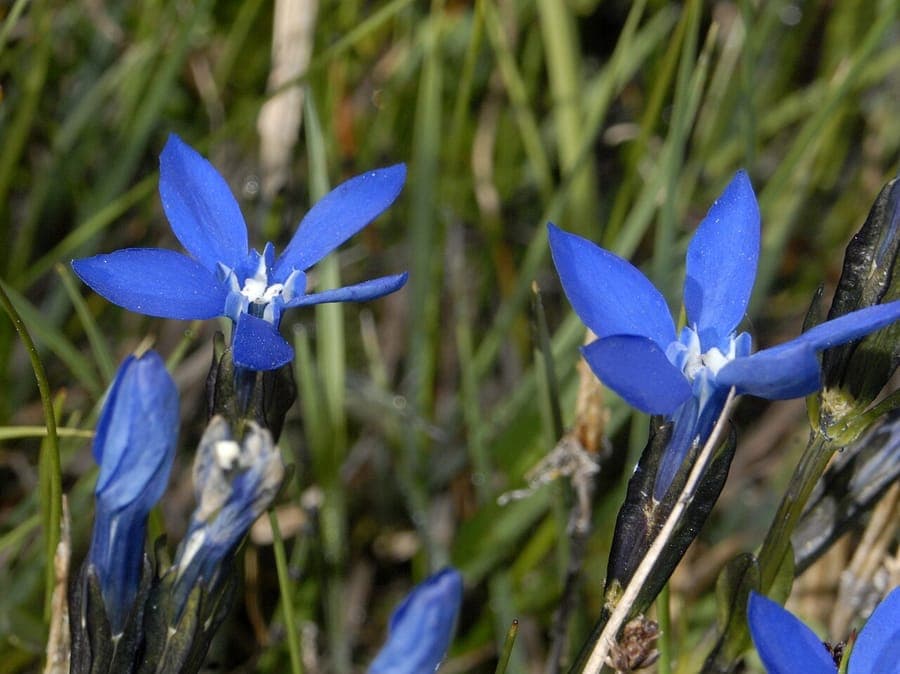
Hectonichus / CC BY-SA 3.0, via Wikimedia Commons
Gentiana bavarica: complete guide
Gentiana bavarica
Want to see Gentiana bavarica: complete guide in your garden?
1 minute, no credit card
Overview
Gentiana bavarica, commonly known as Bavarian gentian, is a delicate alpine plant from the Gentianaceae family. This stunning mountain flower grows wild in the Alps and Apennines on rocky mountain slopes. The plant is particularly beloved by rock garden enthusiasts for its deep blue flowers and compact growth habit.
The plant is named after Bavaria, though its natural distribution extends from Switzerland to Mediterranean regions. Gentiana bavarica is recognized as a reliable rock garden plant blooming year after year with minimal intervention.
In Central Europe, this plant represents a classic component of alpine gardens and scree beds. Flowers appear in July and August, precisely when many other alpine bloomers have finished flowering.
Appearance & Blooming
Gentiana bavarica grows as a compact, low rosette of dark green foliage, typically reaching 10-15 cm in height. Leaves are small, lance-shaped and form densely packed rosettes.
The flowers are the true attraction of this plant. They are deep azure blue, sometimes with white dots in the center, and display a characteristic trumpet shape. Each flower grows on short stems, allowing them to emerge just above the foliage canopy.
Blooming is prolific: a single plant produces dozens of flowers over a 4-6 week period. This makes Gentiana bavarica a highly rewarding alpine garden choice.
Ideal Location
Gentiana bavarica thrives in full sun to partial shade. A location receiving at least 6 hours of sunlight daily is ideal. In warmer mountainous regions, the plant tolerates light afternoon shade.
The plant performs best in locations with good air circulation, avoiding stagnant humidity. East-facing slopes of rock features are often ideal, where morning sun dries the plant following nocturnal dew.
Position this plant visibly on rock beds or in troughs where delicate flowers display effectively.
Soil
Gentiana bavarica thrives in well-draining, alkaline soil. A mixture of potting soil, coarse sand and gravel in 1:2:2 ratio works excellently. The plant cannot tolerate waterlogging and thrives in poor, rocky soils.
The pH should be neutral to alkaline (pH 7.5-8.0). For container cultivation, use alpine soil mix or add coarse grit to standard potting compost.
Watering
Water requirements are moderate. The plant thrives in dry soils and tolerates drought well. Water only when the top 2 cm of soil feels dry to the touch.
During the growing season (April through August), water cautiously, particularly during dry periods. Excessive watering can lead to root rot. In wet winters, underground drainage is essential.
In containers, water management is crucial: ensure drainage is excellent.
Free design
Want to see Gentiana bavarica: complete guide in your garden? Make a free design now.
Maintenance
Gentiana bavarica is a perennial plant providing years of reliable blooming. The plant requires minimal maintenance. Remove faded flowers for neatness, though this is not strictly necessary.
In autumn, when foliage yellows, you can remove dead leaves. However, the plant does not enter complete dormancy, so retain some leaf protection.
Optional feeding in early spring with low-nitrogen fertilizer can stimulate growth, but remains non-essential.
Maintenance Calendar
January-March: Plant is largely dormant. Check drainage. No maintenance required.
April-May: Growth resumes. New foliage appears. Water cautiously. Feeding is optional.
June-July: Blooming initiates. Abundant blue flowers. Water only during drought. Remove spent flowers.
August: Bloom reaches peak. Constant daily flowers. Optional feeding.
September-October: Bloom diminishes. Clear dead foliage. Prepare for winter.
November-December: Plant enters dormancy. Protect against severe frost.
Winter Hardiness
Gentiana bavarica is highly cold-hardy, tolerating temperatures below -20 degrees Celsius without difficulty. The plant grows even in mountainous regions at very high altitudes with persistent frost.
In temperate climates with severe frost and thaw cycles, supplemental protection is beneficial: a layer of sand or gravel with broken pottery shards ensures drainage and prevents water damage to roots.
Companion Plantings
Combine Gentiana bavarica effectively with other alpine bloomers:
- Edelweiss for silvery-white contrast
- Saxifrage for textural variety
- Sempervivum for evergreen foliage
- Other gentians for blue harmony
- Low creeping thyme for green ground cover
Plant in clusters of at least three to five specimens for effective visual impact in rock gardens.
Conclusion
Gentiana bavarica is an absolute essential for alpine and rock garden enthusiasts. The deep blue flowers deliver pure color impact to mountain landscapes. With minimal maintenance requirements, it represents a durable garden choice.
The plant withstands the harsh conditions of high-altitude gardens and mountain meadows. This makes it ideal for purist gardeners seeking authentic alpine aesthetics.
Available from specialized alpine nurseries. Select alpine origins for best adaptation. More information on gardenworld.app.
Want to see Gentiana bavarica: complete guide in your garden? Make a free design now.
Upload a photo, pick a style, and get a photorealistic design with plant list in under a minute.
10,000+ gardens designed already
No credit card required


Similar plants
Branched gentianella: complete guide
Gentianella ramosa
Full growing guide for Gentianella ramosa, the branched Alpine gentianella of the SW Alps - location, soil, watering, winter care and companion plants.
Spiked centaury: complete guide
Schenkia spicata
Full growing guide for Schenkia spicata (spiked centaury): sunny position, dry soil, bloom season and garden companions.
Narrow-leaf gentian: complete guide
Gentiana angustifolia
Narrow-leaf gentian growing guide: intense blue trumpet flowers in May-July on well-drained limestone. Full cultivation tips.