
iNaturalist user: dickrawson / CC BY 4.0, via Wikimedia Commons
Eastern nit-grass: complete guide
Gastridium phleoides
Want to see Eastern nit-grass: complete guide in your garden?
1 minute, no credit card
Overview
Gastridium phleoides, commonly known as eastern nit-grass or nit grass, is a slender annual grass belonging to the family Poaceae. Its native range stretches across an impressively wide area - from the Mediterranean coast of Spain and Italy, through Turkey and the Middle East, and into much of sub-Saharan Africa, including Ethiopia, Kenya, and South Africa. This broad distribution reflects the plant's remarkable adaptability to hot, dry, and nutrient-poor conditions.
The species has also been introduced to parts of North America (California, Oregon, Arizona, Texas), South America (Chile), and Australia, where it sometimes establishes itself in open, disturbed soils along roadsides and in semi-arid grasslands. As an ornamental annual grass for the garden, eastern nit-grass offers delicate texture, graceful movement, and a naturalistic feel. On gardenworld.app you can explore garden design ideas that incorporate airy annual grasses like this one into cohesive, low-water planting schemes.
Appearance and bloom cycle
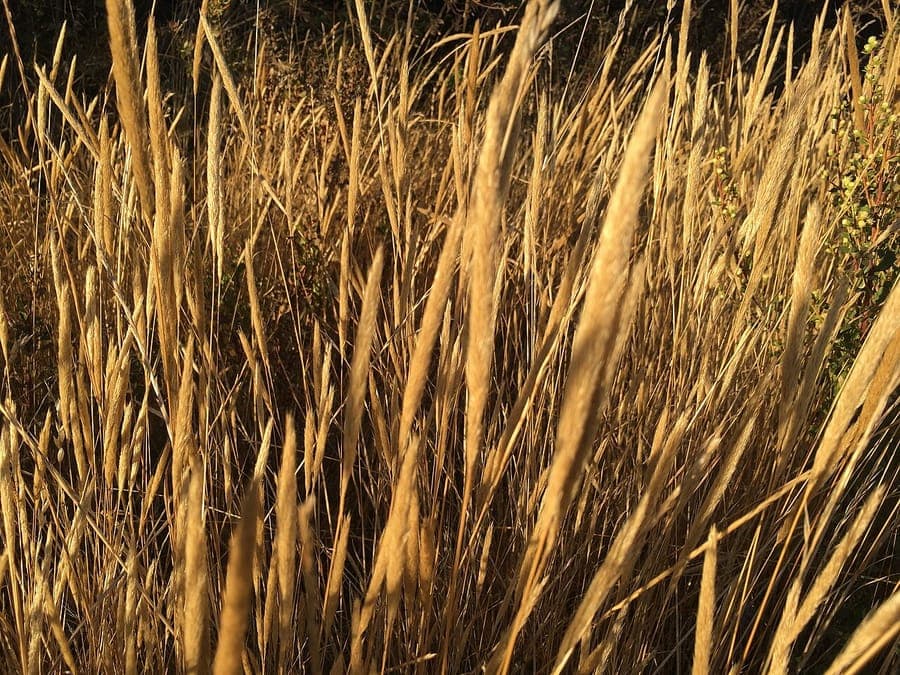
Gastridium phleoides forms neat, upright tufts reaching 15 to 40 cm in height. The stems are slender and wiry, the leaves narrow and linear, pale green to grey-green in colour. The plant's most striking feature is its inflorescence: compact, cylindrical spikes that closely resemble those of timothy grass (Phleum), which is why the species name is phleoides - meaning "resembling Phleum".
Flowering typically occurs from April to June in its native Mediterranean habitat, and from May to July in cooler northern European climates. The spikes emerge green, then transition through shades of straw-yellow and pale gold as the season advances. Even after the seeds have dropped, the dry spikes remain standing and continue to catch the light well into autumn. The individual spikelets have a distinctive inflated glume - a swollen, shiny bract that gives the genus its name, from the Greek gaster meaning "belly". This subtle botanical detail makes the spikes shimmer when sunlight catches them at a low angle.
Ideal location
This species thrives in full sun and open, exposed positions. In its natural habitat, eastern nit-grass colonises rocky slopes, dry coastal paths, open scrubland, and disturbed sandy soils where competition from other plants is limited. In the garden, a south- or west-facing aspect works best, especially one that receives maximum light through the middle of the day.
Eastern nit-grass is well suited to gravel gardens, dry slopes, gaps between paving stones, and the edges of raised beds with excellent drainage. It also performs well in terracotta pots on a sunny terrace, provided drainage holes are unobstructed. Avoid planting in shaded or persistently moist positions: low light leads to weak, floppy stems and poor flowering. The plant does not appreciate waterlogged conditions at any point in its life cycle.
Soil
Poor to moderately fertile, sharply draining soils are ideal. Sandy loam, chalky gravel, and rocky substrates all suit Gastridium phleoides well. If your garden soil is heavy clay or compacted, incorporate coarse grit or horticultural sand at a ratio of roughly one part grit to two parts soil before planting or sowing. This improves drainage and reduces the risk of root rot, which is the main cause of failure in damp conditions.
Soil pH should be neutral to slightly alkaline, ideally between 6.5 and 8.0. Avoid rich, heavily manured soils: excess nitrogen produces tall, leggy plants with weak stems that fall over before the spikes have a chance to develop properly. The key principle is to keep the soil lean - a deliberate nutrient restriction that forces the plant to produce the dense, compact habit it is known for in its native environment.
Watering
Once established, eastern nit-grass is highly drought tolerant and rarely needs supplemental watering in an outdoor bed. During germination and the first few weeks after transplanting, more consistent moisture is helpful to encourage strong root development. After that, reduce watering dramatically.
In a typical northern European summer, natural rainfall is usually sufficient. During prolonged hot, dry spells you might water every two to three weeks, but always allow the soil to dry out completely between waterings. For pot-grown specimens, ensure the pot has adequate drainage holes and is never left sitting in a saucer of standing water. Container plants in areas with wet winters are best moved under cover or into a cool, frost-free shed. Overwatering is a far more common problem than underwatering with this species.
Free design
Want to see Eastern nit-grass: complete guide in your garden? Make a free design now.
Pruning
As an annual, Gastridium phleoides does not require pruning in the conventional sense. The spent flower spikes can be left standing well into autumn: they retain visual interest as structural elements and also serve as a seed bank for the following year's planting. If you want to prevent self-seeding, cut the stems before the seeds ripen and drop.
At the end of the season, once the foliage has fully died back, the old stems can be cut to ground level and composted. If self-seeding is welcome in your garden, simply leave some spikes in place and allow seeds to fall where they will. Eastern nit-grass often appears the following spring in unexpected but pleasing spots - between gravel, along path edges, or tucked against a sunny wall. This spontaneous behaviour is one of its charms in an informal or naturalistic planting.
Maintenance calendar
- March-April: Sow seeds directly in a sunny outdoor position. Surface-sow onto a prepared seedbed and press gently into soil. No covering needed - light aids germination.
- May: Thin seedlings to 10-15 cm apart if crowded. Keep weed competition low around young plants.
- June: Flowering begins. Reduce watering. Watch for any signs of fungal issues in wet weather.
- July-August: Peak flowering and seed development. Plants are largely self-sufficient in dry weather.
- September-October: Seeds ripen and fall. Collect seeds if you want to save for next year. Leave spikes for structural winter interest.
- November-December: Clear dead material. Move pot specimens under cover.
- January-February: Rest period. No action needed for garden-planted seeds.
Winter hardiness
Gastridium phleoides is a true annual and does not survive winter as a living plant in cool temperate climates. It has no frost hardiness to speak of - the first hard frost kills the above-ground growth entirely. In USDA hardiness zones 8-9 (mild coastal climates), seedlings sometimes survive mild winters and resume growth in spring, but this cannot be relied upon in the UK, Belgium, or the Netherlands.
The continuity of the plant from year to year depends on self-seeding or on seeds you have collected and stored. Store ripe seeds in a paper envelope in a cool, dry location and sow them the following April or May. In practice, a patch of eastern nit-grass in a gravel garden or a dry sandy border often self-perpetuates reliably once established, without any intervention needed from the gardener.
Companion plants
Eastern nit-grass pairs beautifully with other Mediterranean annuals and drought-tolerant perennials. Excellent companions include hare's tail grass (Lagurus ovatus), quaking grass (Briza maxima and B. minor), field poppies (Papaver rhoeas), cornflowers (Centaurea cyanus), and pheasant's tail grass (Anemanthele lessoniana). For a layered, naturalistic border, combine it with low rosette-forming plants such as Erodium, Stachys byzantina (lamb's ears), or low-growing Sedum species.
In a dry, sunny gravel garden, Gastridium phleoides makes a fine companion for lavender, thyme, and ornamental alliums. The fine texture of its spikes contrasts well with broader-leaved plants and with the bold spherical heads of Allium. On gardenworld.app, you can use the design tool to experiment with plant combinations for your own front garden and see which pairings work best for your specific climate, soil, and aesthetic preferences. Consulting with garden centres that specialise in wild and naturalistic plants is also worthwhile when sourcing less common annual species.
Closing
Gastridium phleoides is an understated but genuinely rewarding annual grass for sunny, dry gardens. Its slender, shimmering spikes bring movement and delicacy to gravel beds, Mediterranean-style borders, and naturalistic plantings without demanding much in return. Tolerant of poor soils, resistant to drought once established, and capable of self-seeding when conditions suit it, this is a plant that earns its place through quiet elegance rather than showiness. Seed can be sourced from specialist suppliers of botanical and wild grasses, and once you have introduced it to the right spot in your garden, you may find it returns faithfully year after year with little encouragement.
Want to see Eastern nit-grass: complete guide in your garden? Make a free design now.
Upload a photo, pick a style, and get a photorealistic design with plant list in under a minute.
10,000+ gardens designed already
No credit card required


Similar plants
Sporobolus pungens: complete guide
Sporobolus pungens
Sporobolus pungens is a stoloniferous Mediterranean coastal grass with outstanding salt and drought tolerance, perfect for seaside and dry gardens.
Mediterranean aegilops: complete guide
Aegilops biuncialis
Everything about Aegilops biuncialis, a Mediterranean annual grass with ornamental spikes and outstanding drought tolerance for dry gardens.
Silver bluestem: complete guide
Bothriochloa saccharoides
Full guide to Bothriochloa saccharoides (silver bluestem): site, soil, watering, winter hardiness, pruning, and garden companions.