
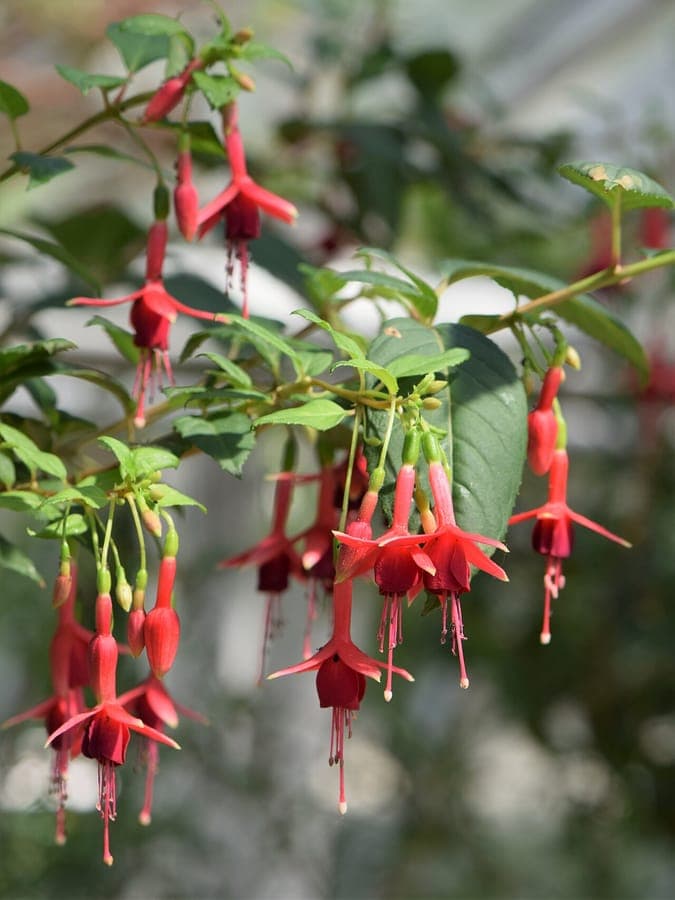
Krzysztof Ziarnek, Kenraiz / CC BY-SA 4.0, via Wikimedia Commons
Fuchsia coccinea: complete guide
Fuchsia coccinea
Want to see Fuchsia coccinea: complete guide in your garden?
1 minute, no credit card
Overview
Scarlet Fuchsia (Fuchsia coccinea), also called Fuchsia elegans, is an elegant ornamental prized for its graceful pendant flowers. Native to southeastern Brazil, this charming plant belongs to the Onagraceae family and rewards gardeners with continuous scarlet-red blooms from spring through fall. The arching stems and delicate flowers create sophistication in any garden setting.
For gardenworld.app readers, Fuchsia coccinea is essential for containers and hanging baskets. The plant creates refined beauty with minimal demands. Proper care ensures months of impressive floral displays alongside attractive foliage.
Appearance and Bloom
This fuchsia is distinguished by elegant pendant flowers. The sepals are bright scarlet-red with darker red accents. Flowers open gracefully, resembling miniature dancing figures. Stems are slender with reddish tones.
Leaves are small, lanceolate, dark green and finely textured, adding refinement to the plant's appearance. Flowers appear continuously May through October, sometimes longer in protected conditions. Small red berries follow bloom, adding extra interest. The cascading growth habit makes it ideal for hanging baskets and elevated planters.
Ideal Location
Fuchsia coccinea prefers bright, sheltered locations without harsh direct sun. Provide four to six hours of indirect light daily. Full, intense sun burns flowers and stresses the plant. Dappled shade from nearby trees or structures is ideal.
Avoid windy locations where delicate flowers suffer damage. In very warm climates, afternoon shade is beneficial. A location with morning sun and afternoon protection performs optimally.
Soil
Use light, well-draining potting soil rich in organic material. Combine two parts peat or coco-coir, one part sand, one part perlite. The plant prefers consistently moist but never waterlogged soil.
Maintain pH between 6.0 and 6.5 (slightly acid). During growth season, add compost as a top dressing monthly. Ensure excellent drainage using pots with drainage holes. Indoor container success depends on proper soil texture.
Watering
Fuchsia coccinea is moisture-demanding during growth. Water regularly maintaining even soil moisture. Check daily by inserting a finger into soil: if the top inch feels dry, water thoroughly. Avoid waterlogging, which causes root rot.
In hot periods, daily watering may be necessary. Reduce watering significantly in winter when growth halts. Use rainwater or distilled water when possible, as chlorine in tap water can cause foliage issues. Morning watering is optimal.
Free design
Want to see Fuchsia coccinea: complete guide in your garden? Make a free design now.
Pruning
Fuchsia responds excellently to pruning. In early spring, cut previous year's growth back to about 10 centimeters above soil level. This promotes dense, compact, bushy form. Remove any dead or damaged stems without hesitation.
As growth season progresses, regularly pinch shoot tips. This stimulates lateral branching, increasing flower production. Deadhead spent flowers continuously to encourage ongoing bloom. Late summer pinching may reduce fall flowers but strengthens winter survival.
Maintenance Calendar
Spring: Heavy pruning, repotting, resume watering and feeding. Summer: Regular water and fertilizer, deadhead spent flowers. Autumn: Gradually reduce watering, prepare for rest. Winter: Minimal water, no fertilizer, provide cool dormancy period.
Winter Hardiness
Fuchsia coccinea is frost-tender and cannot tolerate temperatures below 5 degrees Celsius. Move indoors to a sheltered location, cool greenhouse, or home. A cool, bright position between 5 and 10 degrees Celsius is ideal.
For outdoor winter survival, mulch heavily and cover tops with protective cloth. Roots tolerate several frost degrees if well-insulated. Many plants survive cold winters and regenerate in spring with returning warmth.
Companion Plants
Combine beautifully with other shade-loving plants: hostas, ferns, impatiens, begonias. Elegant flowers contrast nicely with spotted foliage of caladiums and colocasias. In hanging baskets, pair with silver-leaved senecio or trailing helichrysum.
Small herbs like oregano and thyme offer textural contrast. Annual cascaders like trailing lobelias complement the upright flowers.
Final Notes
Fuchsia coccinea is relatively easy when basic requirements are met. Regular moisture, dappled shade and consistent pruning are success secrets. On gardenworld.app, find inspiration for beautiful combinations featuring this plant.
Purchase young plants in spring from reputable garden centers. With attention and care, enjoy elegant flowers for months. At specialty nurseries, find fuchsias in diverse color combinations to create stunning container displays.
Want to see Fuchsia coccinea: complete guide in your garden? Make a free design now.
Upload a photo, pick a style, and get a photorealistic design with plant list in under a minute.
No credit card required


Similar plants
Shortfruit evening primrose: complete guide
Oenothera brachycarpa
Everything about Oenothera brachycarpa - the shortfruit evening primrose from the American Southwest. Growing tips, placement and care for your garden.
Sundrops (Oenothera tetragona): complete guide
Oenothera tetragona
Everything about Oenothera tetragona - the cheerful daytime-blooming sundrops perennial. Growing tips, placement, pruning and care for a long summer display.
Seabeach evening primrose: complete guide
Oenothera humifusa
Full guide to Oenothera humifusa, the seabeach evening primrose native to the US Atlantic coast. Yellow blooms, silvery foliage, drought-tolerant.