
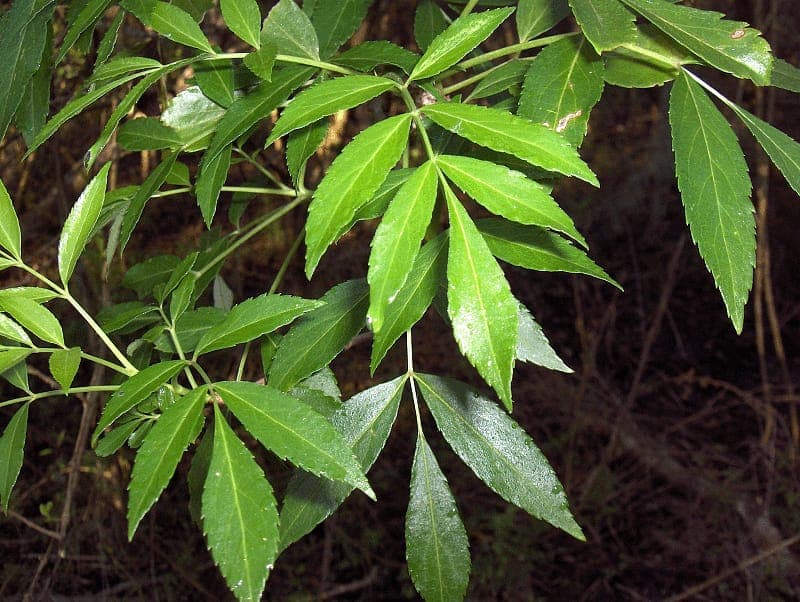
homeredwardprice on Flickr / CC BY 2.0, via Wikimedia Commons
Fraxinus caroliniana: complete guide
Fraxinus caroliniana
Want to see Fraxinus caroliniana: complete guide in your garden?
1 minute, no credit card
Overview
Fraxinus caroliniana, commonly known as Florida ash or water ash, is a North American tree from the olive family (Oleaceae). In the wild, it grows along rivers and in wet forests of the southeastern USA and Texas. As a garden tree, it offers rapid growth, elegant green foliage, and excellent form. Growing to 15-20 meters or taller, it serves as a classic shade tree for large gardens.
Appearance and bloom
The tree forms a straight trunk with a wide-branched, rounded crown. Leaves are compound (pinnate) with 5-9 small leaflets that are finely serrated. In spring they emerge yellow-green, mature to dark green in summer, and turn yellow-brown to red in fall.
Flowers are inconspicuous (no petals, only stamens), but appear reddish-brown and noticeable. After blooming, flat seed cases (samaras) with wings develop, approximately 2-3 cm long.
Ideal location
Florida ash grows best in moist sites with regular water supply. It's adapted to riverside zones and wetlands, so it tolerates wet feet well.
Sunlight: full sun to partial shade. With at least 4-5 hours of daily sunlight, it grows optimally. It also grows in shadier locations but forms a less dense crown.
The tree tolerates wind well and grows in windy areas. Salt tolerance: moderate; unsuitable for coastal sites.
Soil
Fraxinus caroliniana is highly soil-tolerant and grows in both sandy and clay soils. The key is consistent moisture. In dry soils, it grows much slower.
Soil pH: acidic to neutral is fine. Overly chalky soil can cause iron deficiency chlorosis (yellow leaves with green veins).
In containers: use moisture-retaining potting soil with regular watering. Drainage is less critical than for other trees.
Free design
Want to see Fraxinus caroliniana: complete guide in your garden? Make a free design now.
Watering
Regular watering is essential, especially for young trees. During establishment (first 3 years), maintain consistently moist soil. Watering deeply once weekly is appropriate.
Once established (after 3-4 years), the tree tolerates drought periods better but still grows best with regular moisture. During prolonged drought, it drops leaves.
Pruning
Fraxinus caroliniana requires minimal pruning. Allow it to grow naturally. Remove only dead or broken branches and crossing limbs.
Formative pruning on young trees helps: develop a strong central leader by removing weak competing shoots.
Maintenance calendar
Spring: careful formative pruning on young trees. Begin watering for growing season.
Summer: regular watering, inspect for pests (insects).
Fall: leaf drop is normal; collect leaves for garden compost.
Winter: no maintenance needed. The tree rests.
Winter hardiness
Fraxinus caroliniana is hardy to approximately -15 degrees Celsius in dry conditions but much less so in wet soils. The tree originates from warm regions, so in northern areas it may experience late spring frost damage.
In temperate regions, young trees need protection from late May frosts. Mature trees are hardier; young trees are more vulnerable.
Companion plants
Florida ash pairs nicely with:
- Other native trees: Quercus (oak), Acer (maple)
- Underplanting: Ilex (holly), Sambucus (elderberry)
- Evergreens: Ilex verticillata (American winterberry)
- Ornamental grasses beneath the crown
- Shade-loving flowers in moist soil
Conclusion
Fraxinus caroliniana is a classic, fast-growing shade tree for large gardens on moist sites. Elegant foliage, natural form, and native origin make it a valuable addition. Young trees (2-3 years) cost 50-80 euros and are available from nurseries or online.
Use gardenworld.app for positioning in your garden plan.
Sources and further reading
Information available on gardenworld.app. Scientific data: Kew POWO, GBIF 3172339.
Want to see Fraxinus caroliniana: complete guide in your garden? Make a free design now.
Upload a photo, pick a style, and get a photorealistic design with plant list in under a minute.
No credit card required

