
Jerzy Opioła / CC BY-SA 3.0, via Wikimedia Commons
Green ash: complete guide
Fraxinus pennsylvanica
Want to see Green ash: complete guide in your garden?
1 minute, no credit card
Overview
The green ash, or Fraxinus pennsylvanica, is a fast-growing deciduous tree that brings structure and seasonal interest to larger gardens and landscapes. Native to eastern North America, it thrives in USDA hardiness zones 3 to 9, making it suitable for a wide range of climates across Europe and North America. With a mature height of 15 to 20 meters and a spread of 10 to 12 meters, it demands space - both above and below ground. On gardenworld.app you can design a layout that accommodates the green ash's expansive root system and canopy.
Appearance & bloom cycle
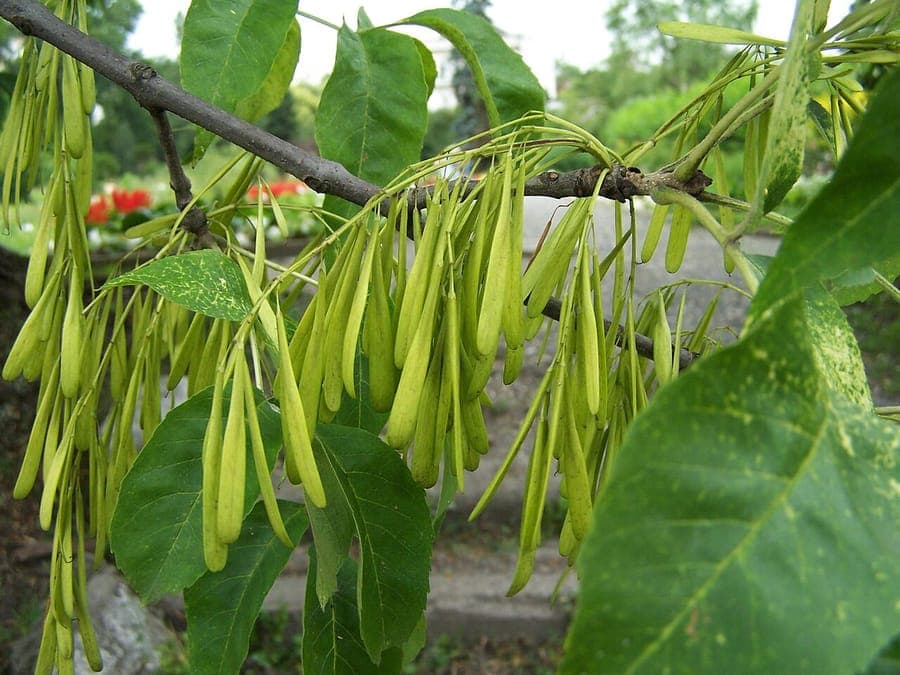
This tree has a straight trunk and an open, oval crown. Its pinnately compound leaves consist of 5 to 9 lance-shaped leaflets, each up to 15 cm long. In late spring, small brownish flowers appear - inconspicuous but essential for pollinators. They're followed by slender, winged samaras, 2.5 to 4 cm long, which disperse in late autumn.
The foliage turns a bright, clear yellow in fall, creating a soft glow in the landscape. Young bark is smooth and olive-green, earning the tree its common name, but matures into a diamond-patterned, deeply furrowed gray-brown texture that adds winter interest.
Ideal location
Green ash prefers full sun (rating 7–10) and needs at least 6 hours of direct light daily. It performs poorly in deep shade. Plant it at least 4 meters from buildings, driveways, or underground utilities to avoid root damage. It's an excellent choice for parks, wide borders, and suburban backyards.
Given its size, it's not suitable for small gardens. Use gardenworld.app to visualize how this tree fits into your space before planting - a smart move for long-term planning.
Soil requirements
This species is adaptable to a wide pH range (5.0–8.1) and tolerates clay, loam, and sandy soils. It handles temporary flooding and compacted urban soils better than most trees, which explains its popularity in street planting. However, prolonged waterlogging can lead to root rot. If planting in heavy clay, amend the hole with compost or coarse sand to improve drainage.
Avoid highly saline soils. While green ash is salt-tolerant compared to other species, excessive de-icing salts near driveways can damage young trees.
Watering
Young trees need consistent moisture for the first two growing seasons. Water deeply once a week with 10–15 liters during dry spells. Established trees are drought-tolerant and access moisture from deep soil layers. Still, during extreme summer heat or extended dry periods, supplemental watering prevents leaf scorch and premature drop.
Apply a 5 cm layer of wood chip mulch around the base (keeping it 10 cm from the trunk) to retain moisture and suppress weeds.
Free design
Want to see Green ash: complete guide in your garden? Make a free design now.
Pruning
Minimal pruning is required. Remove dead, damaged, or crossing branches during late winter while the tree is dormant. Avoid pruning in early spring to prevent 'bleeding' - sap oozing from cuts, which weakens but rarely kills the tree.
For young trees, select a single central leader and remove competing stems to encourage a strong structure. Use clean, sharp tools to reduce disease risk. Never top the tree - it leads to weak regrowth and structural issues.
Maintenance calendar
- Jan: Inspect for pests and structural damage
- Feb: Light pruning if needed
- Mar: Apply compost around base
- Apr: Monitor for ash borer signs and aphids
- May: Flowers appear; no action needed
- Jun: Check soil moisture during heatwaves
- Jul: Water deeply if rainfall is below 2.5 cm/week
- Aug: Watch for leaf discoloration or wilting
- Sep: Begin preparing for leaf drop
- Oct: Rake and compost fallen leaves
- Nov: Replenish mulch layer
- Dec: Final inspection before winter
Winter hardiness
Hardy to USDA zone 3 (-40°C), green ash survives harsh winters without protection. Young trees may suffer sunscald on the south-facing trunk - use a tree wrap for the first 2–3 winters. Mature trees withstand snow load well, though heavy ice can break weak branches.
Avoid piling snow from plows against the trunk, as it can compact soil and damage roots.
Companion plants
Underplant with shade-tolerant perennials like hostas, ferns, or Carex vulpinoidea. Avoid aggressive groundcovers such as ivy, which compete for water. In open areas beneath the canopy, a shade-tolerant lawn mix works - but expect thin grass due to root competition.
For garden borders, pair with flowering perennials like Echinacea, Rudbeckia, or ornamental grasses that don't clash with the tree's root zone.
Closing
Green ash is a resilient, low-maintenance tree that adds vertical presence and fall color. However, it's vulnerable to the emerald ash borer - an invasive pest now present in parts of Europe. Monitor for D-shaped exit holes, canopy dieback, or excessive woodpecker activity.
Buy young trees from local garden centres, ensuring they're pest-free and locally adapted. Plant in early spring or fall for best establishment. On gardenworld.app, you can explore planting templates and companion suggestions tailored to Fraxinus pennsylvanica, helping you build a balanced, thriving garden.
Want to see Green ash: complete guide in your garden? Make a free design now.
Upload a photo, pick a style, and get a photorealistic design with plant list in under a minute.
No credit card required


Similar plants
Rough menodora: complete guide
Menodora scabra
Full guide to Menodora scabra: a drought-tolerant desert subshrub with bright yellow flowers, ideal for rock gardens and xeriscapes.
Fraxinus dipetala: complete guide
Fraxinus dipetala
California ash or two-petal ash from southwestern USA. Beautiful spring flowers, drought-tolerant. Experimental choice for warm Mediterranean front gardens.
Syringa komarowii: complete guide
Syringa komarowii
Syringa komarowii is a striking lilac from central China with elegant flower spikes and lovely foliage. Discover the complete care guide here.