
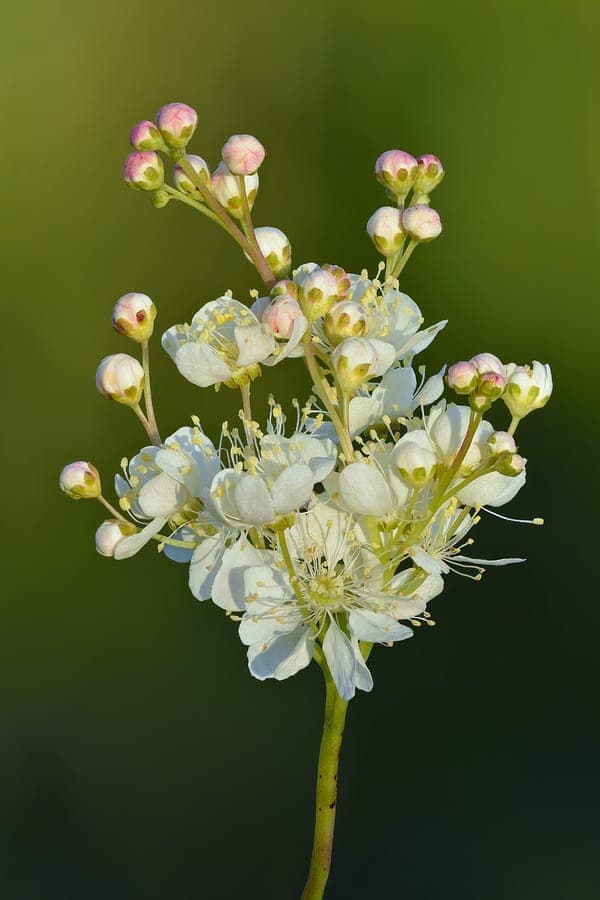
Ivar Leidus / CC BY-SA 4.0, via Wikimedia Commons
Filipendula vulgaris: complete guide
Filipendula vulgaris
Want to see Filipendula vulgaris: complete guide in your garden?
1 minute, no credit card
Overview
Filipendula vulgaris, commonly known as dropwort, is a slender and elegant perennial that deserves a prominent place in dry, sunny garden corners. This European native distinguishes itself from its larger cousin (F. ulmaria) by preferring dry soil and having a more compact growth habit.
Appearance and Bloom
Dropwort grows to only 60-80 cm tall, much lower than meadowsweet. The plant forms neat, upright clusters with finely serrated leaves. Flowers appear from May to June in elegant, loose plumes with pink to white blooms. Each flower is small but very numerous, making the overall flower display impressive. The fragrance is pleasant, though less strong than in F. ulmaria.
Ideal Location
Unlike its moisture-loving cousin, dropwort feels most at home in dry to moderately moist spots in full sun. This is a plant that naturally grows on chalky slopes, so good drainage is essential. Place this plant in a sunny spot in full sun for optimal growth and richer flowering.
Soil Requirements
Dropwort grows best in well-draining, calcareous to neutral soil. In heavy clay, this plant will not thrive. Sandy or loam soil is ideal. Add some limestone grit if the soil is too acidic. The plant tolerates drought better than meadowsweet, making it suitable for dry, warm garden spots.
Watering
Once established, dropwort needs little water. During extremely dry periods, you can water, but the plant tolerates drought well. Too much water, especially in winter on heavy soil, can lead to rot. Mulching is less important than in moist locations, but a thin layer (2-3 cm) helps keep roots healthy.
Free design
Want to see Filipendula vulgaris: complete guide in your garden? Make a free design now.
Pruning and Maintenance
Dropwort requires minimal pruning. Remove spent flowers to keep the plant tidy and prevent self-seeding. In early spring, remove dead leaves. This plant self-seeds readily, so if you want to propagate new plants, leave some flowers standing.
Maintenance Calendar
March-April: Remove dead leaves; no feeding needed on well-prepared soil May-June: Flowering period; remove flowers when they change color July-September: Minimal maintenance; water only in extremely dry weeks October-November: Remove dead parts; add limestone grit if soil becomes too acidic December-February: Dormant period; no care needed
Winter Hardiness
Dropwort is extremely hardy and grows from North Africa to Siberia. The plant tolerates temperatures down to -25°C without difficulty. In warm winters, the plant may emerge from dormancy early, which poses no problem as long as severe frost doesn't follow.
Companion Plants
Dropwort combines beautifully with other drought-tolerant plants:
- Catananche caerulea (cupid's dart)
- Achillea millefolium (yarrow)
- Salvia nemorosa (woodland sage)
- Stachys byzantina (lamb's ear)
- Geranium sanguineum (bloody cranesbill)
- Teucrium chamaedrys (wall germander)
This plant brings elegance and airiness to dry borders. Discover on gardenworld.app how to incorporate dropwort into your garden design. For advice on dry garden spots, consult gardenworld.app.
Final Thoughts
Dropwort is perfect for anyone looking to enliven a dry, sunny garden without much maintenance. With its elegant flowers and minimal water requirements, it fits perfectly into modern, climate-resilient garden design. This is a true performer for dry conditions.
Want to see Filipendula vulgaris: complete guide in your garden? Make a free design now.
Upload a photo, pick a style, and get a photorealistic design with plant list in under a minute.
No credit card required

