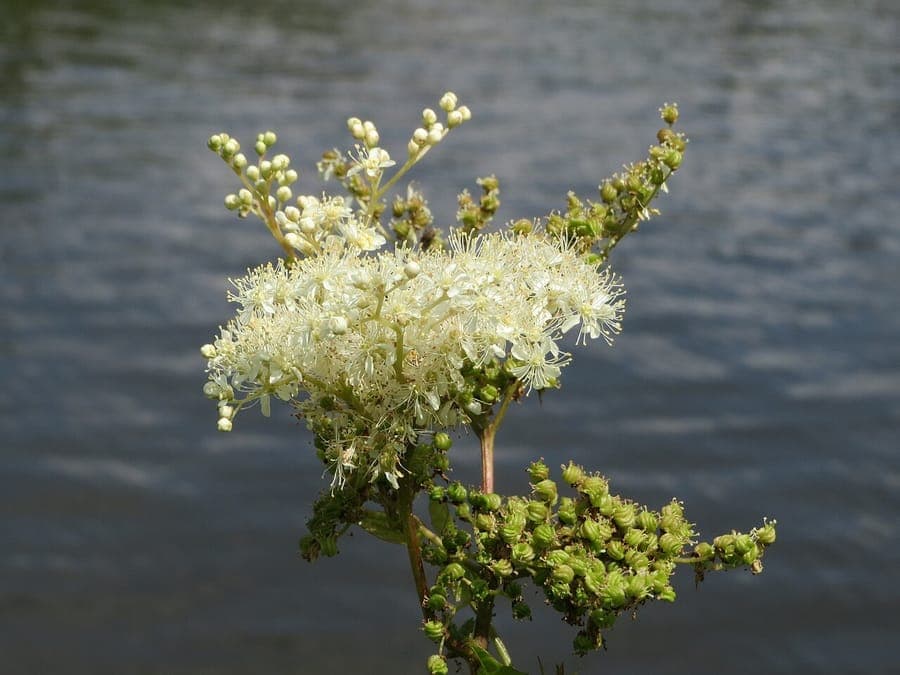
AnRo0002 / CC0, via Wikimedia Commons
Filipendula ulmaria: complete guide
Filipendula ulmaria
Want to see Filipendula ulmaria: complete guide in your garden?
Full design in HD: €7.99
Look after your Filipendula ulmaria with the GardenWorld app
Identify plants with your camera and get a care calendar with reminders for this plant.


Overview
Filipendula ulmaria, commonly known as meadowsweet, is an impressive perennial renowned for its lush growth and spectacular blooms. This European native is a classic choice for naturalistic gardens and is especially cherished for its fragrant, creamy white flower panicles.
Appearance and Bloom
Meadowsweet grows up to 150 cm tall and forms a robust, upright plant with finely serrated leaves somewhat resembling those of an elm (hence the Latin name ulmaria). Leaves are dark green and have a rough texture. Flowers appear from June through August in large, fluffy plumes composed of countless tiny creamy-white florets. These flowers release a pleasant sweet fragrance that attracts bees and butterflies.
Ideal Location
Meadowsweet thrives best in moist locations within the garden. This is a plant that naturally grows along water margins, so the wetter, the better. Place this plant in full sun to partial shade for optimal flowering. In too much shade, the plant will become taller and produce fewer flowers.
Soil Requirements
The ideal soil for meadowsweet is moisture-retentive, humus-rich, and neutral to slightly acidic. In heavy clay soil, this plant grows excellently as long as water can drain to prevent waterlogging. On dry sandy soil, you'll need more frequent watering. A thick layer of compost or leaf litter in autumn helps keep the soil moist.
Watering
This is a plant that appreciates abundant water. During dry periods, water regularly, especially during the growth and flowering season. The soil should never dry out completely. A thick mulch layer (5 cm) helps retain moisture. In extremely dry summers, daily watering may be necessary.
Free preview
Want to see Filipendula ulmaria: complete guide in your garden? Make a free preview of your design.
Pruning and Maintenance
Meadowsweet requires minimal pruning. Remove spent flower heads to prevent self-seeding and keep the plant tidy. In early spring, cut back withered stems to ground level. Divide old plants every four to five years by digging them up and cutting them into pieces with a spade.
Maintenance Calendar
March-April: Remove dead parts, apply slow-release fertilizer May-June: Check for adequate moisture, install stakes if needed July-August: Flowering period; deadhead spent blooms September-October: Apply leaf litter, divide old plants November-February: Dormant period; minimal care needed
Winter Hardiness
Meadowsweet is extremely hardy and thrives throughout Northern and Central Europe. The plant tolerates temperatures down to -30°C without difficulty. As long as the soil remains moist (which moist locations typically ensure), the plant survives without any protective materials.
Companion Plants
Meadowsweet combines beautifully with other moisture-loving plants:
- Lysichiton (skunk cabbage)
- Lythrum salicaria (purple loosestrife)
- Iris sibirica and I. pseudacorus (Siberian and yellow flag iris)
- Astilbe (false spiraea)
- Rodgersia (fingeleaf rodgersia)
- Fatsia (Japanese aralia) in partial shade
This plant transforms wet spots in your garden into magnificent flowering paradises. Discover more garden designs on gardenworld.app where meadowsweet features in moist terraces. For personalized garden advice, visit gardenworld.app.
Final Thoughts
Meadowsweet is an indispensable plant for anyone looking to transform a moist spot in the garden. With its elegant growth, fragrant flowers, and wildlife-friendly nature, it brings both structure and biodiversity to your green space. Once well-established, this plant thrives for years with minimal maintenance.
Frequently asked questions about Filipendula ulmaria
Is Filipendula ulmaria winter hardy?
Meadowsweet is extremely hardy and thrives throughout Northern and Central Europe. The plant tolerates temperatures down to -30°C without difficulty.
When and how do you prune Filipendula ulmaria?
Meadowsweet requires minimal pruning. Remove spent flower heads to prevent self-seeding and keep the plant tidy.
How much water does Filipendula ulmaria need?
This is a plant that appreciates abundant water. During dry periods, water regularly, especially during the growth and flowering season.
Where does Filipendula ulmaria grow best?
Meadowsweet thrives best in moist locations within the garden. This is a plant that naturally grows along water margins, so the wetter, the better.
What soil does Filipendula ulmaria need?
The ideal soil for meadowsweet is moisture-retentive, humus-rich, and neutral to slightly acidic. In heavy clay soil, this plant grows excellently as long as water can drain to prevent waterlogging.

See it in your garden
See Filipendula ulmaria in your garden
One photo of your garden and a few questions. You see the result in about a minute.
Try it with a photoIdentify this plant in your own garden. Identify a plant
