
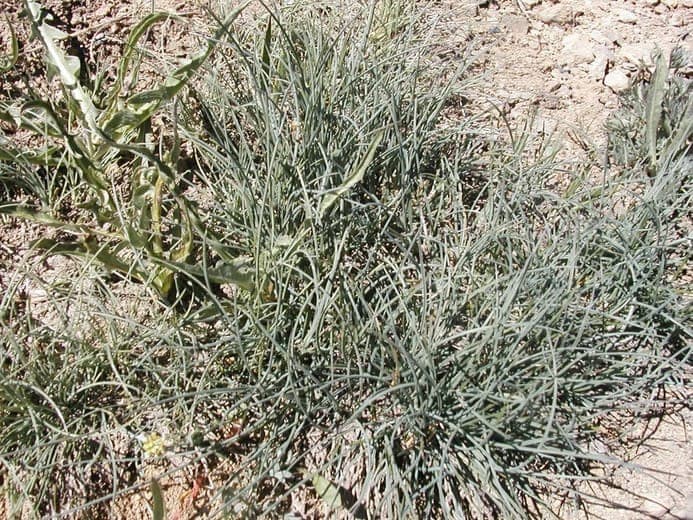
Chris Wagner / Public domain, via Wikimedia Commons
Festuca idahoensis: complete guide
Festuca idahoensis
Want to see Festuca idahoensis: complete guide in your garden?
1 minute, no credit card
Festuca idahoensis, commonly known as Idaho fescue or bluebunch fescue, is a frost-hardy grass from the western United States and western Canada. This North American grass belongs to the Poaceae family and forms attractive blue-green bunches that remain evergreen year-round and enrich many garden ecosystems.
Overview
Festuca idahoensis is a bunch grass that can reach 30-60 centimetres in height. The plant forms compact, blue-green bunches with fine blades that develop deep root systems. This grass is extremely suitable for dry gardens and xeriscaping because it is highly drought-tolerant and requires only minimal irrigation. The grass maintains its colour from spring through late autumn.
Appearance and bloom
The leaves of Festuca idahoensis have a characteristic blue-green colour that subtly glimmers in sunlight. The plant develops slowly but remains compact and tidy. During June to August, pale yellow flower heads emerge that are inconspicuous. Seed ripens quickly and drops naturally, enabling natural reseeding.
Ideal location
Select a spot for Festuca idahoensis with full sun. This grass tolerates no shade and will decline in partially shaded areas. The plant thrives excellently on dry slopes, in rock gardens, and as groundcover in arid climates. This species is ideal for xeriscaping and minimal-water landscapes.
Soil requirements
Festuca idahoensis grows perfectly in lean, well-draining soils. Loamy and sandy soils are optimal. The plant is extremely resilient to dry, nutrient-poor soils. Add no supplementary fertilizers, as this promotes excessive foliage growth and weakens the plant. A pH value of 5.6 to 8.4 is acceptable.
Free design
Want to see Festuca idahoensis: complete guide in your garden? Make a free design now.
Watering
Once the root system reaches full strength, Festuca idahoensis is highly drought-tolerant. Water only during establishment and extreme heat. Once mature, the grass tolerates extended droughts excellently. Overwatering leads to disease and weak growth. In rainy regions, supplementary irrigation can be eliminated entirely.
Pruning
Festuca idahoensis requires practically no pruning. Dead leaf material can be carefully combed out in early spring, but avoid aggressive pruning methods. The plant needs no formal pruning and largely maintains itself.
Maintenance calendar
Spring: Carefully remove dead leaves and clear leaf litter. Summer: Add water only during exceptional drought. Autumn: No special maintenance required. Winter: The plant is fully hardy and needs no winter protection.
Winter hardiness
Festuca idahoensis is extremely winter-hardy, tolerating temperatures below -20 degrees Celsius. The plant remains evergreen and provides constant visual interest. This grass is ideal for harsh climates and high-altitude gardens.
Companion plants
Perfect companions for Festuca idahoensis include other drought-loving grasses such as Bouteloua dactyloides and Stipa splendens. Also combine with succulents such as sedum and rosette plants like sempervivum. These combinations create authentic prairie effects.
Closing
Festuca idahoensis is the ultimate choice for dry gardens and xeriscaping projects. With its blue-green colour, drought tolerance, and minimal maintenance requirements, this North American grass provides years of enjoyment with little intervention. Explore design inspiration at gardenworld.app. Order your Festuca idahoensis today and transform your garden into a sustainable, water-saving masterpiece!
Want to see Festuca idahoensis: complete guide in your garden? Make a free design now.
Upload a photo, pick a style, and get a photorealistic design with plant list in under a minute.
No credit card required


Similar plants
Sporobolus pungens: complete guide
Sporobolus pungens
Sporobolus pungens is a stoloniferous Mediterranean coastal grass with outstanding salt and drought tolerance, perfect for seaside and dry gardens.
Mediterranean aegilops: complete guide
Aegilops biuncialis
Everything about Aegilops biuncialis, a Mediterranean annual grass with ornamental spikes and outstanding drought tolerance for dry gardens.
Silver bluestem: complete guide
Bothriochloa saccharoides
Full guide to Bothriochloa saccharoides (silver bluestem): site, soil, watering, winter hardiness, pruning, and garden companions.